Hubbry Logo
CallusCallusMain
Open search
Callus
Community hub
Callus
logo
8 pages, 0 posts
0 subscribers
Be the first to start a discussion here.
Contribute something
Callus
Callus
from Wikipedia
Callus
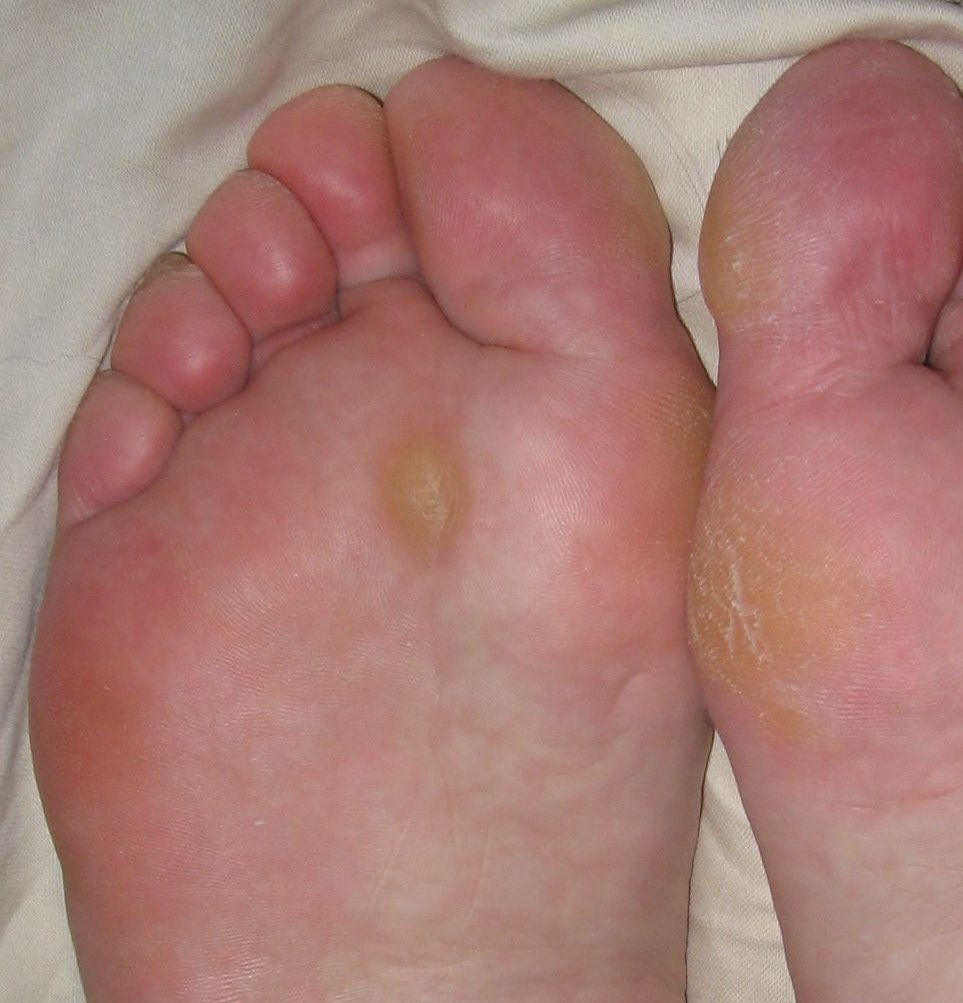
Examples of callus found on the toe
SpecialtyDermatology
ComplicationsSkin ulceration, infection
Calluses (plantar in right foot and medial in left foot)

A callus (pl.: calluses) is an area of thickened and sometimes hardened skin that forms as a response to repeated friction, pressure, or other irritation. Since repeated contact is required, calluses are most often found on the feet and hands, but they may occur anywhere on the skin. Some degree of callus, such as on the bottom of the foot, is normal.[1]

Calluses are generally not harmful and help prevent blisters, as well as offering protection.[2] However, excessive formation may sometimes lead to other problems, such as a skin ulceration or infection, or cause the affected person to try to offload the affected painful area, which can place excessive stress on the asymptomatic side.

Rubbing that is too frequent or forceful will cause blisters, as opposed to calluses, to form.

Cause

[edit]

Normally, a callus will form on any part of the skin exposed to excess friction over a long period of time. Activities that are known for causing calluses include construction work and craftwork, the arts,[3] food preparation, many sports and physical activities,[4][5] and fashion choices like wearing high heels.[6]

Although calluses can occur anywhere on the body as a reaction to moderate, constant "grinding" pressure, they are most often found on the foot (where the most pressure and friction are applied). On the feet (arguably the source of the most problematic calluses), they typically form on the metatarsal-phalangeal joint area ("balls of the foot"), heels and small toes due to the compression applied by tightly fitting shoes.

Biologically, calluses are formed by the accumulation of terminally differentiated keratinocytes in the outermost layer of skin. Though the cells of calluses are dead, they are quite resistant to mechanical and chemical damage due to extensive networks of cross-linked proteins and hydrophobic keratin intermediate filaments containing many disulfide bonds.[7] It is the natural reaction of the palmar or plantar skin. Too much friction occurring too fast for the skin to develop a protective callus will cause a blister or abrasion instead.

Sometimes a callus occurs where there is no rubbing or pressure. These hyperkeratoses can have a variety of causes. Some toxic materials, such as arsenic, can cause thick palms and soles. Some diseases, such as syphilis, can cause thickening of the palms and soles as well as pinpoint hyperkeratoses. There is a benign condition called keratosis palmaris et plantaris, which produces corns in the creases of the fingers and non-weight bearing spaces of the feet. Some of this may be caused by actinic keratosis, which occurs due to overexposure to sun or with age and hormonal shifts.

Corns

[edit]
Painful corns

A corn (or clavus, plural clavi) is a cone-shaped callus that penetrates into the dermis, usually on the feet or hands. Corns may form due to chronic pressure or rubbing at a pressure point (in this skin over a bone), or due to scar tissue from a healing wound creating pressure in a weight-bearing area such as the sole of the foot. If there is constant stimulation of the tissue producing the corns, even after the corn is surgically removed, the skin may continue to grow as a corn.[1]

The hard part at the center of the corn resembles a funnel with a broad raised top and a pointed bottom. Because of their shape, corns intensify the pressure at the tip and can cause deep tissue damage and ulceration.[8] The scientific name for a corn is heloma (plural helomata). A hard corn is called a heloma durum, while a soft corn is called a heloma molle.

The location of the soft corns tends to differ from that of hard corns. Hard corns occur on dry, flat surfaces of skin. Soft corns (frequently found between adjacent toes) stay moist, keeping the surrounding skin soft. The corn's center is not soft however, but indurated.

The specific diagnostic workup and treatments for corns may differ substantially from other forms of calluses.

Prevention

[edit]

Corns and calluses are easier to prevent than to treat. When it is undesirable to form a callus, minimizing rubbing and pressure will prevent callus formation. Footwear should be properly fitted,[9] gloves may be worn, and protective pads, rings or skin dressings may be used. People with poor circulation or sensation should check their skin often for signs of rubbing and irritation so they can minimize any damage.[citation needed]

Treatment

[edit]
Painting of a person with a callus receiving treatment from a barber surgeon (Attributed to Joos van Craesbeeck, 17th century)

Calluses and corns may heal by themselves eventually, once the irritation is consistently avoided. They may also be dissolved with keratolytic agents containing salicylic acid, sanded down with a pumice stone or silicon carbide sandpaper or filed down with a callus shaver, or pared down by a professional such as a podiatrist.[10]

Diabetes

[edit]

People with diabetes face special skin challenges. Because diabetes affects the capillaries, the small blood vessels which feed the skin, thickening of the skin with callus increases the difficulty of supplying nutrients to the skin.[11] Callus formation is seen in high numbers of patients with diabetes, and together with absent foot pulses and formation of hammer toe,[12][13] this may be an early sign of individuals at an increased risk for foot ulcers.[12]

The stiffness of a callus or corn, coupled with the shear and pressure that caused it, may tear the capillaries or adjoining tissue, causing bleeding within the callus or corn. This can often be result of trying to pick, cut, or shave off the callus by yourself at home. Although the bleeding can be small, sometimes small pools of blood or hematoma are formed. The blood itself is an irritant, a foreign body within the callus that makes the area burn or itch. If the pool of blood is exposed to the outside, infection may follow. Infection may also lead to ulceration. This process can be prevented at several places. Diabetic foot infections are the leading cause of diabetic limb amputation.

Society and culture

[edit]
A Muslim man with a prayer bump

Calluses in the hands are frequently associated with manual labor and blue-collar workers.[14][15][16] During the Gads Hill Train Robbery in 1874, the James–Younger Gang purportedly refrained from robbing men with calloused hands, assuming them to be working class laborers.[17][18] A similar notion is also present in Māori culture, where the words raupā and raupo refer to hands left cracked and chapped due to manual work, and are used as similes for someone deemed a hard worker.[19][20]

Calluses have also been known to develop on the forehead from the frequent prostrations required in Muslim prayer; known as a prayer bump or zebiba, such calluses are considered marks of piety in some Muslim countries, and people have been known to take special steps, such as praying on straw mats, to encourage the callus to develop.[21]

Calluses may also form on the fingertips from the repeated pressure and friction of playing stringed instruments. This formation of calluses allows the player to repeatedly depress the strings without causing pain. Because of this, callus formation is viewed as something of a rite of passage for beginner string players.

Calluses also commonly form on the palms of the hands in certain athletic sports such as weightlifting and gymnastics due to the repeated gripping of bars.

See also

[edit]

References

[edit]

Further reading

[edit]
Revisions and contributorsEdit on WikipediaRead on Wikipedia
from Grokipedia
This article is about the thickening of skin. For the bony tissue formed during fracture healing, see callus (osteology). A callus is a localized area of thickened, hardened that develops as the body's protective response to repeated , , or other forms of . These formations typically occur on the hands, feet, or other high-exposure areas and consist of an accumulation of dead skin cells in the outermost layer (), often remaining painless unless excessively thickened. Unlike corns, which are smaller and feature a distinct central core of , calluses are broader and more diffuse, serving to shield underlying tissues from further damage. Calluses commonly arise from everyday activities that involve mechanical stress, such as walking or running in ill-fitting shoes, manual labor, playing stringed instruments, or using hand tools without gloves. Individuals with certain foot deformities (e.g., bunions or hammertoes), high-risk occupations, or underlying conditions like are at greater risk, as impaired circulation or neuropathy can exacerbate formation and lead to complications such as ulceration. In most cases, calluses are benign and self-limiting, but persistent or painful ones may indicate excessive pressure and require intervention to prevent deeper tissue damage.

Definition and Classification

Definition

A callus is a localized area of thickened and hardened that develops as a protective response to repeated friction, pressure, or irritation, resulting in , which is the excessive buildup of dead skin cells in the outermost layer of the . This thickening primarily affects the , the tough, protective top layer of the , where accumulate to form a compact, cornified shield against ongoing mechanical stress. Unlike normal skin, a callus is typically painless or only mildly tender unless excessively thickened, remains non-infectious as it arises from a physiological rather than pathological process, and is self-limiting, gradually resolving once the source of irritation is eliminated. Calluses differ from corns (clavi), which are more discrete and often centrally hardened, though both represent forms of hyperkeratotic . The term "callus" originates from the Latin callus (or callum), meaning "hard " or "callosity," and entered medical usage in the 16th century to describe such cutaneous hardenings.

Types of Calluses

Calluses are categorized primarily by their morphological features, location, and depth of involvement, which help distinguish them from related hyperkeratotic conditions. The common callus, also referred to as a diffuse or shearing callus, manifests as a broad, even thickening of the , typically appearing on high-friction sites such as the palms of the hands, soles of the feet, or other pressure-bearing areas. These lesions are generally superficial and lack a distinct core, presenting with exaggerated skin markings and a yellowish discoloration in chronic cases. Additional variants include plantar calluses, which are localized hyperkeratotic thickenings exclusively on the weight-bearing surfaces of the soles, such as the heels or metatarsal heads, often showing a diffuse pattern adapted to shear forces. Grip-related calluses, conversely, develop on the palmar surfaces or fingers from repetitive handling of tools, , or instruments, resulting in thickened, roughened that may include discrete nodules in athletes or manual laborers. These variants are typically hyperkeratotic, characterized by dry, rough textures with increased epidermal turnover. The primary morphological distinction from corns lies in the absence of a central plug in calluses, which remain more superficial and evenly distributed without such penetration into deeper dermal layers. This differentiation aids in clinical identification, as corns tend to be smaller (under 1 cm) and more symptomatic compared to the broader, often asymptomatic expanse of diffuse calluses.

Etiology and Risk Factors

Primary Causes

Calluses primarily form due to repeated mechanical stress from and , which induces as the skin's protective response to ongoing irritation. This biomechanical trigger occurs in everyday activities such as walking, manual labor, or sports, where localized areas of the skin experience consistent rubbing or compression, prompting the to thicken. Specific examples include ill-fitting that generates focused on the toes, leading to corn-like calluses, or prolonged tool handling that builds protective layers on the palms through repetitive gripping and . Chronic exposure to irritants, such as rubbing against rough surfaces during occupational tasks, further exacerbates this process, with shear forces—lateral sliding motions—playing a more significant role than pure vertical in determining callus morphology and location. At the cellular level, this response involves hyperproliferation and incomplete differentiation of , the primary cells in the , resulting in excessive buildup to shield underlying tissues from further damage. This adaptive mechanism, while beneficial for protection, can lead to hardened plaques if the stress persists unchecked.

Risk Factors

Several anatomical factors predispose individuals to callus development by altering distribution on the skin, particularly on the feet. Conditions such as high arches, , and hammertoes can lead to uneven , increasing localized and on specific areas like the heels, balls of the feet, or toes. Poor foot or abnormal further exacerbate this by concentrating mechanical stress, making calluses more likely in those with structural deformities like bunions. Occupational exposures significantly heighten the risk through repetitive use of hands or feet, amplifying as a primary mechanism. Jobs involving prolonged standing, walking on hard surfaces, or manual labor—such as construction work, ballet dancing, or healthcare roles—often result in callus formation due to consistent mechanical trauma. Athletes and workers in repetitive physical activities, like runners or gymnasts, face similar risks from high-impact or friction-intensive tasks. Lifestyle elements play a key role in susceptibility, often by intensifying and on vulnerable areas. Poor choices, including ill-fitting, tight, or high-heeled shoes, are major contributors, as they rub against the skin and redistribute unevenly, particularly on the feet. increases foot load, elevating on weight-bearing surfaces and promoting callus buildup. Athletic pursuits like running or sports involving repetitive foot strikes heighten this risk, while dry conditions—often from inadequate moisturization—make the skin more prone to thickening under stress. Demographic risks highlight variations in callus prevalence tied to age, , and . Calluses are more common in adults over 40, as age-related changes like reduced elasticity and issues increase vulnerability to friction-induced thickening. Females face higher risk due to frequent use of high-heeled or narrow footwear, which alters and concentrates pressure on the forefoot. Individuals with inherently dry , often linked to aging or environmental factors, are also more susceptible, as drier responds to by forming protective more readily.

Clinical Features and Diagnosis

Symptoms and Signs

Calluses manifest as thickened, hardened patches of skin that are often dry, flaky, or waxy in texture, forming larger and more diffuse areas compared to corns, which appear as smaller, round, raised bumps with a dense or hard center surrounded by inflamed skin. These lesions are generally asymptomatic, with calluses rarely causing pain unless fissures develop from excessive dryness, leading to cracking and irritation; corns, however, frequently produce tenderness or sharp pain upon direct pressure due to compression of underlying nerves. On the feet, calluses typically occur on areas such as the heels, balls of the feet, or soles, where they may indirectly contribute to limping or changes if discomfort arises; in the hands, they commonly affect the palms or fingers from repetitive activities, sometimes resulting in fissured, dry surfaces that exacerbate sensitivity. The development of calluses begins with mild tenderness from ongoing or , evolving over weeks into painless, protective thickening as the outer layers accumulate to shield vulnerable areas beneath.

Diagnosis Methods

of calluses typically begins with a thorough clinical examination by a healthcare professional, such as a dermatologist or , involving visual inspection to identify the thickened, hardened patch and its location, often on weight-bearing areas like the heels or balls of the feet. is then performed to assess the thickness, texture, and tenderness of the , distinguishing diffuse calluses from more discrete corns that may exhibit a central core. This hands-on evaluation helps differentiate calluses from similar conditions like or cysts by noting the absence of or punctate under . A detailed patient history is essential, inquiring about potential friction sources such as ill-fitting , repetitive activities, or occupational exposures, as well as the duration and progression of symptoms to contextualize the lesion's development. For instance, patients may report gradual thickening without prior injury, aiding in ruling out acute traumatic causes. To aid in , non-invasive tools like dermoscopy are employed, particularly for corns, allowing magnified visualization of the translucent plug or core that is characteristic and not seen in simple . is rarely required but may be indicated if the appears atypical, such as irregular borders or rapid growth, to exclude malignancy like . If biomechanical factors are suspected based on history or examination—such as abnormal contributing to localized —podiatric can be utilized as a non-invasive , involving observation or video recording of walking patterns to identify contributing abnormalities. This method helps confirm if gait-related issues are exacerbating the callus formation, though it is not routine for all cases.

Prevention Strategies

General Prevention

To prevent callus formation, selecting appropriate is essential, as improper fit contributes to and on the skin. Individuals should choose shoes that provide ample room for toes to wiggle comfortably, avoiding tight or narrow styles that compress the feet. Opting for well-cushioned options with supportive insoles can further distribute evenly, while high-heeled or pointed-toe shoes should be limited to minimize repetitive stress on forefeet. Breathable shoes paired with cotton socks enhance air circulation and reduce moisture buildup, helping to prevent skin thickening that can lead to yellow soles from dead skin accumulation. for shoes later in the day, when feet are typically more swollen, ensures a better fit, and consulting a for custom may help if structural foot issues are present. Maintaining skin hydration and integrity through daily care routines reduces the likelihood of thickened developing from dryness or . Regular moisturizing with a or after bathing keeps the supple, particularly on hands and feet, but application should avoid areas between toes to prevent fungal growth. In addition, adequate hydration by drinking sufficient water and consuming a balanced diet rich in vitamins and nutrients supports overall skin health, further aiding in the prevention of callus formation and associated discoloration such as yellow soles. Gentle exfoliation using a pumice stone or soft file during or after warm soaks can remove dead buildup without causing further abrasion, promoting smoother over time. For areas prone to , applying nonmedicated padding such as felt or cushions acts as a barrier, redirecting away from vulnerable spots. Raising awareness of early friction signs, such as redness or tenderness, allows for prompt adjustments in activities to avert callus development, building on primary causes like sustained pressure. Daily self-inspection of hands and feet, combined with hygiene practices like thorough drying after washing with mild soap, supports overall skin health and early intervention. By integrating these habits, individuals can effectively mitigate the risk of calluses in everyday scenarios.

Occupational and Lifestyle Prevention

In occupational environments involving manual labor, such as or , implementing ergonomic adaptations like padded gloves and cushioned handles on tools can effectively minimize and repetitive pressure on the hands, thereby reducing the incidence of calluses. For workers who spend extended periods standing, such as in retail or , incorporating supportive insoles into helps redistribute weight and alleviate localized stress on the feet. Additionally, rotating tasks among members prevents overuse of specific muscle groups and contact points, promoting overall musculoskeletal health and callus prevention. For sports enthusiasts, selecting appropriate tailored to the activity is crucial; for instance, cyclists can use padded bar grips or gloves to buffer hand-bar contact and distribute force more evenly during rides. Incorporating dynamic warm-ups, such as leg swings or light pedaling, before sessions prepares tissues for exertion and helps avoid concentrated pressure that leads to skin thickening on feet or hands. Lifestyle modifications play a key role in mitigating callus risk through daily habits; maintaining a healthy weight decreases overall foot loading, which is particularly beneficial for those with as a contributing to excessive plantar . Alternating types—such as switching between athletic sneakers for walking and supportive loafers for casual wear—varies the distribution of forces across the feet during diverse activities, preventing habitual friction at the same sites. Long-term prevention in high-risk groups, including athletes and manual professionals, involves routine through weekly visual and tactile checks of hands and feet for early thickening or , allowing timely adjustments to or habits before calluses progress.

Treatment Approaches

Conservative Treatments

Conservative treatments for calluses emphasize non-invasive methods to reduce thickened skin, alleviate pressure, and promote through or minor professional interventions. These approaches are typically the first-line management for most cases, focusing on softening and removing excess while addressing contributing mechanical factors. For yellow soles resulting from callus formation and dead skin buildup, specific routines can be particularly effective, including nightly soaking and moisturization to address discoloration and thickening. Soaking the affected area in warm, soapy water for 10 to 15 minutes nightly softens the callus, making it easier to gently file down the thickened ; adding vinegar or salt can further soften the keratin layer. This is followed by using a pumice stone or foot file to gradually away the dead in circular motions, ideally after bathing when the is most pliable; care should be taken to avoid over-filing, which can cause or . For yellow soles, consistent nightly application of this routine helps reduce discoloration from accumulated dead skin. Topical agents play a key role in keratolysis by chemically breaking down the hardened layer. Urea-based creams in concentrations of 10% to 40% the and soften calluses, applied daily after soaking for optimal absorption and efficacy; petroleum jelly (Vaseline) can also be used as a moisturizer to lock in hydration and protect the skin. For corns—a localized type of callus— plasters or solutions at 12.6% to 40% concentration can be used to dissolve the core, though application should be limited to healthy surrounding skin to prevent burns. Maintaining overall skin health through adequate hydration (drinking sufficient water) and a balanced diet rich in vitamins supports treatment efficacy and prevents recurrence. Padding and help redistribute pressure and reduce friction on the callus site. Moleskin or gel pads can be applied directly over the area to cushion it, while custom orthotic inserts correct foot alignment issues, such as abnormal pronation, thereby preventing further buildup. These devices are particularly useful for recurrent calluses caused by biomechanical factors. Wearing cotton socks and breathable shoes, while avoiding tight or high-heeled footwear, further minimizes friction and pressure on the soles, aiding in the resolution of yellowing from calluses. With consistent application, most calluses resolve within 1 to 2 weeks, though depends on addressing the underlying source; recurrence is common if causative factors like ill-fitting shoes persist. Over-the-counter topicals and provide short-term relief and symptom reduction in the majority of uncomplicated cases. If yellowing persists, worsens, itches, spreads (e.g., to palms or eyes), or is accompanied by other symptoms, consult a dermatologist or internist for evaluation, which may include liver blood tests to rule out underlying conditions.

Surgical and Advanced Interventions

Surgical and advanced interventions for calluses are reserved for cases where conservative treatments have failed to provide relief, particularly for persistent, painful, or deeply embedded lesions such as intractable plantar keratoses or heloma durum corns that cause significant discomfort or ulceration risk. These procedures are typically performed by podiatrists or orthopedic surgeons following confirmation of through clinical examination and, if needed, to identify underlying biomechanical issues. Indications include recurrent calluses unresponsive to , , or topical therapies, often linked to structural deformities like hammertoes or prominent metatarsal heads. Professional involves the precise paring of excess keratinized tissue using a , performed in an outpatient setting by a to alleviate and without damaging underlying viable . This sharp technique removes hyperkeratotic layers in thin increments at a 45-degree angle, targeting the callus core while preserving healthy tissue, and is particularly effective for plantar calluses, providing immediate symptomatic relief in most patients. For deep or intractable corns, surgical excision may be necessary, entailing the removal of the keratinous core and, in select cases, or resection of underlying bony prominences to address the cause of . This procedure, often conducted under as an , targets conditions like digital corns associated with hammertoe deformities, where simple core excision alone may suffice, but combined ensures long-term resolution by redistributing foot pressures. Minimally invasive approaches, such as endoscopic or percutaneous techniques, minimize recovery time while effectively eliminating recurrent lesions. Advanced therapies include , which employs (CO2) or erbium:YAG lasers for precise vaporization of callus tissue, offering hemostasis and reduced postoperative compared to traditional methods. This ablative technique clears hyperkeratotic layers and underlying abnormal tissue in a single session, with reported success in preventing recurrences for intractable plantar keratoses by enabling complete removal without excessive thermal damage. Overall outcomes for these interventions are favorable, with high patient satisfaction rates exceeding 90% in surgical cases. Recurrence is minimized by concurrent correction of predisposing factors, though follow-up may be required if mechanical causes persist.

Complications and Special Populations

Potential Complications

Untreated or mismanaged calluses can lead to , particularly when thickened skin presses on underlying , causing discomfort during weight-bearing activities. This persistent discomfort may alter patterns, resulting in compensatory movements that strain adjacent joints and muscles, potentially exacerbating mobility issues over time. Skin breakdown is a common , where dry, thickened develop fissures or cracks that expose underlying tissue to and environmental pathogens. These fissures can serve as entry points for bacterial or fungal infections, leading to localized , redness, and formation if not addressed promptly. In particular, improper self-treatment, such as aggressive trimming, heightens the risk of such breaks and subsequent infections. In the case of corns—a localized form of callus—sustained pressure from the hardened core can impinge on nerves and bones, potentially causing deeper tissue damage, ulceration, or progressive deformities like hammertoe if the underlying biomechanical issues persist. Ulcers arising from this pressure may fail to heal without intervention, further compromising skin integrity. Rare but serious escalations occur when infections from fissures or ulcers spread, resulting in —a diffuse bacterial characterized by swelling, warmth, and fever—or, in severe instances, , a that demands systemic antibiotics and possible surgical , especially in areas with compromised skin barriers. These complications underscore the importance of early management to prevent progression beyond superficial involvement.

Considerations in Diabetes and Other Conditions

In patients with , peripheral neuropathy often masks the pain associated with callus formation, allowing these hyperkeratotic lesions to develop unnoticed and progress to more severe issues. Additionally, impairs through mechanisms such as hyperglycemia-induced and reduced , elevating the risk of callus breakdown into , with studies reporting a of up to 11 for ulcer development under callused areas. To mitigate these risks, daily self-inspection of the feet is strongly recommended to identify calluses early before they fissure or . In (RA), joint deformities such as hallux valgus and metatarsophalangeal subluxations increase mechanical pressure on the forefoot, exacerbating callus formation and leading to painful keratotic lesions that can impair mobility. Among elderly individuals, age-related skin thinning and reduced elasticity heighten the susceptibility of calluses to fissuring, particularly on areas like the heels, where cracks can serve as entry points for . Management adaptations for calluses in diabetic patients emphasize avoiding self-debridement, as attempts to trim or chemically remove them can cause skin breaks that lead to in the presence of neuropathy and poor circulation; instead, professional podiatric care is mandatory for safe paring and offloading. Integrating glycemic control into callus management is crucial, as improved HbA1c levels correlate with faster resolution of associated wounds and reduced complication rates. For those with RA or advanced age, customized to redistribute pressure are prioritized alongside gentle professional to prevent exacerbation of deformities or fissures. The (ADA) guidelines advocate comprehensive foot care protocols, including regular professional assessments and patient education on callus prevention, to avert ulcers that contribute to lower extremity amputations, which affect approximately 150,000 individuals annually in the United States.

and Societal Impact

and Demographics

Calluses, also known as hyperkeratotic lesions, affect approximately 9.2 million individuals , equating to about 38 cases per 1,000 people. Among older adults aged 65 and above, rates are substantially higher, ranging from 20% to 65%, reflecting cumulative effects of biomechanical stress and reduced skin elasticity over time. Demographic patterns reveal notable disparities. Calluses are more prevalent in women than men, with a reported ratio of 4:1, largely attributed to choices such as high heels and narrow shoes that increase on the forefoot. Manual laborers, including construction workers, exhibit elevated rates, with frictional callosities affecting nearly 20% due to repetitive hand and foot trauma. Ethnic variations also exist; in a multiethnic U.S. community sample of older adults, had a 70% prevalence, compared to 58% among and 34% among . Geographic differences highlight environmental influences. In developing regions like , hyper-callosities affect about 26.5% of urban young working women, often linked to high-heel usage. Prevalence trends are rising in tandem with global aging populations, as older individuals face heightened risks from comorbidities and mobility demands. U.S. studies, such as the North Carolina Foot Study, indicate foot callus rates exceeding 58% in those over 65, underscoring the need for targeted interventions amid demographic shifts.

Cultural and Historical Perspectives

In , corns and calluses were recognized as common afflictions, with the (circa 1552 BCE) documenting one of the earliest remedies: a made from various berries applied to affected areas to soften and reduce hardened skin. This text reflects early medical efforts to address friction-induced skin thickening through natural topical applications, highlighting calluses as a practical concern in a society reliant on manual labor and walking. By the , treatments evolved with the formalization of chiropody as a profession in and the , where practitioners used specialized tools for paring calluses and applied emollient creams, salves, and plasters to soften thickened skin, marking initial surgical-like advances in foot care. In agrarian societies, calluses have historically been regarded as emblems of and physical toil, particularly on the hands of farmers enduring prolonged exposure to tools and . Descriptions of "farmer's hands" emphasize their calloused, rough texture as evidence of unwavering commitment to agricultural work, fostering a cultural in such markers of . Conversely, modern beauty standards often stigmatize calluses as undesirable imperfections, associating smooth with and attractiveness, which has driven consumer interest in preventive foot care. Calluses appear in and as potent symbols of resilience, representing the body's adaptation to adversity and the unyielding spirit of laborers facing hardship. In American literary traditions, calloused hands frequently denote characters' perseverance through manual labor, evoking themes of strength forged by necessity. Modern media has amplified awareness through health campaigns by organizations like the American Podiatric Medical Association, promoting on callus prevention to reduce and improve , shifting public discourse from tolerance to proactive management. Perceptions of calluses have transformed significantly since the mid-20th century, evolving from an accepted of daily life to a largely preventable condition due to podiatric innovations. Post-1950s advancements, including standardized professional training, custom , and improved design, enabled targeted interventions like biomechanical assessments to address underlying causes of , empowering individuals to mitigate callus formation effectively.

References

Add your contribution
Related Hubs
Contribute something
User Avatar
No comments yet.