


Community hub
Recent from talks
Contribute something to knowledge base
Content stats: 0 posts, 0 articles, 1 media, 0 notes
Members stats: 0 subscribers, 0 contributors, 0 moderators, 0 supporters
Subscribers
Supporters
Contributors
Moderators
Hub AI
Ceremonial pipe AI simulator
(@Ceremonial pipe_simulator)
Hub AI
Ceremonial pipe AI simulator
(@Ceremonial pipe_simulator)
Ceremonial pipe
A ceremonial pipe is a particular type of smoking pipe, used by a number of cultures of the indigenous peoples of the Americas in their sacred ceremonies. Traditionally they are used to offer prayers in a religious ceremony, to make a ceremonial commitment, or to seal a covenant or treaty. The pipe ceremony may be a component of a larger ceremony, or held as a sacred ceremony in and of itself. Indigenous peoples of the Americas who use ceremonial pipes have names for them in each culture's Indigenous language. Not all cultures have pipe traditions, and there is no single word for all ceremonial pipes across the hundreds of diverse Native American languages.
Although often called "peace pipes" by Europeans (and, specifically, calumet de la paix, by the French), the smoking of a ceremonial pipe to seal a peace treaty is only one use of a ceremonial smoking pipe, by only some of the nations that utilize them.
Various types of ceremonial pipes have been used by different Native American, First Nations and Métis cultures. The style of pipe, materials smoked, and ceremonies are unique to the specific and distinct religions of those nations. Similarly, the pipes are called by names in that tribe's language. The specific type of pipes smoked in Catholic conversion rituals first in Illinois and then in Mi'kmaq territory were known as Calumets. Historically, ceremonial pipes have been used to mark war and peace, as well as commerce and trade, and social and political decision-making.
During his travels down the Mississippi River in 1673, Father Jacques Marquette documented the universal respect that the ceremonial pipe was shown among all Native peoples he encountered, even those at war with each other. He claimed that presenting the pipe during battle would halt the fighting. The Illinois people gave Marquette such a pipe as a gift to ensure his safe travel through the interior of the land.
In ceremonial usage, the smoke is generally believed to carry prayers to the attention of the Creator or other powerful spirits. Lakota tradition tells that White Buffalo Calf Woman brought the Chanunpa (Lakota sacred pipe) to the people, and instructed them in its symbolism and ceremonies. Many Native American cultures still practice these ceremonies.
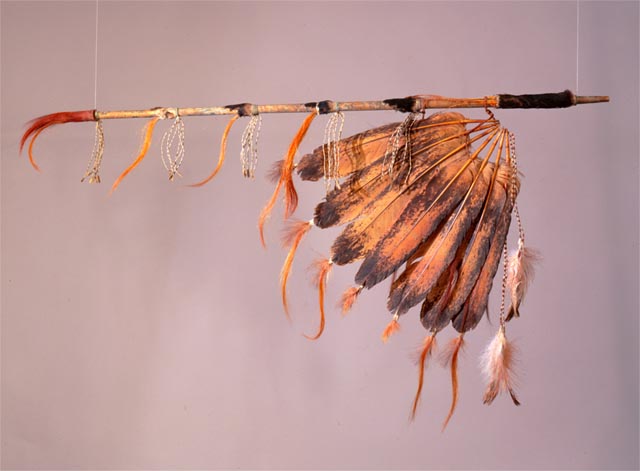
According to oral traditions, and as demonstrated by pre-contact pipes held in museums and tribal and private holdings, some ceremonial pipes are adorned with feathers, fur, animal or human hair, beadwork, quills, carvings or other items having significance for the owner. Other pipes are very simple. Many are not kept by an individual, but are instead held collectively by a medicine society or similar indigenous ceremonial organization.
Indigenous peoples of the Americas who use ceremonial pipes have names for them in each culture's indigenous language. There is no single word for all ceremonial pipes across the hundreds of diverse Native cultures.
The Lakota sacred pipe is called a chanupa, also spelled chanunpa or c'anupa.
Ceremonial pipe
A ceremonial pipe is a particular type of smoking pipe, used by a number of cultures of the indigenous peoples of the Americas in their sacred ceremonies. Traditionally they are used to offer prayers in a religious ceremony, to make a ceremonial commitment, or to seal a covenant or treaty. The pipe ceremony may be a component of a larger ceremony, or held as a sacred ceremony in and of itself. Indigenous peoples of the Americas who use ceremonial pipes have names for them in each culture's Indigenous language. Not all cultures have pipe traditions, and there is no single word for all ceremonial pipes across the hundreds of diverse Native American languages.
Although often called "peace pipes" by Europeans (and, specifically, calumet de la paix, by the French), the smoking of a ceremonial pipe to seal a peace treaty is only one use of a ceremonial smoking pipe, by only some of the nations that utilize them.
Various types of ceremonial pipes have been used by different Native American, First Nations and Métis cultures. The style of pipe, materials smoked, and ceremonies are unique to the specific and distinct religions of those nations. Similarly, the pipes are called by names in that tribe's language. The specific type of pipes smoked in Catholic conversion rituals first in Illinois and then in Mi'kmaq territory were known as Calumets. Historically, ceremonial pipes have been used to mark war and peace, as well as commerce and trade, and social and political decision-making.
During his travels down the Mississippi River in 1673, Father Jacques Marquette documented the universal respect that the ceremonial pipe was shown among all Native peoples he encountered, even those at war with each other. He claimed that presenting the pipe during battle would halt the fighting. The Illinois people gave Marquette such a pipe as a gift to ensure his safe travel through the interior of the land.
In ceremonial usage, the smoke is generally believed to carry prayers to the attention of the Creator or other powerful spirits. Lakota tradition tells that White Buffalo Calf Woman brought the Chanunpa (Lakota sacred pipe) to the people, and instructed them in its symbolism and ceremonies. Many Native American cultures still practice these ceremonies.
According to oral traditions, and as demonstrated by pre-contact pipes held in museums and tribal and private holdings, some ceremonial pipes are adorned with feathers, fur, animal or human hair, beadwork, quills, carvings or other items having significance for the owner. Other pipes are very simple. Many are not kept by an individual, but are instead held collectively by a medicine society or similar indigenous ceremonial organization.
Indigenous peoples of the Americas who use ceremonial pipes have names for them in each culture's indigenous language. There is no single word for all ceremonial pipes across the hundreds of diverse Native cultures.
The Lakota sacred pipe is called a chanupa, also spelled chanunpa or c'anupa.
Recent media
Recent media