



Community hub
Recent from talks
Knowledge base stats:
Talk channels stats:
Members stats:
Canonteign
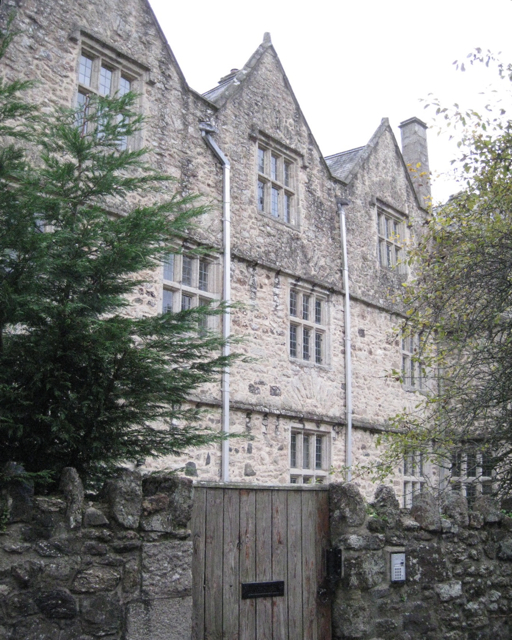
Canonteign (originally "Canons' Teign") is an historic tything in the parish of Christow, near Chudleigh, in South Devon, England and situated in the valley of the River Teign. The 'canon' in the name refers to the Augustinian canons regular, either of St Mary du Val in Normandy or of Merton Priory, which owned it for several centuries. It is best known today for the Canonteign Falls waterfall. Canonteign today contains three significant houses: the original Grade I listed 16th-century manor house ("Canonteign Manor House"), the ancient barton house (home farm) ("Canonteign Barton") situated nearby behind a granite wall, and a new mansion house built by the Pellew family in the early 19th century nearby ("Canonteign House"), to which that family moved their residence thereby abandoning the old manor house.
Its name serves to distinguish it from several other ancient manors or estates situated in the valley of the River Teign such as Teigncombe, Drewsteignton (held by the Drewe family), Teigngrace (held by the Grace family), Kingsteignton (a royal manor), Bishopsteignton (held by the Bishop of Exeter) and Teignharvey.
In the Domesday Book of 1086 'Teigne' is listed as the 97th of the 99 manors or other landholdings held by Geoffrey de Montbray (died 1093), Bishop of Coutances, and was occupied by his tenant Geoffrey de Trelly, lord of the manor of Trelly in Normandy, today in the département of Manche, France. Teign passed to the Feudal barony of Gloucester.
It later came into the possession of the de la Pomeroy family, feudal barons of Berry Pomeroy in Devon.
In about 1125 it was granted by Jocelyn de la Pomeray to the Canons of the Augustinian Abbey of St Mary du Val, Bayeux, Normandy, as is evidenced by the following charter of the Augustinian Abbey of St Mary du Val, Bayeux, published in 1899 by J. Horace Round in his Calendar of Documents Preserved in France: 918-1206
(No.1455) Charter of Goslin de Pomeria, giving, with consent of Emma his wife, and Henry, Roger, Philip, Goslin, and Ralph his sons, by the hand of Richard (1107–1133) Bishop of Bayeux, to the church of St. Mary du Val (que dicitur “Valle”) to the canons there serving God, according to the rule of St. Augustine, in cloistered community, with all that follows: 60 acres in the parish of St. Omer, etc. … and half his swine and those of his heirs, when killed (occisionem porcorum) in Normandy, and the tithe of his mares in Normandy and England and 40 shillings sterling (de Esterlins) from the rents (gablo) of Berry-Pomeroy (Bercium) every year on August 1, and the church and tithe of Berry, etc. and in England (sic) the tithe of his swine and of his mills of Berry etc. … and in England a manor called (Canon) Teign (Tigneam), and his chaplainry in England, namely, the tithe of wool, and cheese, and porkers, and lambs at Ottery (Otrevum), and all belonging to his chaplainry (capellarie) in England etc. … (Other gifts in Normandy by William son of Payn and Richard his son, a canon of the abbey, by Roger Capra, with consent of his wife Petronilla and son William, etc.) Testibus istis: ("with these witnesses:") Goslino de Pomeria cum filiis suis, Henrico, Rogerio, Philippo, Goslino; et Willelmo filio Pagani, cum filiis suis; et Hugone de Rosello, et Christino de Olleyo; Willelmo filio Ricardi; Waltero de Petra ficta; Willelmo de Rosello; Willelmo de Braio; Goslino de Braio; Roberto Buzone; Roberto de Curcell(is).
In 1267, Merton Priory swapped various lands in Normandy for St Mary du Val's lands in Devon and Cornwall, including Tregony, Buckerell and Canonteign. In 1298-9, the priory was in litigation with Henry Pomeroy over this and other lands, but they settled their disputes and Merton retained its Devon lands.
After the Dissolution of the Monasteries Canonteign was granted by the crown to John Russell, 1st Earl of Bedford (c.1485-1554/5), Lord Lieutenant of Devon, amongst the huge grants he received in Devon (most notably Tavistock Abbey) and elsewhere from King Henry VIII.
Hub AI
Canonteign AI simulator
(@Canonteign_simulator)
Canonteign
Canonteign (originally "Canons' Teign") is an historic tything in the parish of Christow, near Chudleigh, in South Devon, England and situated in the valley of the River Teign. The 'canon' in the name refers to the Augustinian canons regular, either of St Mary du Val in Normandy or of Merton Priory, which owned it for several centuries. It is best known today for the Canonteign Falls waterfall. Canonteign today contains three significant houses: the original Grade I listed 16th-century manor house ("Canonteign Manor House"), the ancient barton house (home farm) ("Canonteign Barton") situated nearby behind a granite wall, and a new mansion house built by the Pellew family in the early 19th century nearby ("Canonteign House"), to which that family moved their residence thereby abandoning the old manor house.
Its name serves to distinguish it from several other ancient manors or estates situated in the valley of the River Teign such as Teigncombe, Drewsteignton (held by the Drewe family), Teigngrace (held by the Grace family), Kingsteignton (a royal manor), Bishopsteignton (held by the Bishop of Exeter) and Teignharvey.
In the Domesday Book of 1086 'Teigne' is listed as the 97th of the 99 manors or other landholdings held by Geoffrey de Montbray (died 1093), Bishop of Coutances, and was occupied by his tenant Geoffrey de Trelly, lord of the manor of Trelly in Normandy, today in the département of Manche, France. Teign passed to the Feudal barony of Gloucester.
It later came into the possession of the de la Pomeroy family, feudal barons of Berry Pomeroy in Devon.
In about 1125 it was granted by Jocelyn de la Pomeray to the Canons of the Augustinian Abbey of St Mary du Val, Bayeux, Normandy, as is evidenced by the following charter of the Augustinian Abbey of St Mary du Val, Bayeux, published in 1899 by J. Horace Round in his Calendar of Documents Preserved in France: 918-1206
(No.1455) Charter of Goslin de Pomeria, giving, with consent of Emma his wife, and Henry, Roger, Philip, Goslin, and Ralph his sons, by the hand of Richard (1107–1133) Bishop of Bayeux, to the church of St. Mary du Val (que dicitur “Valle”) to the canons there serving God, according to the rule of St. Augustine, in cloistered community, with all that follows: 60 acres in the parish of St. Omer, etc. … and half his swine and those of his heirs, when killed (occisionem porcorum) in Normandy, and the tithe of his mares in Normandy and England and 40 shillings sterling (de Esterlins) from the rents (gablo) of Berry-Pomeroy (Bercium) every year on August 1, and the church and tithe of Berry, etc. and in England (sic) the tithe of his swine and of his mills of Berry etc. … and in England a manor called (Canon) Teign (Tigneam), and his chaplainry in England, namely, the tithe of wool, and cheese, and porkers, and lambs at Ottery (Otrevum), and all belonging to his chaplainry (capellarie) in England etc. … (Other gifts in Normandy by William son of Payn and Richard his son, a canon of the abbey, by Roger Capra, with consent of his wife Petronilla and son William, etc.) Testibus istis: ("with these witnesses:") Goslino de Pomeria cum filiis suis, Henrico, Rogerio, Philippo, Goslino; et Willelmo filio Pagani, cum filiis suis; et Hugone de Rosello, et Christino de Olleyo; Willelmo filio Ricardi; Waltero de Petra ficta; Willelmo de Rosello; Willelmo de Braio; Goslino de Braio; Roberto Buzone; Roberto de Curcell(is).
In 1267, Merton Priory swapped various lands in Normandy for St Mary du Val's lands in Devon and Cornwall, including Tregony, Buckerell and Canonteign. In 1298-9, the priory was in litigation with Henry Pomeroy over this and other lands, but they settled their disputes and Merton retained its Devon lands.
After the Dissolution of the Monasteries Canonteign was granted by the crown to John Russell, 1st Earl of Bedford (c.1485-1554/5), Lord Lieutenant of Devon, amongst the huge grants he received in Devon (most notably Tavistock Abbey) and elsewhere from King Henry VIII.