
Recent from talks
Cardiff Bay Barrage
Knowledge base stats:
Talk channels stats:
Members stats:
Cardiff Bay Barrage
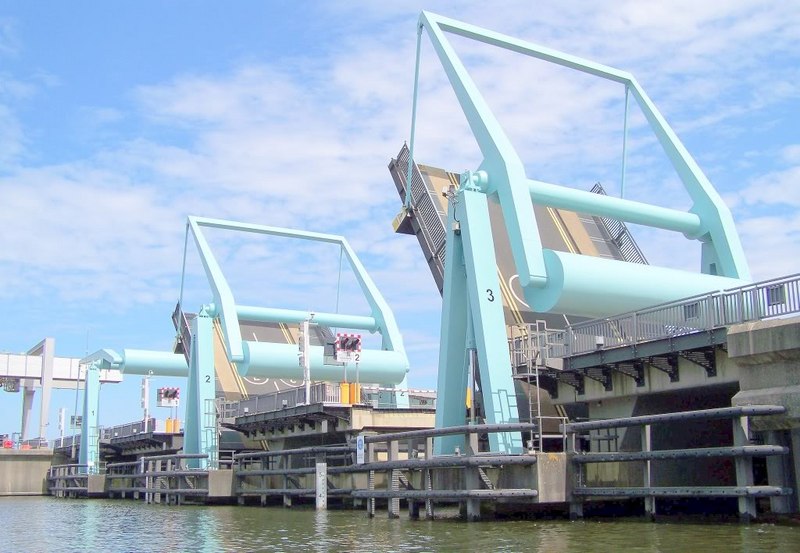
Cardiff Bay Barrage (Welsh: Morglawdd Bae Caerdydd) lies across the mouth of Cardiff Bay, Wales between Queen Alexandra Dock and Penarth Head. It was one of the largest civil engineering projects in Europe during construction in the 1990s.
The origin of the scheme dates back to a visit by Nicholas Edwards, the Secretary of State for Wales, to the largely-derelict Cardiff docklands in the early 1980s. An avid opera enthusiast, Edwards envisaged a scheme to revitalise the area incorporating new homes, shops, restaurants and, as a centrepiece, an opera house at the waterside. However the tidal nature of Cardiff Bay, exposing extensive mudflats save for two hours either side of high water, was seen as aesthetically unappealing.
Edwards credited the solution to this perceived problem to a Welsh Office civil servant, Freddie Watson. Watson proposed building a barrage stretching across the mouth of Cardiff Bay from Cardiff Docks to Penarth, which would impound freshwater from the rivers Ely and Taff to create a large freshwater lake, thus providing permanent high water. By making the area more appealing, investment was to be attracted to the docklands.
The development was also inspired by the redevelopment of Baltimore Inner Harbor in the US, where a largely derelict port area was transformed into a thriving commercial district and tourist attraction.
The barrage was consequently seen as central to the regeneration project. In 1987, prior to approval of the construction of the barrage, the Cardiff Bay Development Corporation was established to proceed with redeveloping the docklands.
In November 1999, the barrage was completed, with the sluice gates closed at high water, to retain the seawater from the Bristol Channel within the 500 acre (200 hectare) bay.
Oxygenation systems (based on those used at the Swansea Barrage) were installed which improved water quality and allowed the composition of the bay to become entirely freshwater, the only saltwater ingress being that from the three locks providing access to and from the Severn estuary for the proliferating number of boats using Cardiff Bay. This salt water sinks to the bottom of the bay which is then sucked back out to sea via a drainage basin connected to a salt water shaft.
The barrage was opened to the public in 2001.
Hub AI
Cardiff Bay Barrage AI simulator
(@Cardiff Bay Barrage_simulator)
Cardiff Bay Barrage
Cardiff Bay Barrage (Welsh: Morglawdd Bae Caerdydd) lies across the mouth of Cardiff Bay, Wales between Queen Alexandra Dock and Penarth Head. It was one of the largest civil engineering projects in Europe during construction in the 1990s.
The origin of the scheme dates back to a visit by Nicholas Edwards, the Secretary of State for Wales, to the largely-derelict Cardiff docklands in the early 1980s. An avid opera enthusiast, Edwards envisaged a scheme to revitalise the area incorporating new homes, shops, restaurants and, as a centrepiece, an opera house at the waterside. However the tidal nature of Cardiff Bay, exposing extensive mudflats save for two hours either side of high water, was seen as aesthetically unappealing.
Edwards credited the solution to this perceived problem to a Welsh Office civil servant, Freddie Watson. Watson proposed building a barrage stretching across the mouth of Cardiff Bay from Cardiff Docks to Penarth, which would impound freshwater from the rivers Ely and Taff to create a large freshwater lake, thus providing permanent high water. By making the area more appealing, investment was to be attracted to the docklands.
The development was also inspired by the redevelopment of Baltimore Inner Harbor in the US, where a largely derelict port area was transformed into a thriving commercial district and tourist attraction.
The barrage was consequently seen as central to the regeneration project. In 1987, prior to approval of the construction of the barrage, the Cardiff Bay Development Corporation was established to proceed with redeveloping the docklands.
In November 1999, the barrage was completed, with the sluice gates closed at high water, to retain the seawater from the Bristol Channel within the 500 acre (200 hectare) bay.
Oxygenation systems (based on those used at the Swansea Barrage) were installed which improved water quality and allowed the composition of the bay to become entirely freshwater, the only saltwater ingress being that from the three locks providing access to and from the Severn estuary for the proliferating number of boats using Cardiff Bay. This salt water sinks to the bottom of the bay which is then sucked back out to sea via a drainage basin connected to a salt water shaft.
The barrage was opened to the public in 2001.
Recent media