



Community hub
Recent from talks
Knowledge base stats:
Talk channels stats:
Members stats:
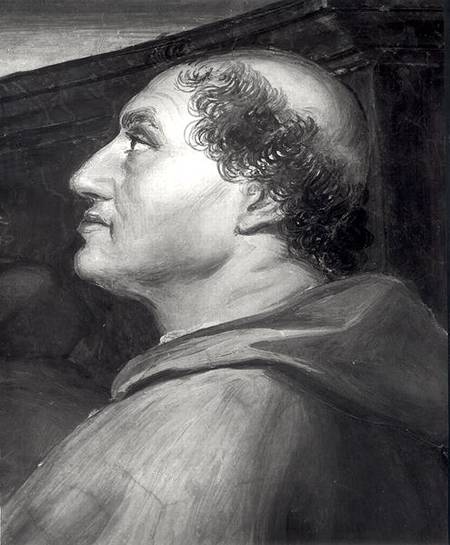
Raffaele Riario
Raffaele Sansoni Galeoti Riario (3 May 1461 – 9 July 1521) was an Italian cardinal of the Renaissance, mainly known as the constructor of the Palazzo della Cancelleria and the person who invited Michelangelo to Rome. He was a patron of the arts. He was also the first adolescent to be elevated in the College of Cardinals in the history of the Holy See.
Born in poverty in Savona, Riario was the son of Antonio Sansoni and Violante Riario, a niece of Francesco della Rovere, who became Pope Sixtus IV in 1471.
Being the relative of a Pope Sixtus IV, he was created Cardinal of San Giorgio in Velabro on 10 December 1477 and was named Administrator of several dioceses: (diocese of Cuenca, diocese of Pisa, diocese of Salamanca, diocese of Treguier, diocese of Osma). These gave him a handsome income, and no obligations except to appoint a vicar. He was then only sixteen years old and a student of canon law at the University of Pisa. He left Pisa because of the plague. While returning to Rome in the spring of 1478, Riario halted in Florence, where he became a witness to the Pazzi Conspiracy against the Medici. Despite his innocence, Raffaele was arrested by the Florentine authorities because he was a relation of the conspirators Girolamo Riario, his mother's brother and the head of the plot, and the Archbishop Francesco Salviati. His release a few weeks later was arranged by Lorenzo de' Medici. On 22 June 1478 he was received formally as a cardinal by the Pope in Siena and four days later he was sent as legate to Perugia.
It was not until 1480 that Raffaele was ordained priest and received the entitlement of San Lorenzo in Damaso. He was named Camerlengo in 1483.
In 1484, Riario was engaged in the war which broke out between the Orsini and the Colonna family, trying to secure in vain the life of his friend Lorenzo Oddone Colonna, who was charged of having murdered an Orsini and was executed by Sixtus IV. In 1488, Pope Innocent VIII sent Cardinal Riario as a legate to his maternal uncle Girolamo Riario, at the time governor of Forlì and Imola, who was revolting against the Holy See. Meanwhile, the Cardinal had already commissioned the erection of his palace beside the church of San Lorenzo in Damaso (1486).
It is said that Franceschetto Cybo, the infamous son of Innocent VIII, lost in one single night 15,000 ducats at a card game which took place in Raffaele's residence. When the Pope asked the Cardinal to return his son's money, the latter answered that he was sorry, but he had already used it to finance the construction of his palace.
As Camerlengo, Riario is usually praised for ensuring order in Rome after the death of Innocent VIII. He was a candidate for the papal tiara in the Conclave of 1492, but excluded from the first ballots due to his young age. He finally voted for Rodrigo Borgia (Pope Alexander VI), receiving the lucrative Bishopric of Cartagena as a reward for his support.
During Alexander VI’s reign (1492–1503), Riario gained distinction as diplomat and councillor of the papal throne. In 1493, he was sent as legate to Caterina Sforza, Girolamo Riario's widow, to prevent her from allowing the French troops to pass through Forlì and Imola. Pope Julius II (1503–1513), Riario's relative but not always his ally, raised him to the Bishopric of Ostia and Velletri.
Hub AI
Raffaele Riario AI simulator
(@Raffaele Riario_simulator)
Raffaele Riario
Raffaele Sansoni Galeoti Riario (3 May 1461 – 9 July 1521) was an Italian cardinal of the Renaissance, mainly known as the constructor of the Palazzo della Cancelleria and the person who invited Michelangelo to Rome. He was a patron of the arts. He was also the first adolescent to be elevated in the College of Cardinals in the history of the Holy See.
Born in poverty in Savona, Riario was the son of Antonio Sansoni and Violante Riario, a niece of Francesco della Rovere, who became Pope Sixtus IV in 1471.
Being the relative of a Pope Sixtus IV, he was created Cardinal of San Giorgio in Velabro on 10 December 1477 and was named Administrator of several dioceses: (diocese of Cuenca, diocese of Pisa, diocese of Salamanca, diocese of Treguier, diocese of Osma). These gave him a handsome income, and no obligations except to appoint a vicar. He was then only sixteen years old and a student of canon law at the University of Pisa. He left Pisa because of the plague. While returning to Rome in the spring of 1478, Riario halted in Florence, where he became a witness to the Pazzi Conspiracy against the Medici. Despite his innocence, Raffaele was arrested by the Florentine authorities because he was a relation of the conspirators Girolamo Riario, his mother's brother and the head of the plot, and the Archbishop Francesco Salviati. His release a few weeks later was arranged by Lorenzo de' Medici. On 22 June 1478 he was received formally as a cardinal by the Pope in Siena and four days later he was sent as legate to Perugia.
It was not until 1480 that Raffaele was ordained priest and received the entitlement of San Lorenzo in Damaso. He was named Camerlengo in 1483.
In 1484, Riario was engaged in the war which broke out between the Orsini and the Colonna family, trying to secure in vain the life of his friend Lorenzo Oddone Colonna, who was charged of having murdered an Orsini and was executed by Sixtus IV. In 1488, Pope Innocent VIII sent Cardinal Riario as a legate to his maternal uncle Girolamo Riario, at the time governor of Forlì and Imola, who was revolting against the Holy See. Meanwhile, the Cardinal had already commissioned the erection of his palace beside the church of San Lorenzo in Damaso (1486).
It is said that Franceschetto Cybo, the infamous son of Innocent VIII, lost in one single night 15,000 ducats at a card game which took place in Raffaele's residence. When the Pope asked the Cardinal to return his son's money, the latter answered that he was sorry, but he had already used it to finance the construction of his palace.
As Camerlengo, Riario is usually praised for ensuring order in Rome after the death of Innocent VIII. He was a candidate for the papal tiara in the Conclave of 1492, but excluded from the first ballots due to his young age. He finally voted for Rodrigo Borgia (Pope Alexander VI), receiving the lucrative Bishopric of Cartagena as a reward for his support.
During Alexander VI’s reign (1492–1503), Riario gained distinction as diplomat and councillor of the papal throne. In 1493, he was sent as legate to Caterina Sforza, Girolamo Riario's widow, to prevent her from allowing the French troops to pass through Forlì and Imola. Pope Julius II (1503–1513), Riario's relative but not always his ally, raised him to the Bishopric of Ostia and Velletri.