



Community hub
Recent from talks
Knowledge base stats:
Talk channels stats:
Members stats:
Career counseling
Career counseling is a type of advice-giving and support provided by career counselors to their clients, to help the clients manage their journey through life, learning and work changes (career). This includes career exploration, making career choices, managing career changes, lifelong career development and dealing with other career-related issues. There is no agreed definition of the role of a career or employment counsellor worldwide, mainly due to conceptual, cultural and linguistic differences. However, the terminology of 'career counseling' typically denotes a professional intervention which is conducted either one-on-one or in a small group. Career counseling is related to other types of counseling (e.g. marriage or clinical counseling). What unites all types of professional counseling is the role of practitioners, who combine giving advice on their topic of expertise with counseling techniques that support clients in making complex decisions and facing difficult situations.
There is considerable variation in the terminology that is used worldwide to describe this activity. In addition to the English-language spelling difference between US (counseling) and UK (counselling), there are also a range of alternate terms which are in common use. These include: career guidance; career coaching; guidance counseling; personal guidance; career consulting and a range of related terminologies. This frequently leads writers and commentators to combine multiple terms e.g. career guidance and counselling to be inclusive. However, care should be exercised when moving from one terminology to another as each term has its own history and cultural significance. An alternate term is 'career guidance'. This term is sometimes used as a synonym for career counseling, but can also be used to describe a broader range of interventions beyond one-to-one counseling.
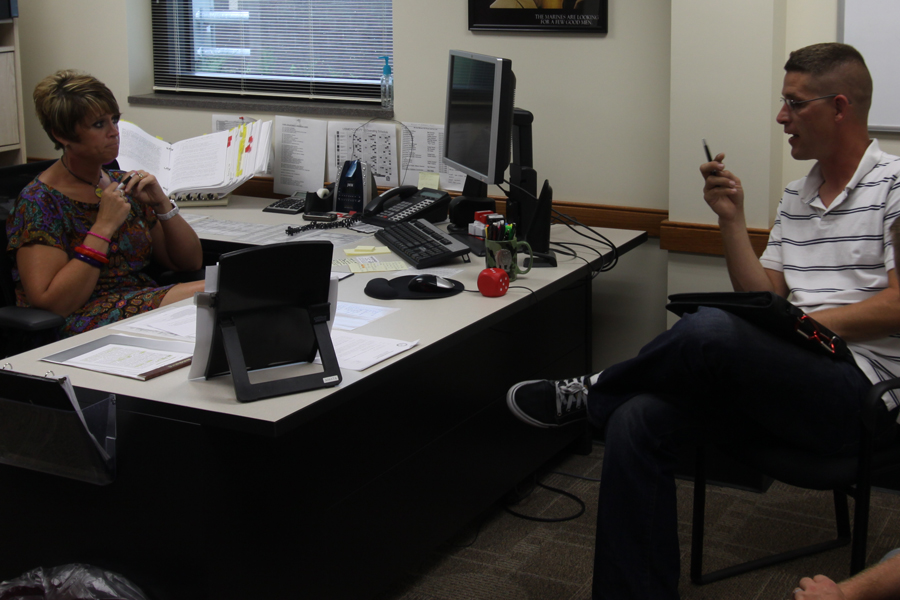
In US government offices (One Stop Career Centers), employment counselors generally focus on the acquisition of work, actually getting a job, which is the desired result of the career development, training and education process. They may also work for community based organizations, or for profit and non profit businesses that are engaged in helping people find jobs. Salary and Working Conditions are quite diverse. Employment Counseling has its historical roots with the US Department of Labor. Career development professionals may work in a variety of settings but usually work in offices where they can conduct private interviews with clients and in classrooms or boardrooms where they conduct group sessions. Depending on the organization, their hours of work may include some evening and weekend work.
Empirical research attests the effectiveness of career counseling. Professional career counselors can support people with career-related challenges. Through their expertise in career development and labor markets, they can put a person's qualifications, experience, strengths and weakness in a broad perspective while also considering their desired salary, personal hobbies and interests, location, job market and educational possibilities. Through their counseling and teaching abilities, career counselors can additionally support people in gaining a better understanding of what really matters for them personally, how they can plan their careers autonomously, or help them in making tough decisions and getting through times of crisis. Finally, career counselors are often capable of supporting their clients in finding suitable placements/ jobs, in working out conflicts with their employers, or finding the support of other helpful services. It is due to these various benefits of career counseling that policy makers in many countries publicly fund guidance services. For example, the European Union understands career guidance and counseling as an instrument to effectively combat social exclusion and increase citizens' employability.
Career counselors assist job seekers in developing structured job search plans designed to meet the demands of modern labor markets. Research indicates that clients who follow such plans submit more applications, receive more job offers, and achieve higher employment rates than those without them. Tailored job search advice has also been shown to increase interview rates, particularly for individuals experiencing long-term unemployment. Furthermore, participation in structured job search programs makes job seekers more than 2.5 times as likely to secure employment compared to those who do not participate. Career counselors can therefore apply these evidence-based approaches to improve job seekers’ motivation, broaden access to employment, and address disparities faced by diverse populations.
One of the major challenges associated with career counseling is encouraging participants to engage in the process. For example, in the UK 70% of people under 14 say they have had no careers advice while 45% of people over 14 have had no or very poor/limited advice.
In a related issue some client groups tend to reject the interventions made by professional career counselors preferring to rely on the advice of peers or superiors within their own profession. Jackson et al. found that 44% of doctors in training felt that senior members of their own profession were best placed to give careers advice. Furthermore, it is recognised that the giving of career advice is something that is widely spread through a range of formal and informal roles. In addition to career counselors it is also common for psychologists, teachers, managers, trainers and human resources (HR) specialists to give formal support in career choices.
Similarly it is also common for people to seek informal support from friends and family around their career choices and to bypass career professionals altogether. In the 2010s, increasingly people rely on career web portals to seek advice on resume writing and handling interviews and to do research on various professions and companies. It has also possible to get a vocational assessment done online.
Hub AI
Career counseling AI simulator
(@Career counseling_simulator)
Career counseling
Career counseling is a type of advice-giving and support provided by career counselors to their clients, to help the clients manage their journey through life, learning and work changes (career). This includes career exploration, making career choices, managing career changes, lifelong career development and dealing with other career-related issues. There is no agreed definition of the role of a career or employment counsellor worldwide, mainly due to conceptual, cultural and linguistic differences. However, the terminology of 'career counseling' typically denotes a professional intervention which is conducted either one-on-one or in a small group. Career counseling is related to other types of counseling (e.g. marriage or clinical counseling). What unites all types of professional counseling is the role of practitioners, who combine giving advice on their topic of expertise with counseling techniques that support clients in making complex decisions and facing difficult situations.
There is considerable variation in the terminology that is used worldwide to describe this activity. In addition to the English-language spelling difference between US (counseling) and UK (counselling), there are also a range of alternate terms which are in common use. These include: career guidance; career coaching; guidance counseling; personal guidance; career consulting and a range of related terminologies. This frequently leads writers and commentators to combine multiple terms e.g. career guidance and counselling to be inclusive. However, care should be exercised when moving from one terminology to another as each term has its own history and cultural significance. An alternate term is 'career guidance'. This term is sometimes used as a synonym for career counseling, but can also be used to describe a broader range of interventions beyond one-to-one counseling.
In US government offices (One Stop Career Centers), employment counselors generally focus on the acquisition of work, actually getting a job, which is the desired result of the career development, training and education process. They may also work for community based organizations, or for profit and non profit businesses that are engaged in helping people find jobs. Salary and Working Conditions are quite diverse. Employment Counseling has its historical roots with the US Department of Labor. Career development professionals may work in a variety of settings but usually work in offices where they can conduct private interviews with clients and in classrooms or boardrooms where they conduct group sessions. Depending on the organization, their hours of work may include some evening and weekend work.
Empirical research attests the effectiveness of career counseling. Professional career counselors can support people with career-related challenges. Through their expertise in career development and labor markets, they can put a person's qualifications, experience, strengths and weakness in a broad perspective while also considering their desired salary, personal hobbies and interests, location, job market and educational possibilities. Through their counseling and teaching abilities, career counselors can additionally support people in gaining a better understanding of what really matters for them personally, how they can plan their careers autonomously, or help them in making tough decisions and getting through times of crisis. Finally, career counselors are often capable of supporting their clients in finding suitable placements/ jobs, in working out conflicts with their employers, or finding the support of other helpful services. It is due to these various benefits of career counseling that policy makers in many countries publicly fund guidance services. For example, the European Union understands career guidance and counseling as an instrument to effectively combat social exclusion and increase citizens' employability.
Career counselors assist job seekers in developing structured job search plans designed to meet the demands of modern labor markets. Research indicates that clients who follow such plans submit more applications, receive more job offers, and achieve higher employment rates than those without them. Tailored job search advice has also been shown to increase interview rates, particularly for individuals experiencing long-term unemployment. Furthermore, participation in structured job search programs makes job seekers more than 2.5 times as likely to secure employment compared to those who do not participate. Career counselors can therefore apply these evidence-based approaches to improve job seekers’ motivation, broaden access to employment, and address disparities faced by diverse populations.
One of the major challenges associated with career counseling is encouraging participants to engage in the process. For example, in the UK 70% of people under 14 say they have had no careers advice while 45% of people over 14 have had no or very poor/limited advice.
In a related issue some client groups tend to reject the interventions made by professional career counselors preferring to rely on the advice of peers or superiors within their own profession. Jackson et al. found that 44% of doctors in training felt that senior members of their own profession were best placed to give careers advice. Furthermore, it is recognised that the giving of career advice is something that is widely spread through a range of formal and informal roles. In addition to career counselors it is also common for psychologists, teachers, managers, trainers and human resources (HR) specialists to give formal support in career choices.
Similarly it is also common for people to seek informal support from friends and family around their career choices and to bypass career professionals altogether. In the 2010s, increasingly people rely on career web portals to seek advice on resume writing and handling interviews and to do research on various professions and companies. It has also possible to get a vocational assessment done online.