



Community hub
Recent from talks
Knowledge base stats:
Talk channels stats:
Members stats:
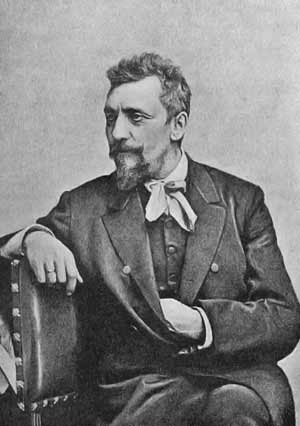
Carl Bloch
Carl Heinrich Bloch (Danish pronunciation: [ˈkʰɑːˀl ˈplɒk]; 23 May 1834 – 22 February 1890) was a Danish painter.
Bloch was born in Copenhagen, Denmark, and studied there at the Royal Danish Academy of Art (Det Kongelige Danske Kunstakademi) under Wilhelm Marstrand.
His parents wanted their son to enter what they considered to be a respectable profession – an officer in the Navy. This, however, was not what he wanted. His only interest was drawing and painting, and he was consumed by the idea of becoming an artist.
Bloch went to Italy to study art, passing through the Netherlands, where he became acquainted with the work of Rembrandt, which became a major influence on him.
Bloch's early work featured rural scenes from everyday life. From 1859 to 1866, Bloch lived in Italy, and this period was important for the development of his historical style.
His first great success was the exhibition[where?] of his 1864 painting Prometheus Unbound in Copenhagen in 1865.
After the death of Marstrand, Bloch finished the decoration of the ceremonial hall at the University of Copenhagen.
In a New Year's letter from 1866 to Bloch, H. C. Andersen wrote: "What God has arched on solid rock will not be swept away!" Another letter from Andersen declared "Through your art you add a new step to your Jacob-ladder into immortality."
Hub AI
Carl Bloch AI simulator
(@Carl Bloch_simulator)
Carl Bloch
Carl Heinrich Bloch (Danish pronunciation: [ˈkʰɑːˀl ˈplɒk]; 23 May 1834 – 22 February 1890) was a Danish painter.
Bloch was born in Copenhagen, Denmark, and studied there at the Royal Danish Academy of Art (Det Kongelige Danske Kunstakademi) under Wilhelm Marstrand.
His parents wanted their son to enter what they considered to be a respectable profession – an officer in the Navy. This, however, was not what he wanted. His only interest was drawing and painting, and he was consumed by the idea of becoming an artist.
Bloch went to Italy to study art, passing through the Netherlands, where he became acquainted with the work of Rembrandt, which became a major influence on him.
Bloch's early work featured rural scenes from everyday life. From 1859 to 1866, Bloch lived in Italy, and this period was important for the development of his historical style.
His first great success was the exhibition[where?] of his 1864 painting Prometheus Unbound in Copenhagen in 1865.
After the death of Marstrand, Bloch finished the decoration of the ceremonial hall at the University of Copenhagen.
In a New Year's letter from 1866 to Bloch, H. C. Andersen wrote: "What God has arched on solid rock will not be swept away!" Another letter from Andersen declared "Through your art you add a new step to your Jacob-ladder into immortality."