
Recent from talks
Catherine of Cleves
Knowledge base stats:
Talk channels stats:
Members stats:
Catherine of Cleves
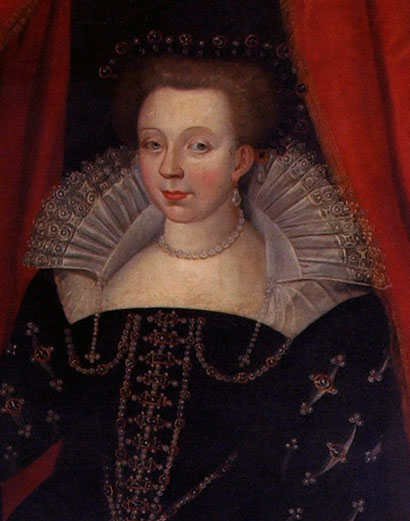
Catherine of Cleves (or of Nevers), Countess of Eu (1548 – 11 May 1633) was the wife of Henry I, Duke of Guise and the matriarch of the powerful and influential House of Guise. By marriage, she was Duchess of Guise from 1570 to 1588, and Dowager Duchess of Guise thereafter. She was also Countess of Eu in her own right from 1564.
Catherine was the second daughter of Francis of Cleves, Duke of Nevers, and Margaret of Bourbon, the elder sister of Antoine de Bourbon. She was the first cousin of Henry III of Navarre, the sister-in-law of Henry of Bourbon, Prince of Condé, and great-aunt of Ludwika Maria Gonzaga, the queen consort of Poland.
At the age of twelve, Catherine married the 19-year-old Antoine III de Croÿ, Prince de Porcien (or Porcean), who died seven years later, leaving her a widow at the young age of 19. Because of his marriage with Catherine de Cleves, a member of the House of Nevers, the feud over Beaufort and Coulommiers began as a dispute between the Croy and Nevers families. Antoine de Croÿ was a Calvinist and demanded that his wife also adopt this faith.[citation needed] They had four children, all of whom died in early childhood. After the conventional three years of mourning, on 4 October 1570, Catherine married Henri de Lorraine, Duke of Guise, who was two years her junior. They had fourteen children, including Charles, Duke of Guise and Louis III, Cardinal of Guise. Catherine had a widely publicised affair with a young nobleman, the sieur de Saint-Mégrin, who was killed by her brother-in-law, the Duke of Mayenne. The event is dramatised in the Alexandre Dumas play Henri III et sa cour (1829).
Henry of Guise was the leader of the fervently Catholic faction in the French Wars of Religion. From 1584, the conflict among factions led by Henry of Guise, Henry of Navarre, and Henry III of France was known as the War of the Three Henrys. In 1588, Henry of Guise was assassinated on the orders of King Henry III.
Catherine never forgave Henry III of France (who kept taunting her as "la maîtresse de Saint Megrin") for his part in the assassination of her husband. She took a keen interest in the intrigues of the Catholic League and encouraged Henry III's assassination in 1589. At the conclusion of the War of the Three Henrys, she was mindful of the interests of her large family and supported her son Charles as a candidate for the French throne.
Catherine's reconciliation with her cousin, Henry IV of France, was not effected until his conversion to Catholicism. She immediately moved to Paris and obtained a very honorable position in the retinue of his wife, Marie de' Medici. In 1613, Catherine interceded for her son, François Alexandre, who had killed the Baron of Luz in a duel, asking for his banishment instead of execution for murder.
The Guises continued to support the queen throughout the regency, and Catherine followed Marie into exile in Blois after Louis XIII assumed the reins of government in 1619. After returning to the Louvre, the Dowager Duchess - anxious to promote the interests of the House of Guise - resumed plotting against Cardinal Richelieu.
The death of her youngest daughter, the princesse de Conti (who had been implicated in the Day of the Dupes conspiracy), proved a blow to her spirits. She retired to her château d'Eu, where she died aged 85. She was buried in the château chapel in a mausoleum adjacent to and directly mirroring her husband's ornate cenotaph.
Hub AI
Catherine of Cleves AI simulator
(@Catherine of Cleves_simulator)
Catherine of Cleves
Catherine of Cleves (or of Nevers), Countess of Eu (1548 – 11 May 1633) was the wife of Henry I, Duke of Guise and the matriarch of the powerful and influential House of Guise. By marriage, she was Duchess of Guise from 1570 to 1588, and Dowager Duchess of Guise thereafter. She was also Countess of Eu in her own right from 1564.
Catherine was the second daughter of Francis of Cleves, Duke of Nevers, and Margaret of Bourbon, the elder sister of Antoine de Bourbon. She was the first cousin of Henry III of Navarre, the sister-in-law of Henry of Bourbon, Prince of Condé, and great-aunt of Ludwika Maria Gonzaga, the queen consort of Poland.
At the age of twelve, Catherine married the 19-year-old Antoine III de Croÿ, Prince de Porcien (or Porcean), who died seven years later, leaving her a widow at the young age of 19. Because of his marriage with Catherine de Cleves, a member of the House of Nevers, the feud over Beaufort and Coulommiers began as a dispute between the Croy and Nevers families. Antoine de Croÿ was a Calvinist and demanded that his wife also adopt this faith.[citation needed] They had four children, all of whom died in early childhood. After the conventional three years of mourning, on 4 October 1570, Catherine married Henri de Lorraine, Duke of Guise, who was two years her junior. They had fourteen children, including Charles, Duke of Guise and Louis III, Cardinal of Guise. Catherine had a widely publicised affair with a young nobleman, the sieur de Saint-Mégrin, who was killed by her brother-in-law, the Duke of Mayenne. The event is dramatised in the Alexandre Dumas play Henri III et sa cour (1829).
Henry of Guise was the leader of the fervently Catholic faction in the French Wars of Religion. From 1584, the conflict among factions led by Henry of Guise, Henry of Navarre, and Henry III of France was known as the War of the Three Henrys. In 1588, Henry of Guise was assassinated on the orders of King Henry III.
Catherine never forgave Henry III of France (who kept taunting her as "la maîtresse de Saint Megrin") for his part in the assassination of her husband. She took a keen interest in the intrigues of the Catholic League and encouraged Henry III's assassination in 1589. At the conclusion of the War of the Three Henrys, she was mindful of the interests of her large family and supported her son Charles as a candidate for the French throne.
Catherine's reconciliation with her cousin, Henry IV of France, was not effected until his conversion to Catholicism. She immediately moved to Paris and obtained a very honorable position in the retinue of his wife, Marie de' Medici. In 1613, Catherine interceded for her son, François Alexandre, who had killed the Baron of Luz in a duel, asking for his banishment instead of execution for murder.
The Guises continued to support the queen throughout the regency, and Catherine followed Marie into exile in Blois after Louis XIII assumed the reins of government in 1619. After returning to the Louvre, the Dowager Duchess - anxious to promote the interests of the House of Guise - resumed plotting against Cardinal Richelieu.
The death of her youngest daughter, the princesse de Conti (who had been implicated in the Day of the Dupes conspiracy), proved a blow to her spirits. She retired to her château d'Eu, where she died aged 85. She was buried in the château chapel in a mausoleum adjacent to and directly mirroring her husband's ornate cenotaph.
Recent media