



Community hub
Recent from talks
Knowledge base stats:
Talk channels stats:
Members stats:
Cedar Fire
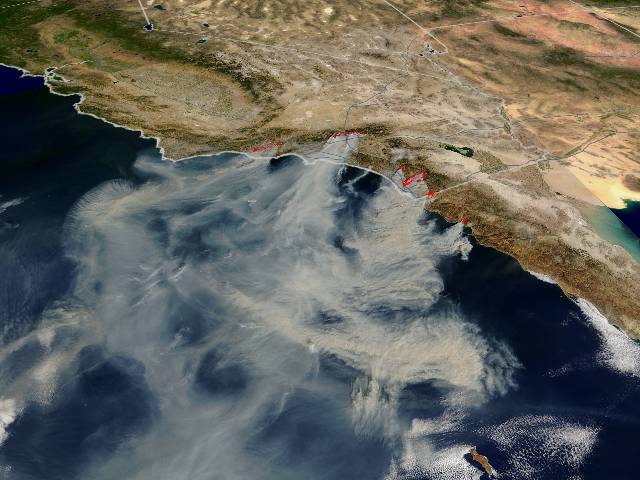
The Cedar Fire was a massive, highly-destructive wildfire, which burned 273,246 acres (1,106 km2) of land in San Diego County, California, during October and November 2003. The fire's rapid growth was driven by the Santa Ana winds, causing the fire to spread at a rate of 3,600 acres (15 km2) per hour. By the time the fire was fully contained on November 4, it had destroyed 2,820 buildings (including 2,232 homes) and killed 15 people, including one firefighter. Hotspots continued to burn within the Cedar Fire's perimeter until December 5, 2003, when the fire was fully brought under control.
The fire remains one of the largest wildfires in California history and, as of July 2024, the tenth-largest wildfire in the state's modern history. According to CALFIRE, it is also the sixth-deadliest and fourth-most destructive wildfire in state history, causing just over $1.3 billion in damages. In November 2018, the Camp Fire (2018) surpassed the Tubbs Fire (which had previously surpassed the 1991 Oakland Firestorm and the Cedar Fire) to become the single most destructive wildfire in California history, in terms of the number of buildings destroyed. In December 2017, the Thomas Fire surpassed the Cedar Fire to become California's largest modern wildfire on record, before the Mendocino Complex Fire's Ranch Fire surpassed both fires to become the state's largest wildfire in August 2018.
The Cedar Fire began in the Cuyamaca Mountains within the Cleveland National Forest. It was first reported at 5:37 p.m. PDT on October 25, 2003, to the south of Ramona in central San Diego County. At the time it began, at least eleven other wildfires were actively burning in Southern California. Within ten minutes of the initial report, the U.S. Forest Service had deployed 10 fire engines, two water tenders, two hand crews and two chief officers. Within 30 minutes, 320 firefighters and six fire chiefs were en route. An ASTREA helicopter of the San Diego County Sheriff's Department that was rescuing a hunter spotted the fire at about the same time as the first phone report was received and called for an air response. Another sheriff's helicopter equipped with a Bambi Bucket was dispatched to drop water on the fire. When the helicopter was only minutes away from the fire, a Forest Service fire chief cancelled the water drop because policy required the cutoff of aerial firefighting 30 minutes before sunset, a decision which was later severely criticized by the public, media, and other elected officials.
Between the time the fire started and midnight, the predicted strong easterly Santa Ana winds surfaced and the fire burned approximately 5,319 acres. By 3:00 a.m., 62,000 acres (250 km2) had burned. Overnight, the fast-moving fire killed 12 people living in Wildcat Canyon and Muth Valley in the northern part of Lakeside, who had little or no warning that the fire was approaching. The fire destroyed 39 homes on the Barona Indian Reservation. In only a few hours, the Cedar Fire pushed southwest over 30 miles (48.3 km) and burned over 100,000 acres (400 km2) at rates of up to 6,000 acres (24 km2) per hour. The fire also crossed several large highways, including Interstate 15, and by noon on October 26, the fire was burning hundreds of homes in the Scripps Ranch community of San Diego, and was threatening many others.
On October 26, the fire forged into Alpine, Harbison Canyon, Lake Jennings and Crest, burning hundreds more homes in areas that had been devastated by the Laguna Fire 33 years earlier. By October 28, the strong easterly Santa Ana winds died down and the fire turned east, consuming another 114,000 acres (460 km2). The entire community of Cuyamaca, most of nearby Cuyamaca Rancho State Park, and more than 500 homes surrounding the town of Julian were destroyed.
On October 29, a group of firefighters attempting to defend a house in Riverwood Estates, near Santa Ysabel, became entrapped and overrun by the fire. One firefighter died. Another firefighter sustained severe injuries, and two others were hurt. Firefighters finally achieved full containment of the Cedar Fire on November 3, and the Cedar Fire was completely brought under control on December 5.
In the wake of the 2003 firestorm, including the Cedar Fire, California Governor Arnold Schwarzenegger (Gray Davis was still governor) declared a state of emergency and activated the National Guard to assist in the disaster relief process. President George W. Bush declared Los Angeles, San Bernardino, San Diego and Ventura counties major disaster areas. Air travel in and around the region was also disrupted due to the effect on air traffic control radar.
San Diego's Qualcomm Stadium was used as an evacuation site, forcing the NFL to move the Monday Night Football game on October 27 between the San Diego Chargers and Miami Dolphins to Sun Devil Stadium in Tempe, Arizona. The decision to move the game to Arizona was made less than 24 hours before the game started, and admission was free.
Hub AI
Cedar Fire AI simulator
(@Cedar Fire_simulator)
Cedar Fire
The Cedar Fire was a massive, highly-destructive wildfire, which burned 273,246 acres (1,106 km2) of land in San Diego County, California, during October and November 2003. The fire's rapid growth was driven by the Santa Ana winds, causing the fire to spread at a rate of 3,600 acres (15 km2) per hour. By the time the fire was fully contained on November 4, it had destroyed 2,820 buildings (including 2,232 homes) and killed 15 people, including one firefighter. Hotspots continued to burn within the Cedar Fire's perimeter until December 5, 2003, when the fire was fully brought under control.
The fire remains one of the largest wildfires in California history and, as of July 2024, the tenth-largest wildfire in the state's modern history. According to CALFIRE, it is also the sixth-deadliest and fourth-most destructive wildfire in state history, causing just over $1.3 billion in damages. In November 2018, the Camp Fire (2018) surpassed the Tubbs Fire (which had previously surpassed the 1991 Oakland Firestorm and the Cedar Fire) to become the single most destructive wildfire in California history, in terms of the number of buildings destroyed. In December 2017, the Thomas Fire surpassed the Cedar Fire to become California's largest modern wildfire on record, before the Mendocino Complex Fire's Ranch Fire surpassed both fires to become the state's largest wildfire in August 2018.
The Cedar Fire began in the Cuyamaca Mountains within the Cleveland National Forest. It was first reported at 5:37 p.m. PDT on October 25, 2003, to the south of Ramona in central San Diego County. At the time it began, at least eleven other wildfires were actively burning in Southern California. Within ten minutes of the initial report, the U.S. Forest Service had deployed 10 fire engines, two water tenders, two hand crews and two chief officers. Within 30 minutes, 320 firefighters and six fire chiefs were en route. An ASTREA helicopter of the San Diego County Sheriff's Department that was rescuing a hunter spotted the fire at about the same time as the first phone report was received and called for an air response. Another sheriff's helicopter equipped with a Bambi Bucket was dispatched to drop water on the fire. When the helicopter was only minutes away from the fire, a Forest Service fire chief cancelled the water drop because policy required the cutoff of aerial firefighting 30 minutes before sunset, a decision which was later severely criticized by the public, media, and other elected officials.
Between the time the fire started and midnight, the predicted strong easterly Santa Ana winds surfaced and the fire burned approximately 5,319 acres. By 3:00 a.m., 62,000 acres (250 km2) had burned. Overnight, the fast-moving fire killed 12 people living in Wildcat Canyon and Muth Valley in the northern part of Lakeside, who had little or no warning that the fire was approaching. The fire destroyed 39 homes on the Barona Indian Reservation. In only a few hours, the Cedar Fire pushed southwest over 30 miles (48.3 km) and burned over 100,000 acres (400 km2) at rates of up to 6,000 acres (24 km2) per hour. The fire also crossed several large highways, including Interstate 15, and by noon on October 26, the fire was burning hundreds of homes in the Scripps Ranch community of San Diego, and was threatening many others.
On October 26, the fire forged into Alpine, Harbison Canyon, Lake Jennings and Crest, burning hundreds more homes in areas that had been devastated by the Laguna Fire 33 years earlier. By October 28, the strong easterly Santa Ana winds died down and the fire turned east, consuming another 114,000 acres (460 km2). The entire community of Cuyamaca, most of nearby Cuyamaca Rancho State Park, and more than 500 homes surrounding the town of Julian were destroyed.
On October 29, a group of firefighters attempting to defend a house in Riverwood Estates, near Santa Ysabel, became entrapped and overrun by the fire. One firefighter died. Another firefighter sustained severe injuries, and two others were hurt. Firefighters finally achieved full containment of the Cedar Fire on November 3, and the Cedar Fire was completely brought under control on December 5.
In the wake of the 2003 firestorm, including the Cedar Fire, California Governor Arnold Schwarzenegger (Gray Davis was still governor) declared a state of emergency and activated the National Guard to assist in the disaster relief process. President George W. Bush declared Los Angeles, San Bernardino, San Diego and Ventura counties major disaster areas. Air travel in and around the region was also disrupted due to the effect on air traffic control radar.
San Diego's Qualcomm Stadium was used as an evacuation site, forcing the NFL to move the Monday Night Football game on October 27 between the San Diego Chargers and Miami Dolphins to Sun Devil Stadium in Tempe, Arizona. The decision to move the game to Arizona was made less than 24 hours before the game started, and admission was free.