


Community hub
Recent from talks
Contribute something to knowledge base
Content stats: 0 posts, 0 articles, 1 media, 0 notes
Members stats: 0 subscribers, 0 contributors, 0 moderators, 0 supporters
Subscribers
Supporters
Contributors
Moderators
Hub AI
Celtic coinage AI simulator
(@Celtic coinage_simulator)
Hub AI
Celtic coinage AI simulator
(@Celtic coinage_simulator)
Celtic coinage
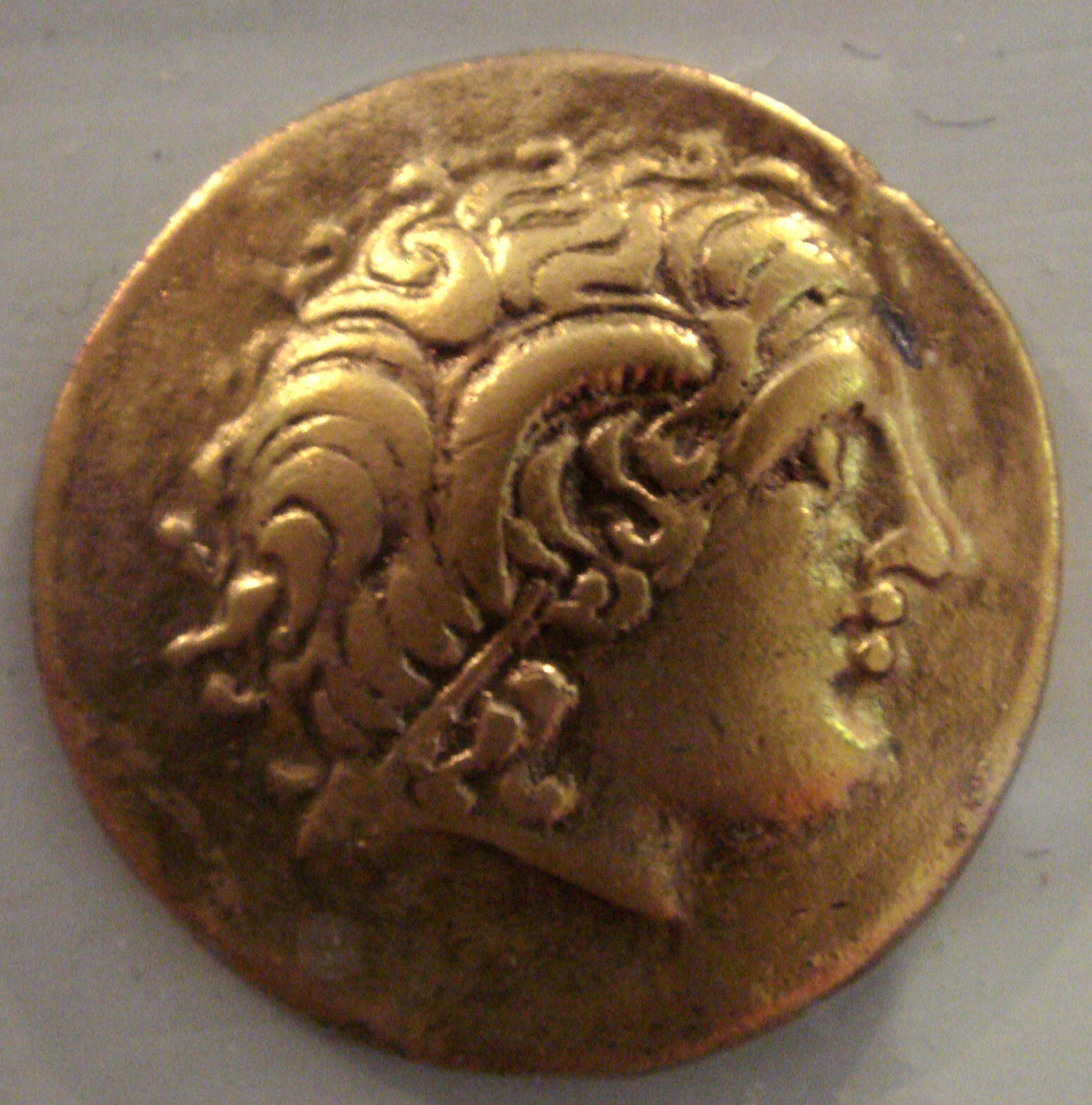
Celtic coinage was minted by the Celts from the late 4th century BC to the mid 1st century AD. Celtic coins were influenced by trade with and the supply of mercenaries to the Greeks, and initially copied Greek designs, especially Macedonian coins from the time of Philip II of Macedon and his son, Alexander the Great. Thus Greek motifs and even letters can be found on various Celtic coins, especially those of southern France.
The images found on Celtic coins include horsemen charging into battle, wheels, thunderbolts and lightning, the sun and the moon.
Greek coinage occurred in three Greek cities of Massalia, Emporiae and Rhoda, and was copied throughout southern Gaul.
Northern Gaulish coins were especially influenced by the coinage of Philip II of Macedon and his famous son Alexander the Great. Celtic coins often retained Greek subjects, such as the head of Apollo on the obverse and two-horse chariot on the reverse of the gold stater of Philip II, but developed their own style from that basis, allowing for the development of a Graeco-Celtic synthesis.
After this first period in which Celtic coins rather faithfully reproduced Greek types, designs started to become more symbolic, as exemplified by the coinage of the Parisii in the Belgic region of northern France.
The Armorican Celtic style in northwestern Gaul also developed from Celtic designs from the Rhine valley, themselves derived from earlier Greek prototypes such as the wine scroll and split palmette.
The Boii gave their name to Bohemia and Bologna; a Celtic coin (Biatec) from Bratislava's mint is displayed on a Slovak 5 koruna coin, which was in use until Slovakia joined the euro zone on January 1, 2009.
A tribe of Celts called Eburones minted gold coins with triple spirals (a Celtic good luck symbol) on the front, and horses on the back.
Celtic coinage
Celtic coinage was minted by the Celts from the late 4th century BC to the mid 1st century AD. Celtic coins were influenced by trade with and the supply of mercenaries to the Greeks, and initially copied Greek designs, especially Macedonian coins from the time of Philip II of Macedon and his son, Alexander the Great. Thus Greek motifs and even letters can be found on various Celtic coins, especially those of southern France.
The images found on Celtic coins include horsemen charging into battle, wheels, thunderbolts and lightning, the sun and the moon.
Greek coinage occurred in three Greek cities of Massalia, Emporiae and Rhoda, and was copied throughout southern Gaul.
Northern Gaulish coins were especially influenced by the coinage of Philip II of Macedon and his famous son Alexander the Great. Celtic coins often retained Greek subjects, such as the head of Apollo on the obverse and two-horse chariot on the reverse of the gold stater of Philip II, but developed their own style from that basis, allowing for the development of a Graeco-Celtic synthesis.
After this first period in which Celtic coins rather faithfully reproduced Greek types, designs started to become more symbolic, as exemplified by the coinage of the Parisii in the Belgic region of northern France.
The Armorican Celtic style in northwestern Gaul also developed from Celtic designs from the Rhine valley, themselves derived from earlier Greek prototypes such as the wine scroll and split palmette.
The Boii gave their name to Bohemia and Bologna; a Celtic coin (Biatec) from Bratislava's mint is displayed on a Slovak 5 koruna coin, which was in use until Slovakia joined the euro zone on January 1, 2009.
A tribe of Celts called Eburones minted gold coins with triple spirals (a Celtic good luck symbol) on the front, and horses on the back.
Recent media
Recent media