Hubbry Logo
Cezary MorawskiCezary MorawskiMain
Open search
Cezary Morawski
Community hub
Cezary Morawski
logo
8 pages, 0 posts
0 subscribers
Be the first to start a discussion here.
Cezary Morawski
Cezary Morawski
from Wikipedia

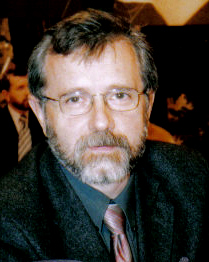
Cezary Morawski (born 5 June 1954 in Szczecin) is a Polish film, theatre and television actor, as well as a voiceover provider for film dubbing and video games.

Key Information

Biography

[edit]

He is the son of the Polish actor Tomasz Morawski. In 1977 he graduated from the Aleksander Zelwerowicz National Academy of Dramatic Art in Warsaw. He is linked with two theatres in Warsaw – the Contemporary Theatre and the Common Theatre (Powszechny in pol.). He is also a lecturer at his alma mater.

In 2000 he was awarded the Order of Polonia Restituta for his achievements in social activities and charity for the artistic community. For his role in the play My Soul (Moja Dusza in pol.) he was handed, by President Lech Walesa, the honorary title of the Ambassador of the Siberians awarded by the World Congress of Siberians. Morawski is also one of the heroes in the book "The Power of everyday life" – Siła codzienności.

He married to a Polish actress.

Filmography

[edit]

Bibliography

[edit]
Revisions and contributorsEdit on WikipediaRead on Wikipedia
from Grokipedia
''Cezary Morawski'' is a Polish actor and voice actor known for his prolific work across theatre, Polish television series, and dubbing international films and animated productions into Polish. Born on 5 June 1954 in Szczecin, Morawski graduated from the Aleksander Zelwerowicz National Academy of Dramatic Art in Warsaw in 1977 and built a career spanning stage performances in prominent Warsaw theatres, recurring roles in long-running television soaps such as ''M jak miłość'' (where he portrayed Krzysztof Zduński), and extensive voice work. His dubbing credits include providing the Polish voice for characters like John Smith in Disney's ''Pocahontas'' (1995), Chakotay in ''Star Trek: Voyager'' (1995), and Carl Hanratty in ''Catch Me If You Can'' (2003), establishing him as one of the most recognizable voices in Polish localization of foreign media during the 1990s and 2000s. In addition to acting, he has worked as a theatre pedagogue and director.

Early life and education

Birth and family background

Cezary Morawski was born on June 5, 1954, in Szczecin, Poland. Limited information is publicly available regarding his early family background or parents.

Dramatic training and early debut

Cezary Morawski received his formal dramatic training at the Aleksander Zelwerowicz State Higher School of Theatre (PWST, now Akademia Teatralna) in Warsaw. He graduated in 1977. His stage debut occurred on March 21, 1976, while still a student, in the role of Mask 3 in Antonio Buero Vallejo's play Gdy rozum śpi, directed by Andrzej Wajda at PWST. This early appearance in a production by the renowned director marked his entry into professional theater during his studies.

Theater career

Initial engagements and Warsaw theaters

Cezary Morawski's early professional theater career centered on Warsaw, beginning with a brief affiliation at Teatr Na Woli in 1976, shortly after his studies. In 1977, he joined the ensemble of Teatr Współczesny w Warszawie, where he performed as a regular actor until 1988. In 1988, Morawski moved to Teatr Powszechny im. Zygmunta Hübnera w Warszawie, maintaining an association with the theater until 2001, though with breaks during that period. He returned briefly to Teatr Na Woli in 1994 for additional performances. These long-term engagements in prominent Warsaw venues established Morawski as a fixture in the city's theatrical landscape during the late 20th century. Later stage work is discussed in subsequent sections.

Later stage work and directorial efforts

After concluding his long-term engagement with Teatr Powszechny in Warsaw in 2001, Cezary Morawski transitioned to freelance work, collaborating with various Polish theaters. He became associated with Teatr im. Wojciecha Bogusławskiego in Kaliszu, Teatr Syrena in Warsaw, Teatr Dramatyczny im. Aleksandra Węgierki in Białystok, and Teatr Ochoty in Warsaw. His most consistent affiliation in this period has been with Teatr Capitol in Warsaw, where he has specialized in farcical roles in comedic productions. Among his ongoing performances there is the role in the farce "Klub mężusiów". Alongside his acting, Morawski engaged in directing efforts both domestically and internationally. He staged productions at UBS Theater in Schwedt, Germany, and at Teatr na Pohulance in Lithuania. In 2015, he directed Sławomir Mrożek's play "Pieszo" at Polskie Studio Teatralne w Wilnie, based at Teatr na Pohulance. These directing activities reflect his expansion beyond acting in the later phase of his theater career.

Screen career

Film roles

Cezary Morawski began his screen career in feature films during the late 1970s and early 1980s, appearing in several notable Polish productions. He played Stefan, the friend of the protagonist Witold, in Krzysztof Zanussi's Constans (1980), a drama exploring moral dilemmas under communist rule. His performance in Z dalekiego kraju (1981), also known internationally as From a Far Country, saw him portray Karol Wojtyła in this biographical co-production directed by Krzysztof Zanussi and directed toward the life of Pope John Paul II. In subsequent decades, Morawski took on supporting roles in Polish cinema, often portraying figures of authority or institutional power. In Władysław Pasikowski's 80 milionów (2011), he portrayed Jerzy Aulich, the director of the National Bank of Poland's Wrocław branch, central to the film's depiction of Solidarity activists' efforts to protect funds during martial law-era tensions. He appeared as the secretary of the university party committee in 1968 in Układ zamknięty (2013), a thriller addressing corruption and political intrigue in contemporary Poland. More recently, he played the bank president in Banksterzy (2020), a crime drama involving financial misconduct and exploitation.

Television roles

Cezary Morawski has maintained a consistent presence in Polish television for over two decades, often taking on recurring or long-term roles in popular soap operas and drama series. His most prominent and widely recognized television performance came as Krzysztof Zduński in the long-running TVP series M jak miłość, where he appeared from 2000 to 2006 across episodes 1 through 391. This role as the patriarch of the Zduński family helped establish him as a familiar figure in Polish households during the early 2000s. Morawski also had extended involvement in another enduring Polish soap opera, Klan, portraying Leon Krawczyk in earlier seasons and later assuming the role of prof. Maksymilian Bogucki from 2010 to 2012, with appearances spanning 1998 to 2013 overall. In subsequent years, he took on the part of Judge Jurga in the legal drama Prawo Agaty between 2012 and 2014. More recently, Morawski joined the cast of the historical series Korona królów, playing the character Engelhard von Wildstein starting in 2019. These roles highlight his versatility across multi-season formats in Polish television.

Dubbing career

Major voice-over credits

Cezary Morawski has built a significant reputation in Polish dubbing for his versatile and prolific contributions to the localization of foreign films, television series, and animated features. His work spans diverse genres and includes voicing prominent characters in major international productions. Among his most recognized voice-over roles is Chakotay in the Polish dub of the science fiction series Star Trek: Voyager (1995–2001). He also provided the speaking voice for John Smith in Disney's animated film Pocahontas (1995). In live-action dubbing, Morawski voiced Carl Hanratty opposite Leonardo DiCaprio's lead in Catch Me If You Can (2002). Additionally, he lent his voice to Noah in the animated film Happy Feet (2006). These high-profile credits reflect Morawski's broad activity in dubbing and his ability to adapt to varied character types across animation and dramatic roles.

Pedagogical and institutional career

Teaching positions

Cezary Morawski has maintained a long and influential pedagogical career in acting and vocal-acting disciplines at several prominent Polish institutions. He served as a lecturer at the Akademia Teatralna im. Aleksandra Zelwerowicza w Warszawie from 1977 to 2015, where he also held the administrative teaching role of prodziekan Wydziału Aktorskiego from 1996 to 2002. In 2013, he began teaching at the Wydział Wokalno-Aktorski at Uniwersytet Muzyczny Fryderyka Chopina in Warsaw. In the same year, he also began teaching at the Akademia Muzyczna im. Stanisława Moniuszki w Gdańsku.

Administrative and festival roles

Cezary Morawski held several administrative and organizational positions within Polish theater institutions and festivals, complementing his long-term teaching career at the Aleksander Zelwerowicz Theatre Academy in Warsaw. He served as the Rector's Plenipotentiary for International Cooperation at the Theatre Academy, facilitating international partnerships and collaborations. Morawski also played a key role in the International Theatre Schools Festival ITSelF (Międzynarodowy Festiwal Szkół Teatralnych ITSelF), serving as its artistic director and chairman of the Artistic Council. This festival, organized by the Theatre Academy, showcased performances and achievements by students from theater schools worldwide, with Morawski leading its artistic direction during multiple editions, including the 7th edition in 2013. From 1999 to 2002, he was treasurer of the Union of Polish Stage Artists (Związek Artystów Scen Polskich, ZASP). His tenure in this financial oversight role was later marred by controversy, as a court found him and other board members guilty of exposing the union to significant financial loss.

Tenure as director of Teatr Polski we Wrocławiu

Appointment and initial changes

Cezary Morawski assumed the position of director of the Teatr Polski in Wrocław on September 1, 2016, following his selection by a competition commission in August of that year. In the early months of his tenure, he introduced private impresario spectacles to the theater's repertoire to diversify programming and staged his first own premiere as director, Molière's "Chory z urojenia" directed by Janusz Wiśniewski. He also decided against permitting the foreign tour of Krystian Lupa's production "Wycinka."

Protests, financial issues, and dismissal

Protests against Cezary Morawski's appointment as director of Teatr Polski we Wrocławiu began in August 2016, with the theatre's ensemble and numerous prominent figures from the Polish cultural scene voicing strong opposition. The ensemble described Morawski as the worst possible choice, citing his prior responsibility for a 9 million zł financial loss to ZASP and criticizing his proposed artistic program as embarrassing and unrealistic. Key critics included Krystian Lupa, who viewed Morawski as the weakest candidate in the selection process, and Olgierd Łukaszewicz, president of ZASP, who expressed personal shame over Morawski's past actions regarding union royalties. Protesters gathered over 400 people in the theatre auditorium, displayed slogans such as "Teatr Polski - nie Morawski" and "Dość arogancji urzędników," and demanded a round table discussion on the theatre's future while rejecting Morawski's directorship. The protests persisted beyond his appointment. In February 2017, the Zarząd województwa dolnośląskiego attempted to dismiss Morawski, but the resolution was invalidated by the wojewoda dolnośląski, with an administrative court later ruling that the wojewoda had acted lawfully and the initial resolution violated the law. Conflicts continued, including ongoing protests from part of the artistic team associated with the Inicjatywa Pracownicza union. On October 8-9, 2018, the Najwyższa Izba Kontroli (NIK) released findings from its audit, negatively evaluating Teatr Polski we Wrocławiu for irregularities in public spending during the period including 2015–2017. NIK identified unauthorized expenditures of ponad 60 tys. zł on rental of an apartment for the director and ponad 186 tys. zł on contracts for Morawski to perform artistic tasks as director, scenographer, and actor. The report also noted a spadek frekwencji (drop in attendance) over 2015–2017 and broader irregularities in financial management. According to the Urząd Marszałkowski, the theatre had accumulated a debt of 1.3 mln zł by October 2018. On November 26, 2018, the Zarząd województwa dolnośląskiego adopted a resolution dismissing Cezary Morawski from his position as director of Teatr Polski we Wrocławiu, effective immediately. Marszałek Cezary Przybylski stated that Morawski's mission had been exhausted and that NIK's findings, along with those from the Ministry of Culture, confirmed concerns about his management. The decision received positive opinions from the Ministerstwo Kultury i Dziedzictwa Narodowego and the unions operating in the theatre. Morawski acknowledged the decision and expressed hope that it would calm the situation in the theatre.

Personal life

Marriages and children

Cezary Morawski was first married to Joanna Morawska, with whom he has a son, Tomasz Morawski, a film producer known for his work on projects such as We Will Not Fade Away and Mr. Jones. He is currently married to actress Anna Zagórska, whom he met while working at the Aleksander Zelwerowicz National Academy of Dramatic Art in Warsaw, where their relationship developed over time despite initial professional interactions. They have one daughter together.

Awards and honors

State decorations and other recognitions

Cezary Morawski was awarded the Knight's Cross of the Order of Polonia Restituta (Krzyż Kawalerski Orderu Odrodzenia Polski) on 17 February 2000 for his merits in social and charitable activities on behalf of the artistic community. He also received the honorary title of "Ambasador Sybiraków" (Ambassador of the Sybiraks) from the Światowy Zjazd Sybiraków (World Congress of Sybiraks) in 2007 for his performance in the play Moja Dusza. The title was presented to him by former President Lech Wałęsa. No industry-specific awards, festival prizes, or professional distinctions from theatrical or film organizations are documented in reliable sources.

References

Add your contribution
Related Hubs
User Avatar
No comments yet.