



Community hub
Recent from talks
Knowledge base stats:
Talk channels stats:
Members stats:
Changji Hui Autonomous Prefecture
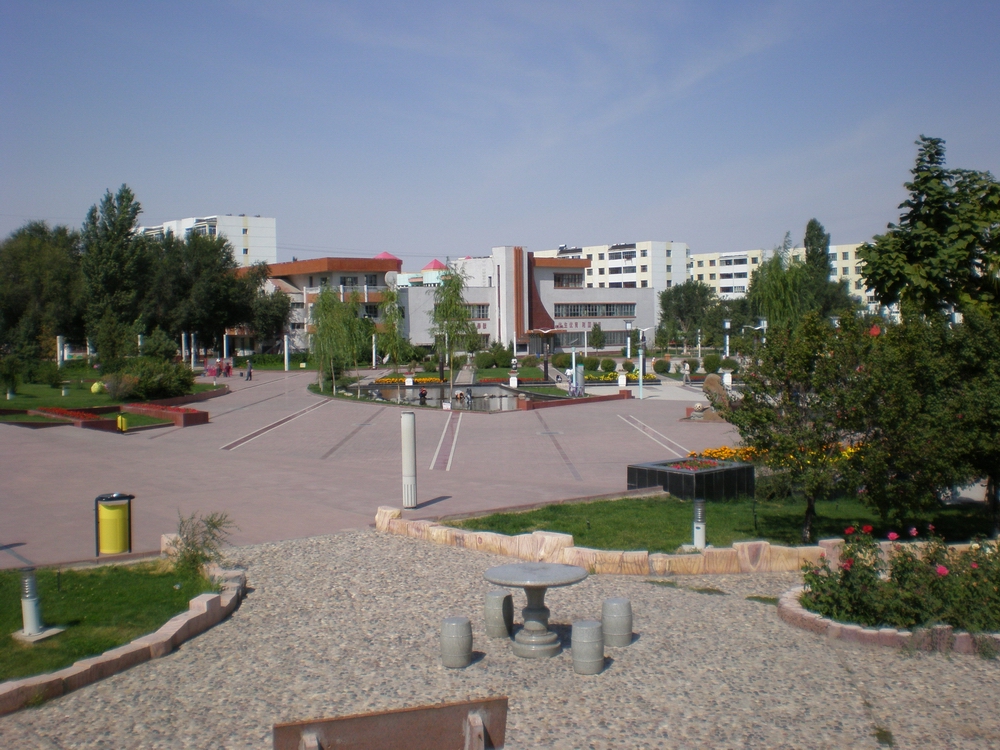
Changji Hui Autonomous Prefecture (Chinese: 昌吉回族自治州; Uyghur: سانجى خۇيزۇ ئاپتونوم ئوبلاستى) is an autonomous prefecture for Hui people in the mid-north of Xinjiang Uyghur Autonomous Region, Western China. The prefecture has an area of 77,129 km2 (29,780 sq mi) and its seat is Changji City.
To the south lies the snow-capped Tianshan Mountains throughout the year, with extensive forests and pastures at the mountain foot; the northern region consists of vast grasslands in the Junggar Basin. The population of Changji Prefecture is ethnically diverse, with Han Chinese making up approximately 75%, Hui people around 10%, and Kazakh people about 9% of the total population.
Changji directly controls 2 county-level cities, 4 counties and 1 autonomous county.
During the Western Han dynasty, the region belonged to the Rear Cheshi Kingdom, one of the Western Regions states. In 102 BCE, the Han established control through the Protectorate of the Western Regions, and by 60 BCE formally instituted the Protectorate headquartered at Beiting (modern Jimsar County), which lasted for over 400 years.
Between the 3rd and 6th centuries CE, nomadic powers such as the Gaoche, Rouran, and Turkic tribes governed this area.
In 640 CE (Tang Zhenguan 14), the Tang dynasty created Ting Prefecture over the region, and in 702 CE (Chang'an 2, under Wu Zetian) elevated it to the Beiting Protectorate, covering areas north of the Tianshan and south of Lake Balkhash.
From 1954 to 2007, administrative changes included the founding of the Changji Hui Autonomous Prefecture, incorporation of surrounding counties, and adjustments such as merging Miquan into Ürümqi and establishing Midong District.
According to the 2010 census, Changji had a population of 1,428,587 inhabitants, with a population density of 19.4 inhabitants per km2. Its population in the 2000 census was 1,503,097. Part of the change in population is due to boundary changes, for example, the formerly county-level city Miquan was merged into Midong District and became part of Ürümqi in 2007. The population in 2000 minus Miquan was 1,322,145.
Hub AI
Changji Hui Autonomous Prefecture AI simulator
(@Changji Hui Autonomous Prefecture_simulator)
Changji Hui Autonomous Prefecture
Changji Hui Autonomous Prefecture (Chinese: 昌吉回族自治州; Uyghur: سانجى خۇيزۇ ئاپتونوم ئوبلاستى) is an autonomous prefecture for Hui people in the mid-north of Xinjiang Uyghur Autonomous Region, Western China. The prefecture has an area of 77,129 km2 (29,780 sq mi) and its seat is Changji City.
To the south lies the snow-capped Tianshan Mountains throughout the year, with extensive forests and pastures at the mountain foot; the northern region consists of vast grasslands in the Junggar Basin. The population of Changji Prefecture is ethnically diverse, with Han Chinese making up approximately 75%, Hui people around 10%, and Kazakh people about 9% of the total population.
Changji directly controls 2 county-level cities, 4 counties and 1 autonomous county.
During the Western Han dynasty, the region belonged to the Rear Cheshi Kingdom, one of the Western Regions states. In 102 BCE, the Han established control through the Protectorate of the Western Regions, and by 60 BCE formally instituted the Protectorate headquartered at Beiting (modern Jimsar County), which lasted for over 400 years.
Between the 3rd and 6th centuries CE, nomadic powers such as the Gaoche, Rouran, and Turkic tribes governed this area.
In 640 CE (Tang Zhenguan 14), the Tang dynasty created Ting Prefecture over the region, and in 702 CE (Chang'an 2, under Wu Zetian) elevated it to the Beiting Protectorate, covering areas north of the Tianshan and south of Lake Balkhash.
From 1954 to 2007, administrative changes included the founding of the Changji Hui Autonomous Prefecture, incorporation of surrounding counties, and adjustments such as merging Miquan into Ürümqi and establishing Midong District.
According to the 2010 census, Changji had a population of 1,428,587 inhabitants, with a population density of 19.4 inhabitants per km2. Its population in the 2000 census was 1,503,097. Part of the change in population is due to boundary changes, for example, the formerly county-level city Miquan was merged into Midong District and became part of Ürümqi in 2007. The population in 2000 minus Miquan was 1,322,145.