



Community hub
Recent from talks
Knowledge base stats:
Talk channels stats:
Members stats:
Charles Herty
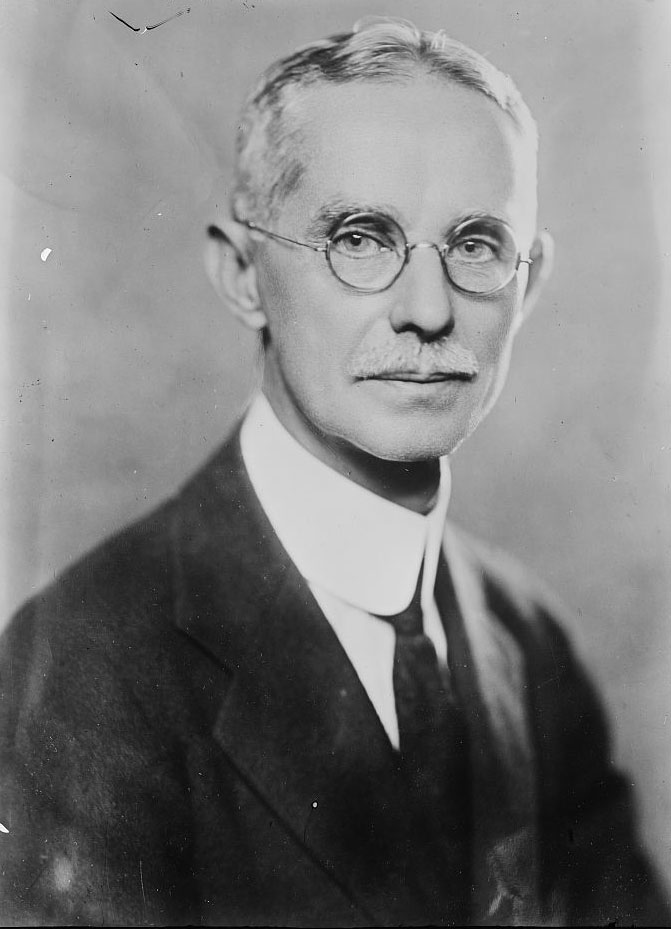
Charles Holmes Herty Sr. (December 4, 1867 – July 27, 1938) was an American academic, scientist, and entrepreneur. Serving in academia as a chemistry professor to begin his career, Herty concurrently promoted collegiate athletics including creating the first varsity football team at the University of Georgia. His academic research gravitated towards applied chemistry where he revolutionized the turpentine industry in the United States. While serving as the president of the American Chemical Society, Herty became a national advocate for the nascent American chemical industry and left academia to preside over the Synthetic Organic Chemical Manufacturers' Association (SOCMA) and the Chemical Foundation. He was also instrumental in the creation of the National Institutes of Health. Towards the end of his career, Herty's research and advocacy led to the creation of a new pulp industry in the Southern United States that utilized southern pine trees to create newsprint.
Born in Milledgeville, Georgia, in 1867, Herty attended the University of Georgia (UGA) in Athens, was a member of the Phi Kappa Literary Society, as well as a member of the Gamma chapter of the Kappa Alpha Order, and graduated with a Bachelor of Philosophy (B.P.) degree in 1886. He continued his studies at Johns Hopkins University where he earned his Ph.D. in inorganic chemistry in 1890 under the direction of Ira Remsen. Herty's dissertation topic was The Double Halides of Lead and the Alkali-Metals.
Herty married Sophie Schaller of Athens (granddaughter of Sophie Sosnowski) on December 23, 1895, and they had three children: Charles "Holmes", Jr., Frank Bernard and Sophia "Dolly" Dorothea. Holmes became a metallurgist and vice-president of Bethlehem Steel and was elected to both the United States National Academy of Sciences and the American Philosophical Society. Frank worked for the Union Gas Company in Brooklyn, New York. Dolly attended Vassar College as an undergraduate, Cornell University for her Masters of Science in botany and returned to Vassar to teach plant physiology.
Upon completing his doctoral studies in 1890, Herty returned to Georgia as an assistant chemist at the Georgia Agricultural Experiment Station, which was temporarily located in Athens at the time. In 1891, he became an instructor in the UGA Chemistry Department in Franklin College with a promotion to Adjunct Professor of Chemistry in 1894.
Herty was granted a sabbatical leave for the 1899–1900 academic year. After securing letters of introduction from American colleagues William McMurtrie, Remsen, Edgar Fahs Smith, and Francis Venable, Herty left for Europe and interacted with Walther Nernst, G. Lunge, Otto N. Witt and Alfred Werner. Herty's European trip provided the stimulus to experiment with Georgia pine trees as a source of paper after learning of the German use of tannenbäume for that same purpose.
A Witt lecture on the poor processes used by the American naval stores industry and the almost certain likelihood that those processes would completely destroy the longleaf pine (Pinus palustris) led Herty to study the naval store industry's use of those trees to produce timber and turpentine. After engaging in literature and field research to better understand the industry and its processes, Herty confirmed the validity of Witt's claim that the pine species would be completely destroyed. Herty also elucidated massive inefficiencies in the destructive collection processes. After conferring with forester W. W. Ashe of the North Carolina Geological Survey, Herty simplified a cup and gutter system used for many decades in France to combat both problems. The "Herty system" required less forestry expertise and labor, both necessities to ensure the method's financial success in the United States.
The initial Herty system utilized two v-shaped galvanized iron gutters to collect the resin. The simplicity of the method allowed it to be taught to the existing workforce in the turpentine industry. Herty's method yielded more resin that was also higher in quality. The most important aspect of this new method was that it lengthened the useful lifetime of the trees from a few years to decades. This extended use saved the trees and the naval store industry as well. Herty's collection method also allowed the trees to eventually be milled as lumber. Herty subsequently moved from an iron gutter to a ceramic one, and his involvement with the Chattanooga Pottery Company in the production of the ceramic gutters eventually led to the creation of the Herty Turpentine Cup Company in 1909.
In November 1901, Herty resigned from UGA due to a dispute with the chair of the department. On January 1, 1902, he joined the United States Bureau of Forestry.
Hub AI
Charles Herty AI simulator
(@Charles Herty_simulator)
Charles Herty
Charles Holmes Herty Sr. (December 4, 1867 – July 27, 1938) was an American academic, scientist, and entrepreneur. Serving in academia as a chemistry professor to begin his career, Herty concurrently promoted collegiate athletics including creating the first varsity football team at the University of Georgia. His academic research gravitated towards applied chemistry where he revolutionized the turpentine industry in the United States. While serving as the president of the American Chemical Society, Herty became a national advocate for the nascent American chemical industry and left academia to preside over the Synthetic Organic Chemical Manufacturers' Association (SOCMA) and the Chemical Foundation. He was also instrumental in the creation of the National Institutes of Health. Towards the end of his career, Herty's research and advocacy led to the creation of a new pulp industry in the Southern United States that utilized southern pine trees to create newsprint.
Born in Milledgeville, Georgia, in 1867, Herty attended the University of Georgia (UGA) in Athens, was a member of the Phi Kappa Literary Society, as well as a member of the Gamma chapter of the Kappa Alpha Order, and graduated with a Bachelor of Philosophy (B.P.) degree in 1886. He continued his studies at Johns Hopkins University where he earned his Ph.D. in inorganic chemistry in 1890 under the direction of Ira Remsen. Herty's dissertation topic was The Double Halides of Lead and the Alkali-Metals.
Herty married Sophie Schaller of Athens (granddaughter of Sophie Sosnowski) on December 23, 1895, and they had three children: Charles "Holmes", Jr., Frank Bernard and Sophia "Dolly" Dorothea. Holmes became a metallurgist and vice-president of Bethlehem Steel and was elected to both the United States National Academy of Sciences and the American Philosophical Society. Frank worked for the Union Gas Company in Brooklyn, New York. Dolly attended Vassar College as an undergraduate, Cornell University for her Masters of Science in botany and returned to Vassar to teach plant physiology.
Upon completing his doctoral studies in 1890, Herty returned to Georgia as an assistant chemist at the Georgia Agricultural Experiment Station, which was temporarily located in Athens at the time. In 1891, he became an instructor in the UGA Chemistry Department in Franklin College with a promotion to Adjunct Professor of Chemistry in 1894.
Herty was granted a sabbatical leave for the 1899–1900 academic year. After securing letters of introduction from American colleagues William McMurtrie, Remsen, Edgar Fahs Smith, and Francis Venable, Herty left for Europe and interacted with Walther Nernst, G. Lunge, Otto N. Witt and Alfred Werner. Herty's European trip provided the stimulus to experiment with Georgia pine trees as a source of paper after learning of the German use of tannenbäume for that same purpose.
A Witt lecture on the poor processes used by the American naval stores industry and the almost certain likelihood that those processes would completely destroy the longleaf pine (Pinus palustris) led Herty to study the naval store industry's use of those trees to produce timber and turpentine. After engaging in literature and field research to better understand the industry and its processes, Herty confirmed the validity of Witt's claim that the pine species would be completely destroyed. Herty also elucidated massive inefficiencies in the destructive collection processes. After conferring with forester W. W. Ashe of the North Carolina Geological Survey, Herty simplified a cup and gutter system used for many decades in France to combat both problems. The "Herty system" required less forestry expertise and labor, both necessities to ensure the method's financial success in the United States.
The initial Herty system utilized two v-shaped galvanized iron gutters to collect the resin. The simplicity of the method allowed it to be taught to the existing workforce in the turpentine industry. Herty's method yielded more resin that was also higher in quality. The most important aspect of this new method was that it lengthened the useful lifetime of the trees from a few years to decades. This extended use saved the trees and the naval store industry as well. Herty's collection method also allowed the trees to eventually be milled as lumber. Herty subsequently moved from an iron gutter to a ceramic one, and his involvement with the Chattanooga Pottery Company in the production of the ceramic gutters eventually led to the creation of the Herty Turpentine Cup Company in 1909.
In November 1901, Herty resigned from UGA due to a dispute with the chair of the department. On January 1, 1902, he joined the United States Bureau of Forestry.