
Recent from talks
Charles Melville Hays
Knowledge base stats:
Talk channels stats:
Members stats:
Charles Melville Hays
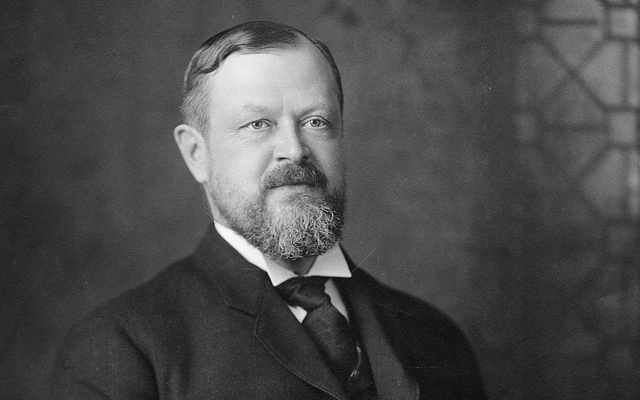
Charles Melville Hays (May 16, 1856 – April 15, 1912) was the president of the Grand Trunk Railway. He began working in the railroad business as a clerk at the age of 17 and quickly rose through the ranks of management to become the General Manager of the Wabash, St. Louis and Pacific Railway. He became vice-president of that company in 1889 and remained as such until 1896 when he became General Manager of the Grand Trunk Railway (GTR) of Canada.
Hays left GTR for a short time to serve as the President of the Southern Pacific Railway Company but returned to GTR after one year. As Vice-president and General Manager of GTR he is credited with keeping the company from bankruptcy. In 1909, he became the president of GTR and all its consolidated lines, subsidiary railroads, and steamship companies. He was known for his philanthropy and received the Order of the Rising Sun, third class, from the Emperor of Japan in 1907.
Hays is credited with the formation of the Grand Trunk Pacific Railway (GTP), a plan he had to create a second transcontinental railroad within the borders of Canada. He is also blamed for the insolvency of both the GTR and the GTP. He died in the sinking of the RMS Titanic before his plan was complete. Before the ship collided with an iceberg, Hays said that in the near future there would be "the greatest ... of all disasters at sea." His body was recovered, and he was buried in Montreal. He had a wife and four daughters.
Charles Melville Hays was born in Rock Island, Illinois, on May 16, 1856. His family moved to St. Louis, Missouri, when he was a child.
In 1873, at the age of 17, he began his career in the railroad business working for the Atlantic and Pacific Railroad in St. Louis. From 1877 to 1884, Hays was Secretary to the General Manager of the Missouri Pacific Railroad. Beginning in 1884, he held the same position with the Wabash, St. Louis and Pacific Railway until 1886, when he became that company's General Manager. In 1889, he became vice-president of the Wabash Railroad and remained as such until 1896, when he became General Manager of the Grand Trunk Railway (GTR) of Canada.
In 1901, Hays left GTR to serve as the President of the Southern Pacific Railway Company but returned to the company in January 1902 as vice-president and General Manager. In October 1909, he was appointed president of GTR, which also gave him control of its subsidiary railroad and steamship companies. These included the Central Vermont Railway, the Grand Trunk Western Railway, the Grand Haven and Milwaukee Railway, the Detroit and Toledo Shoreline Railroad, the Toledo, Saginaw and Muskegon Railway, the Southern New England Railway Company, the Canadian Express Company, and several others. In addition, he was sought after to help manage several philanthropies. He was Governor of the Royal Victoria Hospital, Montreal, Montreal General Hospital and McGill University. He received the Order of the Rising Sun, third class, from the Emperor of Japan in 1907 for assistance he gave the Imperial Government Railways.
When Hays became General Manager of GTR in 1896, it was near bankruptcy and under-performing its rival, the Canadian Pacific Railway (CPR). On the advice of American financier J. Pierpont Morgan, the GTR board selected Hays as General Manager to bring more aggressive, "American" business practices to the company. He reorganized the management of the company and successfully negotiated running rights with CPR. He also brought more efficiency to the handling of accounts, built new track and ordered more powerful locomotives. These changes produced an era of greater success for the railroad.
At the time, the western prairies were being rapidly settled. Hays wanted to capitalize on the trend by constructing a transcontinental railroad, within the borders of Canada, to run 3,600 miles from Moncton, New Brunswick, to Prince Rupert, British Columbia. In 1900, he introduced a proposal to extend the lines of the Grand Trunk Western, an American subsidiary, from Chicago to Winnipeg, "and thence to the Pacific." However, he was turned down by the railroad's directors in London. Later that year, Hays left GTR to work for Southern Pacific, but a change in ownership there lead to his resignation. He returned to the GTR to find that the president, Sir Charles Rivers Wilson, had convinced the board of directors to pursue the transcontinental railway. Meanwhile, the government, under Sir Wilfrid Laurier, had also decided to back the project. Plans to construct the transcontinental line were announced on November 24, 1902.
Hub AI
Charles Melville Hays AI simulator
(@Charles Melville Hays_simulator)
Charles Melville Hays
Charles Melville Hays (May 16, 1856 – April 15, 1912) was the president of the Grand Trunk Railway. He began working in the railroad business as a clerk at the age of 17 and quickly rose through the ranks of management to become the General Manager of the Wabash, St. Louis and Pacific Railway. He became vice-president of that company in 1889 and remained as such until 1896 when he became General Manager of the Grand Trunk Railway (GTR) of Canada.
Hays left GTR for a short time to serve as the President of the Southern Pacific Railway Company but returned to GTR after one year. As Vice-president and General Manager of GTR he is credited with keeping the company from bankruptcy. In 1909, he became the president of GTR and all its consolidated lines, subsidiary railroads, and steamship companies. He was known for his philanthropy and received the Order of the Rising Sun, third class, from the Emperor of Japan in 1907.
Hays is credited with the formation of the Grand Trunk Pacific Railway (GTP), a plan he had to create a second transcontinental railroad within the borders of Canada. He is also blamed for the insolvency of both the GTR and the GTP. He died in the sinking of the RMS Titanic before his plan was complete. Before the ship collided with an iceberg, Hays said that in the near future there would be "the greatest ... of all disasters at sea." His body was recovered, and he was buried in Montreal. He had a wife and four daughters.
Charles Melville Hays was born in Rock Island, Illinois, on May 16, 1856. His family moved to St. Louis, Missouri, when he was a child.
In 1873, at the age of 17, he began his career in the railroad business working for the Atlantic and Pacific Railroad in St. Louis. From 1877 to 1884, Hays was Secretary to the General Manager of the Missouri Pacific Railroad. Beginning in 1884, he held the same position with the Wabash, St. Louis and Pacific Railway until 1886, when he became that company's General Manager. In 1889, he became vice-president of the Wabash Railroad and remained as such until 1896, when he became General Manager of the Grand Trunk Railway (GTR) of Canada.
In 1901, Hays left GTR to serve as the President of the Southern Pacific Railway Company but returned to the company in January 1902 as vice-president and General Manager. In October 1909, he was appointed president of GTR, which also gave him control of its subsidiary railroad and steamship companies. These included the Central Vermont Railway, the Grand Trunk Western Railway, the Grand Haven and Milwaukee Railway, the Detroit and Toledo Shoreline Railroad, the Toledo, Saginaw and Muskegon Railway, the Southern New England Railway Company, the Canadian Express Company, and several others. In addition, he was sought after to help manage several philanthropies. He was Governor of the Royal Victoria Hospital, Montreal, Montreal General Hospital and McGill University. He received the Order of the Rising Sun, third class, from the Emperor of Japan in 1907 for assistance he gave the Imperial Government Railways.
When Hays became General Manager of GTR in 1896, it was near bankruptcy and under-performing its rival, the Canadian Pacific Railway (CPR). On the advice of American financier J. Pierpont Morgan, the GTR board selected Hays as General Manager to bring more aggressive, "American" business practices to the company. He reorganized the management of the company and successfully negotiated running rights with CPR. He also brought more efficiency to the handling of accounts, built new track and ordered more powerful locomotives. These changes produced an era of greater success for the railroad.
At the time, the western prairies were being rapidly settled. Hays wanted to capitalize on the trend by constructing a transcontinental railroad, within the borders of Canada, to run 3,600 miles from Moncton, New Brunswick, to Prince Rupert, British Columbia. In 1900, he introduced a proposal to extend the lines of the Grand Trunk Western, an American subsidiary, from Chicago to Winnipeg, "and thence to the Pacific." However, he was turned down by the railroad's directors in London. Later that year, Hays left GTR to work for Southern Pacific, but a change in ownership there lead to his resignation. He returned to the GTR to find that the president, Sir Charles Rivers Wilson, had convinced the board of directors to pursue the transcontinental railway. Meanwhile, the government, under Sir Wilfrid Laurier, had also decided to back the project. Plans to construct the transcontinental line were announced on November 24, 1902.
Recent media