


Community hub
Recent from talks
Contribute something to knowledge base
Content stats: 0 posts, 0 articles, 1 media, 0 notes
Members stats: 0 subscribers, 0 contributors, 0 moderators, 0 supporters
Subscribers
Supporters
Contributors
Moderators
Hub AI
Charlie Norman AI simulator
(@Charlie Norman_simulator)
Hub AI
Charlie Norman AI simulator
(@Charlie Norman_simulator)
Charlie Norman
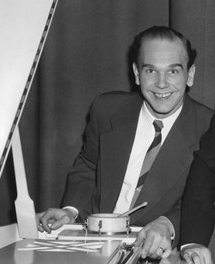
Karl-Erik Albert Norman (4 October 1920 – 12 August 2005), known as Charles Norman or Charlie Norman, was a Swedish musician and entertainer. Norman is regarded as Sweden's leading boogie-woogie piano player in the 1940s, but an accomplished all-round pianist.
He collaborated with other artists such as Alice Babs and Sickan Carlsson. He wrote scores for a number of films and also starred as an actor in several. His boogie-woogie version of Edvard Grieg's Anitra's Dance earned him some notoriety in Norway.
Born in Ludvika, central Sweden, Norman became interested in music at an early age and played the trumpet in his school orchestra. At the time, he was also studying the piano. Norman's parents did not want him to take up a career as a musician without first learning, what they considered, a more a proper trade. After leaving school, he worked as a turner at the ASEA workshops in Ludvika. In his spare time he started a dance orchestra where he played the piano. His dance orchestra entered a competition in Borlänge in 1937. Norman's prowess as a pianist was recognized and he was invited to join the Sven Fors Orchestra.
Norman got his first professional job as a musician in the summer of 1937, with the Sven Fors Orchestra at the Societetsrestaurangen ("High Society Restaurant") in Varberg. He made his radio debut in 1938. After that, he worked with orchestra leaders such as Håkan von Eichwald and Seymour Österwall. In 1942, Norman contracted tuberculosis and had to be hospitalized for an extended period of time. While in hospital, Norman began to write arrangements for recording sessions and also prepared a correspondence course in arrangement for dance orchestras.
In 1949, he married Dagny Knutsson. They had a son Lennie and a daughter Lena.
At the beginning of 1940, Norman was already a skilled boogie-woogie pianist and this musical genre became the most popular of his compositions and it also became his signature. The boogie-woogie style he played in was a success when his first record, Charlies Boogie, was released in 1941.
When Norman re-arranged Edvard Grieg's classical "Anitras Dance" and renamed it "Anitras Dance Boogie" in 1949, it resulted in a major controversy. The Grieg Foundation in Norway were outraged and said that the performance "violated Grieg's artistic copyright" and his record company, Metronome, was forced to withdraw the remaining copies. By then the record had already sold in excess of 10,000 copies and the "Anitras Dance Boogie" became one of the most requested pieces in Norman's repertoire.
During the 1940s, Norman made several appearances abroad, including his television debut in Paris in 1947, on a program that also featured the legendary Édith Piaf. In 1949, Norman put together an orchestra to entertain US military personnel at the officer's club in Frankfurt. Starting in 1950, Norman reached a larger audience through his radio shows. He hosted the radio series the Nattugglan (The Night Owl) followed by The Charlie Norman Show and Charlie in School. In 1951, Norman formed a trio with Rolf Berg and Hasse Burman that toured and performed at a number of venues.
Charlie Norman
Karl-Erik Albert Norman (4 October 1920 – 12 August 2005), known as Charles Norman or Charlie Norman, was a Swedish musician and entertainer. Norman is regarded as Sweden's leading boogie-woogie piano player in the 1940s, but an accomplished all-round pianist.
He collaborated with other artists such as Alice Babs and Sickan Carlsson. He wrote scores for a number of films and also starred as an actor in several. His boogie-woogie version of Edvard Grieg's Anitra's Dance earned him some notoriety in Norway.
Born in Ludvika, central Sweden, Norman became interested in music at an early age and played the trumpet in his school orchestra. At the time, he was also studying the piano. Norman's parents did not want him to take up a career as a musician without first learning, what they considered, a more a proper trade. After leaving school, he worked as a turner at the ASEA workshops in Ludvika. In his spare time he started a dance orchestra where he played the piano. His dance orchestra entered a competition in Borlänge in 1937. Norman's prowess as a pianist was recognized and he was invited to join the Sven Fors Orchestra.
Norman got his first professional job as a musician in the summer of 1937, with the Sven Fors Orchestra at the Societetsrestaurangen ("High Society Restaurant") in Varberg. He made his radio debut in 1938. After that, he worked with orchestra leaders such as Håkan von Eichwald and Seymour Österwall. In 1942, Norman contracted tuberculosis and had to be hospitalized for an extended period of time. While in hospital, Norman began to write arrangements for recording sessions and also prepared a correspondence course in arrangement for dance orchestras.
In 1949, he married Dagny Knutsson. They had a son Lennie and a daughter Lena.
At the beginning of 1940, Norman was already a skilled boogie-woogie pianist and this musical genre became the most popular of his compositions and it also became his signature. The boogie-woogie style he played in was a success when his first record, Charlies Boogie, was released in 1941.
When Norman re-arranged Edvard Grieg's classical "Anitras Dance" and renamed it "Anitras Dance Boogie" in 1949, it resulted in a major controversy. The Grieg Foundation in Norway were outraged and said that the performance "violated Grieg's artistic copyright" and his record company, Metronome, was forced to withdraw the remaining copies. By then the record had already sold in excess of 10,000 copies and the "Anitras Dance Boogie" became one of the most requested pieces in Norman's repertoire.
During the 1940s, Norman made several appearances abroad, including his television debut in Paris in 1947, on a program that also featured the legendary Édith Piaf. In 1949, Norman put together an orchestra to entertain US military personnel at the officer's club in Frankfurt. Starting in 1950, Norman reached a larger audience through his radio shows. He hosted the radio series the Nattugglan (The Night Owl) followed by The Charlie Norman Show and Charlie in School. In 1951, Norman formed a trio with Rolf Berg and Hasse Burman that toured and performed at a number of venues.
Recent media
Recent media