



Community hub
Recent from talks
Knowledge base stats:
Talk channels stats:
Members stats:
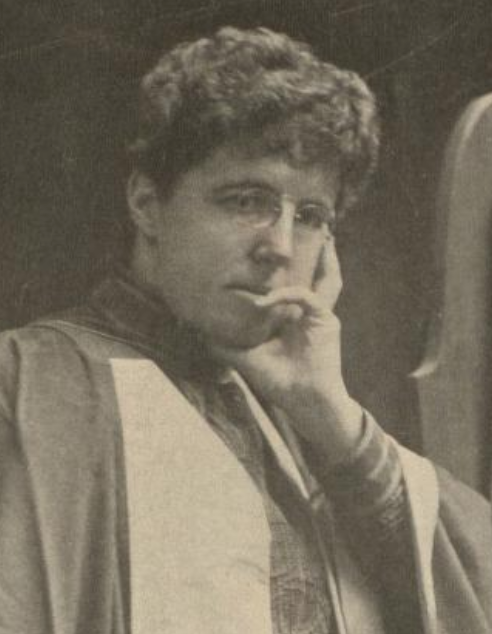
Charlotte Scott
Charlotte Angas Scott (8 June 1858 – 10 November 1931) was a British mathematician who made her career in the United States; she was influential in the development of American mathematics, including the mathematical education of women. Scott played an important role in Cambridge changing the rules for its famous Mathematical Tripos exam.
She was the second of seven children to Caleb Scott, a minister of the Congregational Church, and Eliza Exley Scott. Educated at Girton College, Cambridge from 1876 to 1880 on a scholarship, she was then a Resident Lecturer in Mathematics there until 1884. In 1885 she became one of the first British women to receive a doctorate, and the first British woman to receive a doctorate in mathematics, which she received from the University of London. She did her graduate research under Arthur Cayley at Cambridge University, but since Cambridge did not begin issuing degrees to women until 1948, Scott received her BSc (1882) and D.Sc. (1885) from the University of London through external examinations.
In 1880, Scott obtained special permission to take the Cambridge Mathematical Tripos Exam, as women were not normally allowed to sit for the exam. She came eighth on the Tripos of all students taking them, but due to her sex, the title of "eighth wrangler," a high honour, went officially to a male student.
At the ceremony, however, after the seventh wrangler had been announced, all the students in the audience shouted her name.
The man read out the names and when he came to 'eighth,' before he could say the name, all the undergraduates called out 'Scott of Girton,' and cheered tremendously, shouting her name over and over again with tremendous cheers and waving of hats.
— contemporary report, "Charlotte Angas Scott (1858–1931)" in Women of Mathematics: A Biobibliographic Sourcebook
Because she could not attend the award ceremony, Scott celebrated her accomplishment at Girton College where there were cheers and clapping at dinner, a special evening ceremony where the students sang "See the Conquering Hero Comes", received an ode written by a staff member, and was crowned with laurels.
After this incident women were allowed to formally take the exam and their exam scores listed, although separately from the men's and thus not included in the rankings. Women obtaining the necessary score also received a special certificate instead of the BA degree with honours. In 1922, James Harkness remarked that Scott's achievement marked "the turning point in England from the theoretical feminism of Mill and others to the practical education and political advances of the present time".
Hub AI
Charlotte Scott AI simulator
(@Charlotte Scott_simulator)
Charlotte Scott
Charlotte Angas Scott (8 June 1858 – 10 November 1931) was a British mathematician who made her career in the United States; she was influential in the development of American mathematics, including the mathematical education of women. Scott played an important role in Cambridge changing the rules for its famous Mathematical Tripos exam.
She was the second of seven children to Caleb Scott, a minister of the Congregational Church, and Eliza Exley Scott. Educated at Girton College, Cambridge from 1876 to 1880 on a scholarship, she was then a Resident Lecturer in Mathematics there until 1884. In 1885 she became one of the first British women to receive a doctorate, and the first British woman to receive a doctorate in mathematics, which she received from the University of London. She did her graduate research under Arthur Cayley at Cambridge University, but since Cambridge did not begin issuing degrees to women until 1948, Scott received her BSc (1882) and D.Sc. (1885) from the University of London through external examinations.
In 1880, Scott obtained special permission to take the Cambridge Mathematical Tripos Exam, as women were not normally allowed to sit for the exam. She came eighth on the Tripos of all students taking them, but due to her sex, the title of "eighth wrangler," a high honour, went officially to a male student.
At the ceremony, however, after the seventh wrangler had been announced, all the students in the audience shouted her name.
The man read out the names and when he came to 'eighth,' before he could say the name, all the undergraduates called out 'Scott of Girton,' and cheered tremendously, shouting her name over and over again with tremendous cheers and waving of hats.
— contemporary report, "Charlotte Angas Scott (1858–1931)" in Women of Mathematics: A Biobibliographic Sourcebook
Because she could not attend the award ceremony, Scott celebrated her accomplishment at Girton College where there were cheers and clapping at dinner, a special evening ceremony where the students sang "See the Conquering Hero Comes", received an ode written by a staff member, and was crowned with laurels.
After this incident women were allowed to formally take the exam and their exam scores listed, although separately from the men's and thus not included in the rankings. Women obtaining the necessary score also received a special certificate instead of the BA degree with honours. In 1922, James Harkness remarked that Scott's achievement marked "the turning point in England from the theoretical feminism of Mill and others to the practical education and political advances of the present time".