Hubbry Logo
Chet HuntleyChet HuntleyMain
Open search
Chet Huntley
Community hub
Chet Huntley
logo
8 pages, 0 posts
0 subscribers
Be the first to start a discussion here.
Chet Huntley
Chet Huntley
from Wikipedia

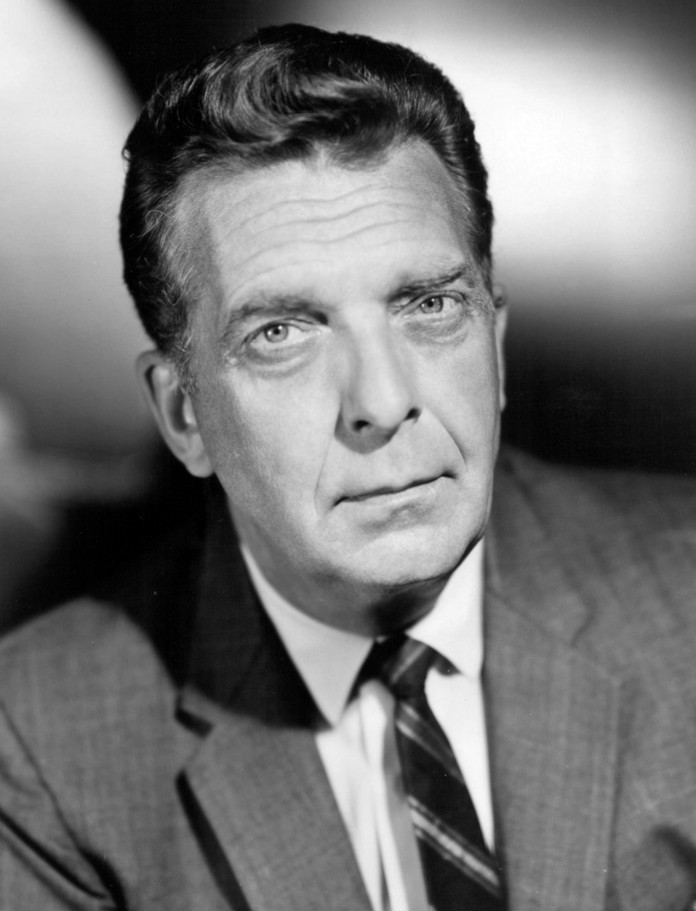
Chester Robert Huntley (December 10, 1911 – March 20, 1974) was an American television newscaster, best known for co-anchoring NBC's evening news program, The Huntley–Brinkley Report, for 14 years beginning in 1956.

Key Information

Early life

[edit]

Huntley was born in Cardwell, Montana,[1] the only son and eldest of four children born to Percy Adams Huntley and Blanche Wadine (née Tatham) Huntley. The family was of Scottish descent.[2] His father was a telegraph operator for the Northern Pacific Railway, and young Chet was born in the Cardwell depot living quarters. Owing to the railroad's seniority system, wherein employees with longer tenure could "bump" newer employees, the family moved often. They lived in Cardwell, Saco, Willow Creek, Logan, Big Timber, Norris, Whitehall, and Three Forks while he was a child.[3][4]

He graduated from Whitehall High School in Whitehall,[3] and attended Montana State College in Bozeman, where he was a member of Sigma Alpha Epsilon fraternity. He attended Cornish College of the Arts in Seattle before graduating from the University of Washington in 1934, with a degree in speech and drama.[5]

Career

[edit]

Huntley began his radio newscast career in 1934 at Seattle's KIRO AM, later working on radio stations in Spokane (KHQ) and Portland. His time (1936–37) in Portland was with KGW-AM, owned by The Oregonian, a Portland daily newspaper. At KGW he was writer, newscaster, and announcer. In 1937 he went to work for KFI in Los Angeles, moving to CBS Radio from 1939 to 1951, then ABC Radio from 1951 to 1955.[6] In 1955, he joined the NBC Radio network, viewed by network executives as "another Ed Murrow".

In 1956, coverage of the national political party conventions was a major point of pride for the fledgling broadcast news organizations. NBC News executives were seeking to counter the growing popularity of CBS' Walter Cronkite, who had been a ratings success at the 1952 conventions. They decided to replace their current news anchor, John Cameron Swayze, but there was a disagreement on who the new anchorman should be. The two leading contenders were Huntley and David Brinkley. The eventual decision was to have both men share the assignment. Their on-air chemistry was apparent from the start, with Huntley's straightforward presentation countered by Brinkley's acerbic wit.

This success soon led to the team replacing Swayze on the network's nightly news program. It was decided to have the two men co-anchor the show; Huntley from New York City, Brinkley from Washington, D.C. The Huntley-Brinkley Report began in October 1956 and was soon a ratings success. Huntley and Brinkley's catchphrase closing of "Good night, Chet"—"Good night, David... and good night for NBC News" was developed by the show's producer, Reuven Frank. Although both anchors initially disliked it, the sign-off became famous. Huntley and Brinkley gained great celebrity themselves, with surveys showing them better known than John Wayne, Cary Grant, Jimmy Stewart or the Beatles. The gregarious Huntley remained the same, a friend commenting in 1968 that "Chet is warm, he's friendly, he's unaffected, he's—well, he's just so damned nice."[7]

In April 1956, before that year's political conventions that brought him to prominence, Huntley began anchoring a new half-hour program entitled Outlook, produced by Reuven Frank. The program aired for seven years, later changing its name to Chet Huntley Reporting. It often covered racial segregation and civil rights.  In January 1962, the program moved from the Sunday evening news time slot to prime time.[8]

In the 1960s Huntley narrated a General Pictures Corp. film for the Cleveland, Ohio Development Foundation titled Cleveland: City on Schedule (1962)[9] and a Cinecraft-Continental Productions film for Haines, Inc., publishers of cross-cross city directories, titled The Key to the City (1963.)[10][11]

Huntley wrote a memoir of his Montana childhood, The Generous Years: Remembrances of a Frontier Boyhood, published by Random House in 1968.[12] He also became involved in a New York advertising agency, Levine, Huntley, Schmidt, Plapler & Beaver, gaining a 10 percent share in the agency in exchange for having his name on the letterhead and attending some agency meetings.[13] He maintained his own cattle farm in Stockton, New Jersey, which for a short time in 1964 included a beef line from the farm's cattle promoted under his name before the network intervened due to conflict of interest and promotional concerns.[14]

Huntley's last NBC News broadcast was aired on Friday, July 31, 1970.[15] He returned to Montana, where he conceived and built Big Sky,[16] a ski resort south of Bozeman, which opened in December 1973.

Marriage

[edit]

Huntley's first marriage, to Ingrid Rolin, produced two daughters and ended in divorce in 1959. Later that year, Huntley, at age 48, married the former Tipton "Tippy" Stringer (1930–2010), a TV broadcaster, who married actor William Conrad after his death.

Death

[edit]

Huntley died of lung cancer on March 20, 1974, at his home in Big Sky at the age of 62, three days before the opening ceremonies for Big Sky.[5] Huntley was honored with a cenotaph at Soldiers Chapel on the grounds of the Big Sky Resort.[17] Boyne USA Resorts purchased the Big Sky Resort in 1976 and has owned and managed it since. Huntley was buried at Sunset Hills Cemetery in Bozeman, Montana, 50 miles east of his hometown of Cardwell, Montana.

Accolades

[edit]

In 1956 Huntley received the Alfred I. duPont Award.[18]

In 1988, Huntley was posthumously inducted into the Television Hall of Fame.[19]

Legacy

[edit]

Only days before his retirement, Huntley gave an interview with Dick Cavett, available on the DVD The Dick Cavett Show: Rock Icons, Disc 2. On that broadcast, he described his political views as conservative on economic issues, but liberal on social issues. However, he stated to Cavett and the other guests that he took pains to ensure that his personal views did not adversely affect his reporting during his years as a journalist.

In 2003, a biography titled Good Night Chet, by Lyle Johnston, was published by McFarland Publishers.

References

[edit]
[edit]
Revisions and contributorsEdit on WikipediaRead on Wikipedia
from Grokipedia
Chester Robert Huntley (December 10, 1911 – March 20, 1974), professionally known as Chet Huntley, was an American radio and television renowned for co-anchoring NBC's The Huntley-Brinkley Report, a nightly program that aired from 1956 to 1970 and elevated the standard for through its concise reporting and high viewership. Born to homesteaders Percy "Pat" and Blanche Huntley in the small community of Cardwell, Huntley developed an early affinity for the rural West that later influenced his post-career endeavors. Huntley's broadcasting career began in radio during , progressing to television where he reported from major events and earned early recognition, including a 1942 Peabody Award for a series addressing against Mexican-Americans. Pairing with correspondent , The Huntley-Brinkley Report delivered Huntley's authoritative Western-segment commentary alongside Brinkley's Washington analysis, culminating in their signature sign-off and dominating ratings over competitors like CBS's . The program amassed prestigious accolades, such as seven , four , two Overseas Press Club Awards, and an Alfred I. duPont Award, reflecting its impact on shaping public discourse during pivotal eras including the and . Though Huntley maintained a reputation for factual delivery, his career included instances of blending reportage with opinion, such as critiques of labor unions and political figures, which occasionally sparked debate over in an era when broadcast standards were evolving. Upon retiring in , he returned to to champion economic development through tourism, spearheading the creation of —an expansive ski and recreational complex on over 11,000 acres designed to attract urban visitors to the region's natural landscapes without compromising its ranching heritage. Huntley succumbed to at his Big Sky home, leaving a legacy as a pioneer who bridged radio traditions with television's visual immediacy while advocating for 's preservation.

Early Life

Childhood and Family Background

Chester Robert Huntley was born on December 10, 1911, in the in , a small rural community. He was the only son and eldest of four children born to Percy Adams "Pat" Huntley, a station agent and telegraph operator for the , and Blanche Wadine Tatham Huntley. Percy's railroad employment necessitated frequent relocations across , including moves to Forsyth and later a homestead claim near Three Forks, where the settled in modest circumstances amid the state's agrarian and rail-dependent economy. Huntley's early years were shaped by this itinerant, working-class existence in isolated Western towns, with his father's role in communications infrastructure providing early exposure to telegraphic technology and regional news dissemination. Blanche Huntley, who had trained as a schoolteacher, contributed to the household through homemaking and likely of the children, reflecting the era's norms for rural families of British descent—Huntley's paternal lineage tracing to Scottish immigrants. These formative experiences in Montana's sparse, self-reliant communities instilled a grounded perspective that later informed his style, though the family maintained financial typical of railroad workers during the early 20th century.

Education and Initial Influences

Huntley graduated from in in 1929, after which he received a scholarship to (now ) in Bozeman due to his proficiency in speech and debate. Initially aspiring to a career in , he enrolled there but departed after two years without completing a degree. Subsequently, Huntley attended the Cornish School of Arts in before transferring to the , where he earned a in fine arts in 1934. His academic pursuits in , combined with honed oratorical skills from , exposed him to performance and , fostering an early aptitude for communication that later channeled into broadcasting. These formative experiences in Montana and Washington state, amid a rural upbringing emphasizing self-reliance, influenced Huntley's grounded perspective and resonant delivery, qualities that distinguished his journalistic style upon entering radio during the mid-1930s. While still in school, he initiated work at local radio stations, marking the pivotal shift from academic ambitions to media as his professional trajectory solidified.

Broadcasting Career

Radio Beginnings (1930s–1940s)

Huntley entered during his senior year at the , joining station KPCB in around 1934, where he handled advertising sales, news writing, and announcing duties. This initial role involved rewriting wire service news for on-air delivery, marking his first professional exposure to news dissemination. By 1936, Huntley had advanced to KHQ in Spokane as a news commentator, followed by a position at in Portland from 1936 to 1937, where he served as writer, newscaster, and announcer. In 1937, he relocated to for work at , an affiliate, continuing until 1939. These and early stints honed his reporting skills amid the era's economic recovery and pre-war tensions, though specific broadcasts from this period remain sparsely documented. In 1939, Huntley transitioned to KNX, the CBS Radio affiliate in Los Angeles, remaining there through the 1940s until 1951; at KNX, he focused on writing and producing concise news commentary segments. A notable achievement came in 1942 with a Peabody Award for a radio series addressing prejudice against Mexican Americans in California, recognizing his analytical reporting on social issues. During World War II, his work at KNX contributed to CBS's wartime coverage, emphasizing factual analysis over sensationalism, though exact program logs from the decade are limited in public archives.

Move to Television and Early Network Work (1950s)

In 1955, after working for ABC Radio and Television in Los Angeles from 1951 to 1955, Huntley joined NBC's Pacific Division as West Coast correspondent and began anchoring local news at KNBC (then KRCA), the NBC affiliate in Los Angeles. This marked his initial shift from primarily radio broadcasting to television, where he handled evening newscasts and contributed to network reporting. In April 1956, Huntley transitioned to national prominence by anchoring NBC's new Sunday afternoon half-hour program Outlook, which featured interviews with newsmakers, documentaries, and in-depth analysis; the show later evolved into Chet Huntley Reporting and continued until 1963. Early episodes of Outlook faced production challenges but improved rapidly, establishing Huntley's authoritative on-camera presence and delivery as assets for television . That summer, Huntley partnered with NBC Washington correspondent to cover the 1956 Republican and Democratic national conventions from New York, providing live commentary that highlighted their complementary styles—Huntley's measured Western gravitas alongside Brinkley's sharp wit—and foreshadowed their later collaboration. These broadcasts, aired across 's expanding television network, drew strong viewership and positioned Huntley as a key figure in the medium's shift toward extended news programming amid growing competition from .

The Huntley-Brinkley Report (1956–1970)

The Huntley-Brinkley Report debuted on on October 29, 1956, following the duo's successful coverage of that year's Republican and Democratic National Conventions, where Chet Huntley reported from and David from Washington, D.C.. The program replaced the Camel News Caravan and initially aired for 15 minutes each weekday evening, with Huntley delivering national and international stories from the New York studio while Brinkley focused on Washington-based political developments, creating a divided-anchor format that emphasized separation between the anchors except during scripted handoffs and their signature closing.. On September 9, 1963, the broadcast expanded to a half-hour format, matching competitors like CBS Evening News, which allowed for deeper coverage of events such as the Kennedy assassination later that year.. Huntley's resonant baritone voice and straightforward delivery contrasted with Brinkley's wry commentary, contributing to the program's appeal; critics praised Huntley's vocal authority as among the finest in broadcast history.. The broadcast concluded each night with the exchange: Huntley saying "Good night, David," Brinkley responding "Good night, Chet," followed by "And good night, for NBC News," a ritual that became iconic and symbolized their professional rapport without on-air personal interaction.. The program dominated evening news ratings for its first dozen years, often surpassing CBS's in viewership during the , though began overtaking it in the late amid shifting audience preferences.. Huntley and Brinkley covered pivotal events including the , escalations, and milestones, with Huntley's narration providing gravitas to reports on crises like the chaos.. The duo's chemistry and perceived objectivity helped elevate television news from brief updates to a trusted prime-time staple, amassing over 3,500 episodes by its conclusion.. The Report ended on July 31, 1970, after Huntley announced his earlier that year on February 16, citing fatigue from the demanding schedule and a desire to pursue business interests in ; Brinkley continued at but the partnership dissolved without Huntley.. In the final broadcast, Huntley initiated the sign-off, marking the close of an era that had defined 's news dominance.. The program's success stemmed from its innovative split-location structure and the anchors' complementary styles, though its end reflected Huntley's personal choice amid declining ratings and industry evolution toward single-anchor formats..

Retirement and Business Ventures

Huntley announced his retirement from The Huntley-Brinkley Report on February 16, 1970, citing a desire to return to his native after 14 years on the program; his final broadcast aired on July 31, 1970. Post-retirement, he relocated to a ranch near , where he pursued independent media projects, including the production and circulation of five-minute telecasts on a non-network basis. A primary focus of Huntley's business activities was the development of Big Sky Resort, a $25 million, 10,647-acre ski and recreation complex at the base of Lone Peak in the Gallatin National Forest, which he promoted as a venture to boost Montana's economy through tourism. In 1969, prior to his full retirement, Huntley petitioned Montana Governor Forrest H. Anderson to approve the "Big Sky" name for the project, overriding a state policy reserving it as a statewide slogan; the resort opened in December 1973 with Huntley as a key investor and public face, though operational control rested with developer Clinton Hill. The initiative drew environmental criticism for its scale and potential impact on local ecosystems, but Huntley defended it as a means to preserve open spaces via controlled development. Huntley remained involved in broadcasting during retirement, delivering occasional commentaries and recording voiceovers for commercials, which he leveraged to secure their sponsorship of a documentary series, , highlighting regional history and landscapes. These endeavors reflected his ongoing interest in media while shifting emphasis to entrepreneurial pursuits in his home state, though his active period was curtailed by health decline leading to his death in March 1974.

Personal Life

Marriages and Relationships

Huntley married Ingrid Eleanor Rolin on February 23, 1936, in Seattle, Washington, while working in local radio; the couple had met during his time there. The marriage produced two daughters, Sharon and another unnamed in primary records, and lasted until their divorce in 1959. Later in 1959, at age 48, Huntley wed Tipton Stringer, a Washington, D.C.-based television known professionally as "Tippy Stringer." The union produced no children and endured until Huntley's death in 1974, during which Stringer supported his post-retirement ventures, including the development of in . No public records indicate additional marriages or significant extramarital relationships.

Health Issues and Death

In the years following his 1970 retirement from broadcasting, Huntley focused on developing the Big Sky ski resort in , but his health deteriorated due to cancer. He was a longtime smoker, a factor later associated with his illness. Huntley underwent for cancer in January 1974 at a Bozeman hospital. Despite the procedure, his condition worsened rapidly. He died of on March 20, 1974, at his home in , at the age of 62—just three days before the resort's opening ceremonies, which he had planned to attend. Huntley was buried in Sunset Hills Cemetery in Bozeman.

Journalistic Approach and Public Persona

Reporting Style and Voice

Huntley's delivery was characterized by a serious and authoritative tone, often described as resonant and commanding, which contributed to his reputation as one of the most trusted voices in broadcast journalism. His deep, sonorous voice, honed from early radio experience, conveyed gravitas and reliability, allowing him to report on complex events with a sense of calm steadiness that resonated with audiences during turbulent periods like the 1960s. This vocal quality contrasted sharply with co-anchor David Brinkley's drier, more sardonic style, creating a dynamic balance where Huntley's stolid demeanor provided weight to the broadcast's factual backbone. In terms of reporting approach, Huntley favored straightforward, unembellished narration focused on empirical details over dramatic flair, avoiding the overpowering commentary common in earlier newsreels. He occasionally incorporated brief personal commentary, particularly on Western issues reflective of his upbringing, but emphasized objectivity by distinguishing it from straight news. This method aligned with the Huntley-Brinkley Report's emphasis on balanced, event-driven coverage, where Huntley's portions from New York prioritized national and international facts delivered in a measured pace that prioritized clarity and viewer comprehension over . Critics noted that his style, spiced sparingly with understated humor, fostered public trust by presenting information as verifiable rather than interpretive, though some observed it occasionally blurred into subtle advocacy on regional topics.

Political Commentary and Views

Huntley earned a reputation as a "fighting liberal" during his early career on the West Coast, where he frequently incorporated commentary advocating progressive social positions. For instance, his radio programs opposed the internment of Japanese-Americans during and supported school integration amid the 1957 crisis. He was also a vocal critic of Senator Joseph McCarthy's anti-communist investigations, denouncing McCarthyism on air and refusing to sign a required by in 1951, which contributed to his departure from the network. Following a broadcast criticizing McCarthy, Huntley successfully sued a detractor who accused him of communism, highlighting the personal backlash he faced from conservative audiences. In a profile, Huntley described himself as a "classic liberal," emphasizing and the free exchange of ideas over rigid . He maintained no formal party affiliation and resisted categorization, noting that conservatives had labeled him a communist while some activists viewed him as insufficiently radical. During the era, however, Huntley shifted toward a more hawkish stance compared to his earlier , reflecting a nuanced evolution in his outlook. He defended journalistic free speech against the Nixon administration's criticisms of reporters covering the war, arguing it as essential to a free society. Huntley's commentary often blurred into opinion, particularly on domestic issues like civil rights and , though he positioned his views as independent and evidence-based rather than partisan. His ranching background informed perspectives on and , as seen in reports critiquing of resources and promoting , but he avoided explicit endorsements of major economic policies. Overall, Huntley's public persona emphasized journalistic integrity over ideological alignment, though his drew consistent scrutiny from right-leaning critics throughout his career.

Controversies and Criticisms

Allegations of Bias in Reporting

During the in , the Huntley-Brinkley Report faced accusations of liberal bias in its coverage of clashes between police and anti-war protesters, with critics including Mayor claiming that Chet Huntley and failed to portray the demonstrators as "terrorists" and instead depicted them sympathetically as "protesters" or "young people," while underemphasizing protester-initiated violence. Networks, including , received thousands of telegrams and letters condemning the coverage as one-sided and favoring radical elements over , contributing to the nationalization of the "liberal " narrative that year. Huntley, anchoring from New York, was implicated alongside Brinkley, though contemporaries often praised Huntley's measured delivery as a counterbalance to Brinkley's wry style, with broadly viewed as the most liberal-leaning of the major networks. Huntley personally drew sporadic claims of ideological slant from both political flanks; conservatives labeled him a Communist for perceived softness on social issues during his early career, while some liberals criticized his economic conservatism. In a 1970 interview, Huntley described himself as a "classic liberal," aligning with fiscal conservatism but social progressivism, yet he maintained that his reporting avoided advocacy, insisting on separating personal views from on-air commentary. Critics from the right, amplified post-1968 by figures like and , pointed to the Huntley-Brinkley duo as exemplars of network bias, arguing their convention reporting exemplified a broader tilt that downplayed disorder to critique authority. Despite such charges, archival reviews and peer accounts often highlighted the program's restraint, with Huntley's Montana-rooted fostering a perception of folksy amid the era's polarization. These allegations subsided after Huntley's 1970 retirement, but they underscored early tensions in television news over objectivity, particularly as viewership data showed Huntley-Brinkley peaking at over 30 million nightly viewers by , heightening scrutiny of any perceived slant. No formal investigations or retractions followed the claims, and Huntley defended the coverage as factual documentation of events, rejecting notions of deliberate in favor of empirical reporting.

Blurring of News and Opinion

Throughout his career, Chet Huntley engaged in commentary programs such as Chet Huntley's Perspective on the News and Outlook, where he expressed personal views on political issues, leading to accusations of blurring the distinction between objective reporting and subjective analysis. These segments, broadcast during the 1950s and 1960s, included critiques of Senator Joseph McCarthy's anti-communist campaigns and Hollywood's response to them, opposition to the World War II internment of Japanese Americans, advocacy for school integration during the 1957 Little Rock crisis, and later evaluations of President Richard Nixon's leadership. Huntley maintained that such opinions were confined to dedicated commentary slots and did not infiltrate his straight news delivery on The Huntley-Brinkley Report, asserting they preserved journalistic integrity. Critics, however, contended that Huntley's on-air demeanor during news broadcasts subtly conveyed bias, with one industry observer accusing him of editorializing through facial expressions on the Huntley-Brinkley Report. This perception was exacerbated by specific incidents, such as unflattering remarks about Nixon's character and intellect made in a July 1970 Life magazine interview shortly before Huntley's retirement on July 31, 1970, where he described feeling "overwhelmed" by Nixon's "shallowness." Huntley later expressed regret to Nixon, stating he was "terribly embarrassed" by the attributed comments and clarifying they did not reflect his intent. These episodes fueled broader debates about whether prominent anchors like Huntley, known for a liberal-leaning philosophy on issues like segregation, inevitably infused personal perspectives into evening news formats despite formal separations. Additional scrutiny arose from Huntley's commercial endorsements, including beef industry advertisements in the , and his decision to cross a union picket line in 1967, actions viewed by some as compromising the impartiality expected of news figures. Despite these controversies, contemporaries often praised the Huntley-Brinkley Report for its relative restraint compared to later broadcast norms, though the format's dual anchors—Huntley's authoritative Montana-rooted delivery paired with David Brinkley's Washington-based wit—invited analysis of any perceived ideological balance or slippage.

Recognition and Accolades

Awards and Honors

Huntley received the Alfred I. duPont Award in 1956, recognizing his excellence in . He earned two for his reporting and commentary, one in 1953 for skilled news analysis amid tense national events and a special award in 1970 honoring his 35 years of dependable contributions to radio and television news. The Huntley-Brinkley Report, co-anchored with , also secured a in 1961 for elevating television news standards through incisive coverage. For his work on programs, Huntley won a Primetime Emmy Award in 1961, displayed today at the Museum of the Rockies in . The Huntley-Brinkley team collectively received eight during the program's run from 1956 to 1970. He was further honored with two Overseas Press Club Awards for distinguished international reporting. In 1970, Huntley was named Man of the Year by the International Radio and Television Society upon his retirement from . Posthumously, he was inducted into the Television Academy Hall of Fame in 1988 for his pioneering role in network news.

Professional Milestones

Huntley initiated his broadcasting career in radio in 1934 at a small station in , progressing through roles at stations in Spokane, Portland, and . In 1939, he joined CBS affiliate KNX in as a reporter and commentator, earning a Peabody Award in 1942 for a radio series examining against Mexican-Americans. Following stints at ABC from 1951 to 1955, he transitioned to television in late 1955 as a local anchorman at (formerly KRCA) in and launched NBC's public-affairs series Outlook in April 1956. On October 29, 1956, Huntley co-anchored the debut of The Huntley-Brinkley Report on alongside , a 15-minute evening news program that rapidly ascended to top ratings by 1958, surpassing competitors like CBS's . The broadcast expanded to 30 minutes in September 1963 and consistently drew an estimated audience of 20 million viewers at its peak, revolutionizing television news with substantive reporting over entertainment. Huntley concluded his tenure as co-anchor with the program's final broadcast on July 31, 1970, after 3,590 episodes spanning 14 years, marking his retirement from daily news anchoring to return to .

Legacy

Influence on Television News

The Huntley-Brinkley Report, co-anchored by Chet Huntley from New York and David Brinkley from Washington, D.C., debuted on October 29, 1956, as a 15-minute evening news program on NBC, replacing the shorter Camel News Caravan and introducing a collaborative dual-anchor format that emphasized geographical and stylistic balance in national reporting. This structure, with Huntley's measured, resonant delivery providing authoritative narration of major events, quickly elevated television news from supplemental radio-style bulletins to a primary visual medium for public information, achieving widespread popularity through its professional tone and timely coverage of events like the 1956 political conventions. The program's success demonstrated television's capacity for serious journalism, drawing an estimated audience of 20 million viewers by the mid-1960s and establishing evening news as a habitual national ritual. On September 9, 1963, the broadcast expanded to 30 minutes—one week after did the same—allowing for deeper analysis and filmed reports, which Huntley helped pioneer through his oversight of NBC's New York operations and insistence on factual, unembellished storytelling. This extension solidified its ratings dominance, often surpassing competitors like Walter Cronkite's program through much of the decade, and influenced the industry shift toward longer formats that prioritized substance over brevity. Huntley's approach, characterized by a deep voice critics hailed as among the finest in broadcasting history, modeled a standard of and restraint that discouraged and fostered viewer trust in television as a credible source. The duo's tenure until Huntley's retirement on July 31, 1970, revolutionized network news by proving that non-radio veterans could command superstar status, thereby encouraging investment in on-air talent and production values that defined subsequent programs like under . Their format contributed to the evolution of the nightly news as a structured institution, blending live commentary with remote reporting to cover crises such as the and civil rights struggles, and the iconic sign-off—"Good night, Chet" / "Good night, David"—became synonymous with reliable closure to the day's events. Huntley's influence endured in the emphasis on journalistic integrity over entertainment, setting precedents for anchors who balanced authority with accessibility amid television's growing dominance in information dissemination.

Cultural and Regional Impact

Huntley contributed to a shift in American media culture through his role on The Huntley-Brinkley Report, which aired on from October 29, 1956, to July 31, 1970, and drew an estimated 20 million viewers nightly at its peak, establishing television as a primary source rivaling print media. The program's format, featuring Huntley's reporting from New York alongside Brinkley's Washington commentary, emphasized substantive coverage and technological integration for live events, such as the 3.5-day continuous broadcast following President Kennedy's in 1963, thereby elevating to a form of national ritual. Their contrasting styles—Huntley's measured authority paired with Brinkley's wit—fostered viewer trust and cultural catchphrases like the sign-off "Good night, Chet," which permeated public discourse and parodies. In , Huntley's return after retirement in 1970 led to his co-founding of , which opened on December 15, 1973, and spurred regional by creating jobs in , , and related services in the Gallatin Valley. Leveraging his celebrity, Huntley promoted the area as a year-round destination, contributing to Montana's , where drives substantial growth and tax revenues. His involvement inspired local tributes, including named facilities at the resort and the Chet Huntley Award for at the , reinforcing his ties to regional identity and media education. The project's expansion, however, generated controversies over environmental impacts and aggressive responses to critical reporting, highlighting tensions between development and local interests.

References

Add your contribution
Related Hubs
User Avatar
No comments yet.