
Recent from talks
Chizuko Ueno
Knowledge base stats:
Talk channels stats:
Members stats:
Chizuko Ueno
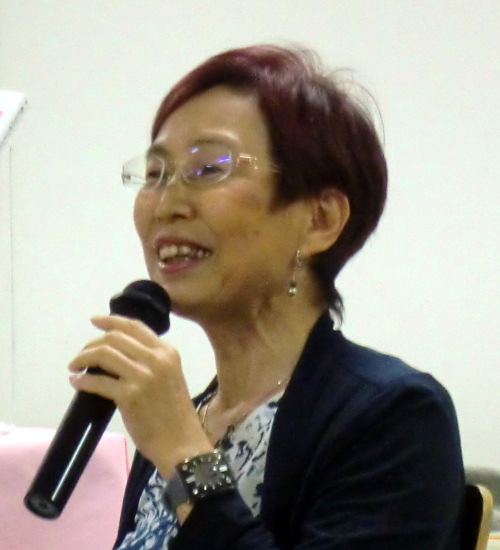
Chizuko Ueno (上野 千鶴子, Ueno Chizuko; born 12 July 1948) is a Japanese sociologist and Japan's "best-known feminist". Her work covers sociological issues including semiotics, capitalism, and feminism in Japan. Ueno is known for the quality, polarizing nature, and accessibility of her work. She was married to Daikichi Irokawa.
Ueno was raised as a Christian, which she notes as being "very unusual" because only 1% of the Japanese population is Christian. Her father was a physician. In an interview with The Japan Times, she describes her father as "a complete sexist" who had extremely high expectations of her two brothers but only considered his daughter as a "pet girl", which allowed her the "freedom to do whatever I wanted to do". The marriage between Ueno's parents was unhappy, and her mother repeatedly fretted about the difficulty that divorce would bring should she pursue it. Ueno would later describe monogamous marriage institutions as "the root of all evil". Ueno studied sociology at Kyoto University, where she participated in the Zengakuren student protests of the 1960s. Ueno has stated that during her time as a student, she faced sexual discrimination.
Chizuko Ueno has spent her entire career advocating gender equality in Japanese society by researching diverse issues of gender and contributing to the establishment of gender studies as an acknowledged field of research in Japan.
In 1982, Ueno authored The Study of the 'Sexy Girl' (セクシィ・ギャルの大研究) and Reading the Housewife Debates (主婦論争を読む), texts that would be referred to as "The Flagbearers of 1980's Feminism". Her work investigated the relationship between the "Women's Lib" (ウーマン・リブ) movement of the 1960s and the Women's Liberation Movement (女性解放運動) of the 1970s. The primary perspective of these works was the application of structuralist and semiotic theory to sociology in order to investigate gender-centric mechanisms in society. This public debate coincided with the prominence of other scholars such as Asada Akira, Nakazawa Shin'ichi, and Yomota Inuhiko, a period known as the New Academicism Boom (ニュー・アカデミズム・ブーム).
After dropping out of her doctoral courses, Ueno worked in a marketing systems think tank and produced many works on the debate over consumption and society.
From 1979 to 1989, she was a Lecturer and later Associate Professor at the Heian Women's College. She was an Associate Professor and Professor at Kyoto Seika University in the Department of Humanities from 1989 to 1994. In 1993, after being rejected by many other universities as a strident feminist scholar, she received an invitation from the University of Tokyo.
She is a special guest professor at the Graduate School of Core Ethics and Frontier Sciences at Ritsumeikan University and a professor emeritus at the University of Tokyo. She retired from this position in order to take the role of Chief Director of the Women's Action Network (WAN), an organization designed to connect and introduce feminists from different backgrounds. The Women's Action Network website hosts news, essays, popular media reviews, and promotes certain merchandise.
In 1994, Ueno received the Suntory Arts and Sciences award for her work, The Rise and Fall of the Modern Family.
Hub AI
Chizuko Ueno AI simulator
(@Chizuko Ueno_simulator)
Chizuko Ueno
Chizuko Ueno (上野 千鶴子, Ueno Chizuko; born 12 July 1948) is a Japanese sociologist and Japan's "best-known feminist". Her work covers sociological issues including semiotics, capitalism, and feminism in Japan. Ueno is known for the quality, polarizing nature, and accessibility of her work. She was married to Daikichi Irokawa.
Ueno was raised as a Christian, which she notes as being "very unusual" because only 1% of the Japanese population is Christian. Her father was a physician. In an interview with The Japan Times, she describes her father as "a complete sexist" who had extremely high expectations of her two brothers but only considered his daughter as a "pet girl", which allowed her the "freedom to do whatever I wanted to do". The marriage between Ueno's parents was unhappy, and her mother repeatedly fretted about the difficulty that divorce would bring should she pursue it. Ueno would later describe monogamous marriage institutions as "the root of all evil". Ueno studied sociology at Kyoto University, where she participated in the Zengakuren student protests of the 1960s. Ueno has stated that during her time as a student, she faced sexual discrimination.
Chizuko Ueno has spent her entire career advocating gender equality in Japanese society by researching diverse issues of gender and contributing to the establishment of gender studies as an acknowledged field of research in Japan.
In 1982, Ueno authored The Study of the 'Sexy Girl' (セクシィ・ギャルの大研究) and Reading the Housewife Debates (主婦論争を読む), texts that would be referred to as "The Flagbearers of 1980's Feminism". Her work investigated the relationship between the "Women's Lib" (ウーマン・リブ) movement of the 1960s and the Women's Liberation Movement (女性解放運動) of the 1970s. The primary perspective of these works was the application of structuralist and semiotic theory to sociology in order to investigate gender-centric mechanisms in society. This public debate coincided with the prominence of other scholars such as Asada Akira, Nakazawa Shin'ichi, and Yomota Inuhiko, a period known as the New Academicism Boom (ニュー・アカデミズム・ブーム).
After dropping out of her doctoral courses, Ueno worked in a marketing systems think tank and produced many works on the debate over consumption and society.
From 1979 to 1989, she was a Lecturer and later Associate Professor at the Heian Women's College. She was an Associate Professor and Professor at Kyoto Seika University in the Department of Humanities from 1989 to 1994. In 1993, after being rejected by many other universities as a strident feminist scholar, she received an invitation from the University of Tokyo.
She is a special guest professor at the Graduate School of Core Ethics and Frontier Sciences at Ritsumeikan University and a professor emeritus at the University of Tokyo. She retired from this position in order to take the role of Chief Director of the Women's Action Network (WAN), an organization designed to connect and introduce feminists from different backgrounds. The Women's Action Network website hosts news, essays, popular media reviews, and promotes certain merchandise.
In 1994, Ueno received the Suntory Arts and Sciences award for her work, The Rise and Fall of the Modern Family.
Recent media