
Recent from talks
Chlorpyrifos
Knowledge base stats:
Talk channels stats:
Members stats:
Chlorpyrifos
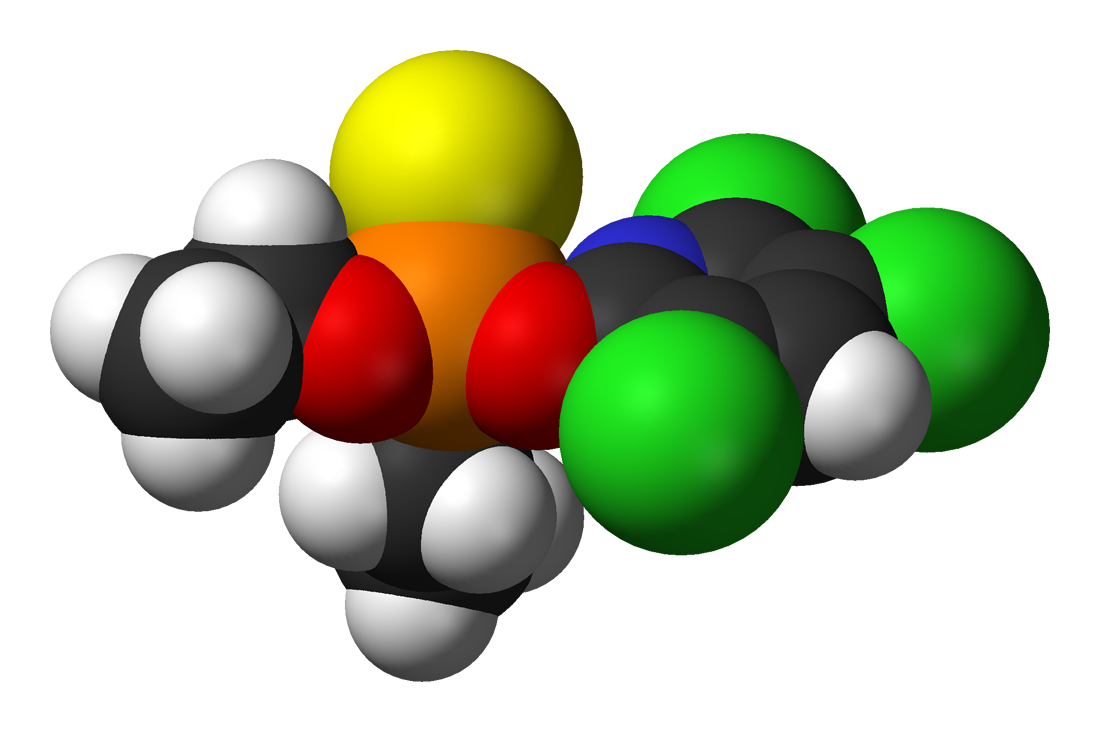
Chlorpyrifos (CPS), also known as chlorpyrifos ethyl, is an organophosphate pesticide that has been used on crops, animals, in buildings, and in other settings, to kill several pests, including insects and worms. It acts on the nervous systems of insects by inhibiting the acetylcholinesterase enzyme. Chlorpyrifos was patented in 1966 by Dow Chemical Company.
Chlorpyrifos is considered moderately hazardous to humans (Class II) by the World Health Organization based on acute toxicity information dating to 1999. Exposure surpassing recommended levels has been linked to neurological effects, persistent developmental disorders, and autoimmune disorders. Exposure during pregnancy may harm the mental development of children.
In the United Kingdom, the use of chlorpyrifos was banned as of 1 April 2016 (with one minor exception). As of 2020, chlorpyrifos and chlorpyrifos-methyl were banned throughout the European Union, where they may no longer be used. In May 2025, the EU listed chlorpyrifos as a persistent organic pollutant (POP) under the Stockholm Convention on Persistent Organic Pollutants.
As of August 18, 2021, the U.S. Environmental Protection Agency (EPA) announced a ban on the use of chlorpyrifos on food crops in the United States. Most home uses of chlorpyrifos had already been banned in the U.S. and Canada since 2001. It is banned in several other countries and jurisdictions as well. The chlorpyrifos ban on food crops is the result of a 1999 lawsuit filed by Natural Resources Defense Council (NRDC) to force the EPA to take action on the riskiest pesticides, as well as five additional successful court orders obtained by Earthjustice to force the EPA to take action on a 2007 petition to ban chlorpyrifos filed by NRDC and the Pesticide Action Network of North America (PANNA).
The industrial synthesis of chlorpyrifos (3) is made by reacting 3,5,6-trichloro-2-pyridinol (TCPy) (1) with O,O-diethyl phosphorochloridothioate (2):
Chlorpyrifos was used in about 100 countries around the world to control insects in agricultural, residential, and commercial settings. Its use in residential applications is restricted in multiple countries. According to Dow, in 2014 chlorpyrifos was registered for use in nearly 100 countries and is annually applied to approximately 8.5 million crop acres. The crops with the most usefulness include cotton, corn, almonds, and fruit trees, including oranges, bananas, and apples.
Chlorpyrifos was first registered for use in the United States in 1965 for the control of foliage and soil-born insects. The chemical became widely used in residential settings, on golf course turf, as a structural termite control agent, and in agriculture. Most residential use of chlorpyrifos has been phased out in the United States after many uses were banned. Agricultural use has remained common though it is being phased out after bans in California and the EU. The US EPA banned the use of chlorpyrifos on food crops in 2021, though courts overturned this decision in 2023.
EPA estimated that, between 1987 and 1998, about 21 million pounds of chlorpyrifos were used annually in the US. In 2001, chlorpyrifos ranked 15th among pesticides used in the United States, with an estimated 8 to 11 million pounds applied. In 2007, it ranked 14th among pesticide ingredients used in agriculture in the United States.
Hub AI
Chlorpyrifos AI simulator
(@Chlorpyrifos_simulator)
Chlorpyrifos
Chlorpyrifos (CPS), also known as chlorpyrifos ethyl, is an organophosphate pesticide that has been used on crops, animals, in buildings, and in other settings, to kill several pests, including insects and worms. It acts on the nervous systems of insects by inhibiting the acetylcholinesterase enzyme. Chlorpyrifos was patented in 1966 by Dow Chemical Company.
Chlorpyrifos is considered moderately hazardous to humans (Class II) by the World Health Organization based on acute toxicity information dating to 1999. Exposure surpassing recommended levels has been linked to neurological effects, persistent developmental disorders, and autoimmune disorders. Exposure during pregnancy may harm the mental development of children.
In the United Kingdom, the use of chlorpyrifos was banned as of 1 April 2016 (with one minor exception). As of 2020, chlorpyrifos and chlorpyrifos-methyl were banned throughout the European Union, where they may no longer be used. In May 2025, the EU listed chlorpyrifos as a persistent organic pollutant (POP) under the Stockholm Convention on Persistent Organic Pollutants.
As of August 18, 2021, the U.S. Environmental Protection Agency (EPA) announced a ban on the use of chlorpyrifos on food crops in the United States. Most home uses of chlorpyrifos had already been banned in the U.S. and Canada since 2001. It is banned in several other countries and jurisdictions as well. The chlorpyrifos ban on food crops is the result of a 1999 lawsuit filed by Natural Resources Defense Council (NRDC) to force the EPA to take action on the riskiest pesticides, as well as five additional successful court orders obtained by Earthjustice to force the EPA to take action on a 2007 petition to ban chlorpyrifos filed by NRDC and the Pesticide Action Network of North America (PANNA).
The industrial synthesis of chlorpyrifos (3) is made by reacting 3,5,6-trichloro-2-pyridinol (TCPy) (1) with O,O-diethyl phosphorochloridothioate (2):
Chlorpyrifos was used in about 100 countries around the world to control insects in agricultural, residential, and commercial settings. Its use in residential applications is restricted in multiple countries. According to Dow, in 2014 chlorpyrifos was registered for use in nearly 100 countries and is annually applied to approximately 8.5 million crop acres. The crops with the most usefulness include cotton, corn, almonds, and fruit trees, including oranges, bananas, and apples.
Chlorpyrifos was first registered for use in the United States in 1965 for the control of foliage and soil-born insects. The chemical became widely used in residential settings, on golf course turf, as a structural termite control agent, and in agriculture. Most residential use of chlorpyrifos has been phased out in the United States after many uses were banned. Agricultural use has remained common though it is being phased out after bans in California and the EU. The US EPA banned the use of chlorpyrifos on food crops in 2021, though courts overturned this decision in 2023.
EPA estimated that, between 1987 and 1998, about 21 million pounds of chlorpyrifos were used annually in the US. In 2001, chlorpyrifos ranked 15th among pesticides used in the United States, with an estimated 8 to 11 million pounds applied. In 2007, it ranked 14th among pesticide ingredients used in agriculture in the United States.
Recent media