
Recent from talks
Chow Chow
Knowledge base stats:
Talk channels stats:
Members stats:
Chow Chow
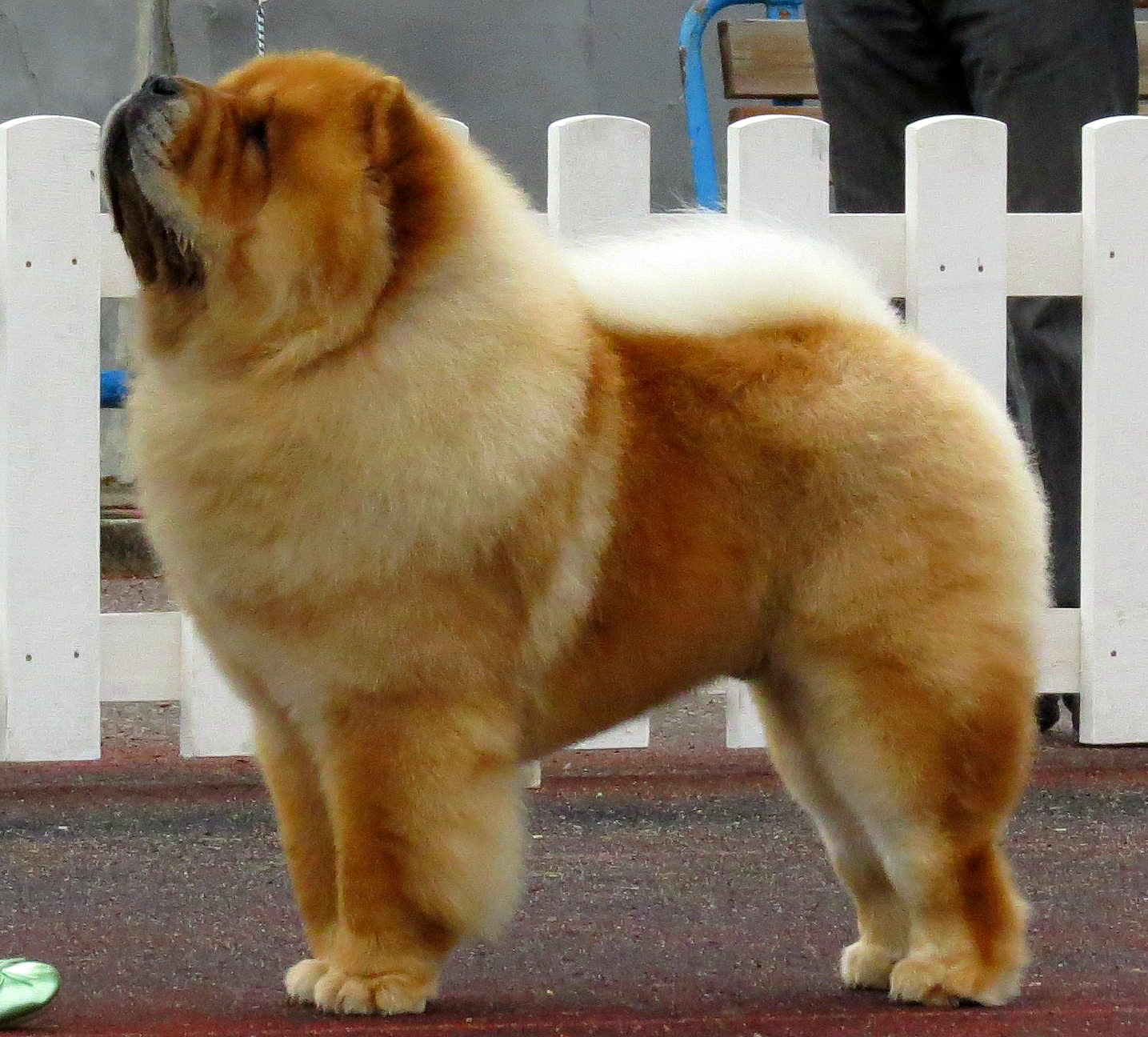
The Chow Chow is a spitz-type of dog breed originally from Northern China. The Chow Chow is a sturdily built dog, square in profile, with a broad skull and small, triangular, erect ears with rounded tips. The breed is known for a very dense double coat that is either smooth or rough. The fur is particularly thick in the neck area, giving it a distinctive ruff or mane appearance. The coat may be shaded/self-red, black, blue, cinnamon/fawn, or cream.
The Chow Chow has been identified as a basal breed that predates the emergence of the modern breeds in the 19th century. A research study has concluded that the Chow Chow dog breed originated from other indigenous dogs in central China about 8,300 years ago. The ancient breed evolved and manifests both morphological and physiological features, including its dark tongue, coat of fur, and stronger build.
One Chinese legend mentions large war dogs from Central Asia that resembled black-tongued lions. One Chinese ruler was said to own 5,000 Chows. The Chinese also used Chows to pull dog sleds through swampy terrain, and this was remarked upon by Marco Polo.
Today, the American Kennel Club registers approximately 10,000 Chow Chows a year. The Canadian Kennel Club registers approximately 350.
The English name Chow Chow is unlinked to any Chinese name such as the modern 鬆獅犬/松狮犬 (sōng shī quǎn, lit. "loose lion dog") for the same breed, and hence of uncertain origin - possible and folk etymologies refer to Pidgin English.
The Chow Chow is a sturdily built dog, square in profile, with a broad skull and small, triangular, erect ears with rounded tips. The breed is known for a very dense double coat that is either smooth or rough. The fur is particularly thick in the neck area, giving it a distinctive ruff or mane appearance. The coat may be shaded/self-red, black, blue, cinnamon/fawn, or cream. Not all these color varieties are recognized as valid in all countries. Individuals with patchy or multicolored coats are considered to be outside the breed standard. Chow Chow eyes are typically deep set and almond shaped. The tongue is purple or blue-black; this color extends to the lips. The Chow Chow is the only dog breed with this distinctive bluish color in its lips and oral cavity; other dogs have black or a piebald pattern skin in their mouths. The hind legs are very straight, resulting in a rather stilted gait. Another distinctive feature is the curly tail. It has thick hair and lies curled on its back. The nose should be black, but blue-coated Chow Chow can have a solid blue or slate-colored nose. According to the American Kennel Club breed standards, any other tone is not acceptable for contests. FCI countries, however, do allow a self-colored nose in the cream.
The blue-black/purple tongue gene appears to be dominant, as most mixed breed dogs that come from a Chow Chow retain that tongue color. However, the blue-black/purple tongue can also be found on the Shar Pei. This is not to say that every mixed breed dog with spots of purple on the tongue is descended from Chow Chow, as purple spots on the tongue can be found on other purebred dogs.
Owning a Chow Chow can raise the cost of homeowners' insurance in the US because some companies consider them high-risk dogs. In a study in the Journal of the American Veterinary Medical Association, Chow Chow were responsible for 8 out of 238 fatalities related to dog bites from 1979 to 1998.
Hub AI
Chow Chow AI simulator
(@Chow Chow_simulator)
Chow Chow
The Chow Chow is a spitz-type of dog breed originally from Northern China. The Chow Chow is a sturdily built dog, square in profile, with a broad skull and small, triangular, erect ears with rounded tips. The breed is known for a very dense double coat that is either smooth or rough. The fur is particularly thick in the neck area, giving it a distinctive ruff or mane appearance. The coat may be shaded/self-red, black, blue, cinnamon/fawn, or cream.
The Chow Chow has been identified as a basal breed that predates the emergence of the modern breeds in the 19th century. A research study has concluded that the Chow Chow dog breed originated from other indigenous dogs in central China about 8,300 years ago. The ancient breed evolved and manifests both morphological and physiological features, including its dark tongue, coat of fur, and stronger build.
One Chinese legend mentions large war dogs from Central Asia that resembled black-tongued lions. One Chinese ruler was said to own 5,000 Chows. The Chinese also used Chows to pull dog sleds through swampy terrain, and this was remarked upon by Marco Polo.
Today, the American Kennel Club registers approximately 10,000 Chow Chows a year. The Canadian Kennel Club registers approximately 350.
The English name Chow Chow is unlinked to any Chinese name such as the modern 鬆獅犬/松狮犬 (sōng shī quǎn, lit. "loose lion dog") for the same breed, and hence of uncertain origin - possible and folk etymologies refer to Pidgin English.
The Chow Chow is a sturdily built dog, square in profile, with a broad skull and small, triangular, erect ears with rounded tips. The breed is known for a very dense double coat that is either smooth or rough. The fur is particularly thick in the neck area, giving it a distinctive ruff or mane appearance. The coat may be shaded/self-red, black, blue, cinnamon/fawn, or cream. Not all these color varieties are recognized as valid in all countries. Individuals with patchy or multicolored coats are considered to be outside the breed standard. Chow Chow eyes are typically deep set and almond shaped. The tongue is purple or blue-black; this color extends to the lips. The Chow Chow is the only dog breed with this distinctive bluish color in its lips and oral cavity; other dogs have black or a piebald pattern skin in their mouths. The hind legs are very straight, resulting in a rather stilted gait. Another distinctive feature is the curly tail. It has thick hair and lies curled on its back. The nose should be black, but blue-coated Chow Chow can have a solid blue or slate-colored nose. According to the American Kennel Club breed standards, any other tone is not acceptable for contests. FCI countries, however, do allow a self-colored nose in the cream.
The blue-black/purple tongue gene appears to be dominant, as most mixed breed dogs that come from a Chow Chow retain that tongue color. However, the blue-black/purple tongue can also be found on the Shar Pei. This is not to say that every mixed breed dog with spots of purple on the tongue is descended from Chow Chow, as purple spots on the tongue can be found on other purebred dogs.
Owning a Chow Chow can raise the cost of homeowners' insurance in the US because some companies consider them high-risk dogs. In a study in the Journal of the American Veterinary Medical Association, Chow Chow were responsible for 8 out of 238 fatalities related to dog bites from 1979 to 1998.
Recent media