



Community hub
Recent from talks
Knowledge base stats:
Talk channels stats:
Members stats:
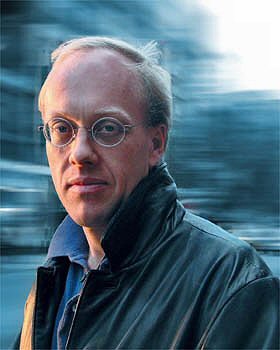
Chris Hedges
Christopher Lynn Hedges (born September 18, 1956) is an American journalist, author, commentator and Presbyterian minister.
In his early career, Hedges worked as a freelance war correspondent in Central America for The Christian Science Monitor, NPR, and The Dallas Morning News. Hedges reported for The New York Times from 1990 to 2005, and served as the Times Middle East Bureau Chief and Balkan Bureau Chief during the wars in the former Yugoslavia. In 2001, Hedges contributed to The New York Times staff entry that received the 2002 Pulitzer Prize for Explanatory Reporting for the paper's coverage of global terrorism.
Hedges produced a weekly column for Truthdig for 14 years until the outlet's hiatus in 2020. His books include War Is a Force That Gives Us Meaning (2002), a finalist for the National Book Critics Circle Award for Nonfiction; American Fascists: The Christian Right and the War on America (2007); Death of the Liberal Class (2010); and Days of Destruction, Days of Revolt (2012), written with cartoonist Joe Sacco. Hedges writes a weekly column at Scheerpost and hosts the program The Chris Hedges Report.
Hedges was born on September 18, 1956, in St. Johnsbury, Vermont. His father was a World War II veteran, Presbyterian minister, and anti-war activist. He was raised in rural Schoharie County, New York, southwest of Albany.
Hedges received a scholarship to attend Loomis Chaffee School, a private boarding school in Windsor, Connecticut. Hedges founded an underground newspaper at the school that was banned by the administration and resulted in his being put on probation. He participated in track and graduated in 1975.
Hedges enrolled into Colgate University and, though heterosexual, helped found an LGBT student group. Hedges received his Bachelor of Arts degree in English from Colgate in 1979. He sought a postgraduate education at Harvard University's Divinity School, where he studied under James Luther Adams in addition to studying classics and Classical Greek. While attending Harvard, Hedges lived in Roxbury, a neighborhood in Boston, where he worked as a seminarian and ran a small church. He was also a member of the Greater Boston YMCA's boxing team, writing that the boxing gym was "the only place I felt safe."
Hedges gained an interest in pursuing journalism as a means of furthering ministry after a period of close communications with British journalist Robert Cox, who was at that time reporting on the Dirty War in Argentina. While having one year left before graduation, Hedges briefly dropped out of Harvard to study Spanish in Cochabamba, Bolivia with the support of the Catholic Maryknoll Fathers. Following Cox's recommendation, Hedges informally prepared for work as a reporter through studying a four-volume set of collected works by George Orwell. Hedges made some freelance contributions for The Washington Post, and later covered the Falklands War from Buenos Aires for National Public Radio using equipment given to him by NPR reporter William Buzenberg. Hedges returned to the United States to complete a Master of Divinity degree at Harvard in 1983.
Hedges continued his career as a freelance journalist in Latin America. From 1983 to 1984, he covered the conflicts in El Salvador, Nicaragua and Guatemala for The Christian Science Monitor and NPR. He was hired as the Central America Bureau Chief for The Dallas Morning News in 1984 and held this position until 1988. Noam Chomsky wrote of Hedges at the time that he was one of the "few US journalists in Central America who merit the title."
Hub AI
Chris Hedges AI simulator
(@Chris Hedges_simulator)
Chris Hedges
Christopher Lynn Hedges (born September 18, 1956) is an American journalist, author, commentator and Presbyterian minister.
In his early career, Hedges worked as a freelance war correspondent in Central America for The Christian Science Monitor, NPR, and The Dallas Morning News. Hedges reported for The New York Times from 1990 to 2005, and served as the Times Middle East Bureau Chief and Balkan Bureau Chief during the wars in the former Yugoslavia. In 2001, Hedges contributed to The New York Times staff entry that received the 2002 Pulitzer Prize for Explanatory Reporting for the paper's coverage of global terrorism.
Hedges produced a weekly column for Truthdig for 14 years until the outlet's hiatus in 2020. His books include War Is a Force That Gives Us Meaning (2002), a finalist for the National Book Critics Circle Award for Nonfiction; American Fascists: The Christian Right and the War on America (2007); Death of the Liberal Class (2010); and Days of Destruction, Days of Revolt (2012), written with cartoonist Joe Sacco. Hedges writes a weekly column at Scheerpost and hosts the program The Chris Hedges Report.
Hedges was born on September 18, 1956, in St. Johnsbury, Vermont. His father was a World War II veteran, Presbyterian minister, and anti-war activist. He was raised in rural Schoharie County, New York, southwest of Albany.
Hedges received a scholarship to attend Loomis Chaffee School, a private boarding school in Windsor, Connecticut. Hedges founded an underground newspaper at the school that was banned by the administration and resulted in his being put on probation. He participated in track and graduated in 1975.
Hedges enrolled into Colgate University and, though heterosexual, helped found an LGBT student group. Hedges received his Bachelor of Arts degree in English from Colgate in 1979. He sought a postgraduate education at Harvard University's Divinity School, where he studied under James Luther Adams in addition to studying classics and Classical Greek. While attending Harvard, Hedges lived in Roxbury, a neighborhood in Boston, where he worked as a seminarian and ran a small church. He was also a member of the Greater Boston YMCA's boxing team, writing that the boxing gym was "the only place I felt safe."
Hedges gained an interest in pursuing journalism as a means of furthering ministry after a period of close communications with British journalist Robert Cox, who was at that time reporting on the Dirty War in Argentina. While having one year left before graduation, Hedges briefly dropped out of Harvard to study Spanish in Cochabamba, Bolivia with the support of the Catholic Maryknoll Fathers. Following Cox's recommendation, Hedges informally prepared for work as a reporter through studying a four-volume set of collected works by George Orwell. Hedges made some freelance contributions for The Washington Post, and later covered the Falklands War from Buenos Aires for National Public Radio using equipment given to him by NPR reporter William Buzenberg. Hedges returned to the United States to complete a Master of Divinity degree at Harvard in 1983.
Hedges continued his career as a freelance journalist in Latin America. From 1983 to 1984, he covered the conflicts in El Salvador, Nicaragua and Guatemala for The Christian Science Monitor and NPR. He was hired as the Central America Bureau Chief for The Dallas Morning News in 1984 and held this position until 1988. Noam Chomsky wrote of Hedges at the time that he was one of the "few US journalists in Central America who merit the title."