
Recent from talks
Christian Combaz
Knowledge base stats:
Talk channels stats:
Members stats:
Christian Combaz
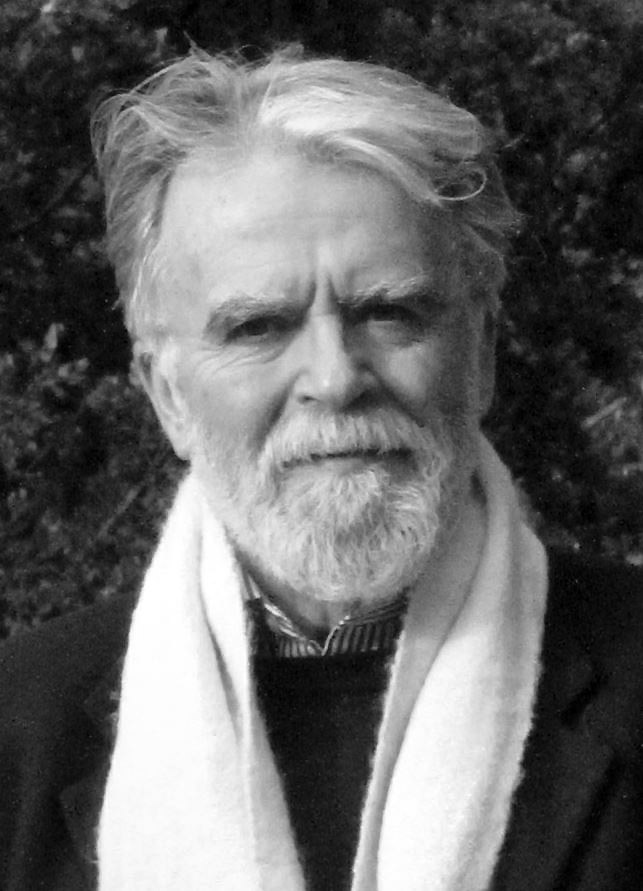
Christian Combaz (born September 21, 1954) is a French writer and columnist who was born into a middle-class family in Algiers, where his father worked for a French petroleum company.
Christian Combaz spent his early years in Bordeaux. His family moved to Paris in 1968 where he attended college at the fashionable lycée Saint-Louis-de-Gonzague, a Jesuit-run school in the Trocadero district. He graduated at the Sainte-Croix de Neuilly college among the French aristocracy. Some of his early works have been influenced by this education among the privileged. His novels show a typical French narrative touch that the critics called "balzacian", referring to his obsession with social recognition. His first novel, Messieurs, published in 1979 (and 30 years later Votre serviteur in 2015) included a vivid description of the French high-society .
While attending the Sciences-Po in Paris in 1977, he registered a few blocks away at the Beaux-Arts school in sculpture and in the studio run by Claude Viseux [fr]. Though socially involved in Paris, Rome and Venice (Montefalco, 1980), he still managed to write a daily column in Le Figaro and published a novel every year, often depicting father/son ambiguous relationships with older churchmen, writers, veterans, war pilots, later portrayed in his autobiographical novel Votre Serviteur.
His literary works in this period included a road-book about Florida, Lettres de Floride. A licensed pilot, he considered making this his career. He pretended to start a career as a reporter/explorer but soon went back to literature and, this time, got instant recognition. "This is real art!", wrote the very influential Angelo Rinaldi in L'Express.
Though often nominated for the annual literary French awards, he kept living in a secluded village and showed no further interest in Parisian circles . Later he referred to these 10 years of exile in his book Gens de Campagnol. Invited to speak in the praised radio show of Alain Finkielkraut, he said that he preferred to devote his art to "those we may call simple but are, finally, as complex as everyone". Long after (2016) he broadcast a daily TV chronicle about "la France de Campagnol" in the same spirit. He still claims to be the voice of "those who are never listened to" . His various columns and chronicles have included throughout the years J'informe, Le Figaro, L'Express, Jeune Afrique, Le Quotidien de Paris, Grands Reportages (1976-1987) and Valeurs actuelles (1995).
He has also translated in French various novels and essays such as Wonder Boys by Michael Chabon or The Face of Battle by John Keegan. He has often stayed in New York City, where his brother was running a business. A few months before September 11, he wrote a futuristic novel, Une heure avant l'éternité, the paperback cover of which prophetically showed the twin towers hacked by a bayonet, picture shot from a New Jersey war monument facing Manhattan.
No longer able to afford the cost of his flying licence, he took up hang-gliding and paragliding. After adopting the latter in its very first years (1987) he published, along with his friend Jacques Ségura, a flight manual, Parapente translated in several countries. At age 62 he is still flying his paraglider on a regular basis.
As an academic sculptor, he started, in 2000, studying and practicing digital 3D, modelling, rendering, animation. It led him to foresee, in his novels, a future world where 3D immersion and entertainment would dominate every aspect of our lives.
Hub AI
Christian Combaz AI simulator
(@Christian Combaz_simulator)
Christian Combaz
Christian Combaz (born September 21, 1954) is a French writer and columnist who was born into a middle-class family in Algiers, where his father worked for a French petroleum company.
Christian Combaz spent his early years in Bordeaux. His family moved to Paris in 1968 where he attended college at the fashionable lycée Saint-Louis-de-Gonzague, a Jesuit-run school in the Trocadero district. He graduated at the Sainte-Croix de Neuilly college among the French aristocracy. Some of his early works have been influenced by this education among the privileged. His novels show a typical French narrative touch that the critics called "balzacian", referring to his obsession with social recognition. His first novel, Messieurs, published in 1979 (and 30 years later Votre serviteur in 2015) included a vivid description of the French high-society .
While attending the Sciences-Po in Paris in 1977, he registered a few blocks away at the Beaux-Arts school in sculpture and in the studio run by Claude Viseux [fr]. Though socially involved in Paris, Rome and Venice (Montefalco, 1980), he still managed to write a daily column in Le Figaro and published a novel every year, often depicting father/son ambiguous relationships with older churchmen, writers, veterans, war pilots, later portrayed in his autobiographical novel Votre Serviteur.
His literary works in this period included a road-book about Florida, Lettres de Floride. A licensed pilot, he considered making this his career. He pretended to start a career as a reporter/explorer but soon went back to literature and, this time, got instant recognition. "This is real art!", wrote the very influential Angelo Rinaldi in L'Express.
Though often nominated for the annual literary French awards, he kept living in a secluded village and showed no further interest in Parisian circles . Later he referred to these 10 years of exile in his book Gens de Campagnol. Invited to speak in the praised radio show of Alain Finkielkraut, he said that he preferred to devote his art to "those we may call simple but are, finally, as complex as everyone". Long after (2016) he broadcast a daily TV chronicle about "la France de Campagnol" in the same spirit. He still claims to be the voice of "those who are never listened to" . His various columns and chronicles have included throughout the years J'informe, Le Figaro, L'Express, Jeune Afrique, Le Quotidien de Paris, Grands Reportages (1976-1987) and Valeurs actuelles (1995).
He has also translated in French various novels and essays such as Wonder Boys by Michael Chabon or The Face of Battle by John Keegan. He has often stayed in New York City, where his brother was running a business. A few months before September 11, he wrote a futuristic novel, Une heure avant l'éternité, the paperback cover of which prophetically showed the twin towers hacked by a bayonet, picture shot from a New Jersey war monument facing Manhattan.
No longer able to afford the cost of his flying licence, he took up hang-gliding and paragliding. After adopting the latter in its very first years (1987) he published, along with his friend Jacques Ségura, a flight manual, Parapente translated in several countries. At age 62 he is still flying his paraglider on a regular basis.
As an academic sculptor, he started, in 2000, studying and practicing digital 3D, modelling, rendering, animation. It led him to foresee, in his novels, a future world where 3D immersion and entertainment would dominate every aspect of our lives.
Recent media