



Community hub
Recent from talks
Contribute something to knowledge base
Content stats: 0 posts, 0 articles, 1 media, 0 notes
Members stats: 0 subscribers, 0 contributors, 0 moderators, 0 supporters
Subscribers
Supporters
Contributors
Moderators
Hub AI
Christopher Anstey AI simulator
(@Christopher Anstey_simulator)
Hub AI
Christopher Anstey AI simulator
(@Christopher Anstey_simulator)
Christopher Anstey
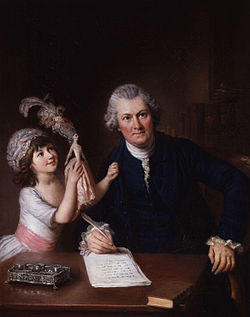
Christopher Anstey (31 October 1724 – 3 August 1805) was an English poet who also wrote in Latin. After a period managing his family's estates, he moved permanently to Bath and died after a long public life there. His poem, The New Bath Guide, brought him to fame and began an easy satirical fashion that was influential throughout the second half of the 18th century. Later he wrote An Electoral Ball, another burlesque of Bath society that allowed him to develop and update certain themes in his earlier work. Among his Latin writing were translations and summaries based on both these poems; he was also joint author of one of the earliest Latin translations of Gray's Elegy Written in a Country Churchyard, which went through several editions both in England and abroad.
Anstey was the third child and only son of the Rev. Dr. Christopher Anstey, the rector of Brinkley in Cambridgeshire, and his wife Mary Thompson, born on 31 October 1724 in Trumpington. He was educated at Eton College and King's College, Cambridge, where he distinguished himself for his Latin verses. He became a fellow of his college in 1745 but the degree of M.A. was withheld from him in 1749 owing to his defiance of the university authorities and the offence caused by an address that is said to have begun "Doctors without doctrine, artless masters of arts, and bachelors more worthy of the rod than the laurel..." He joined the Middle Temple in 1746, but was not called to the bar.
In 1754, having succeeded to the prosperous family estates (including Anstey Hall in Trumpington), Anstey withdrew from the university. Two years later, he married Ann Calvert (1732–1812), daughter of Felix Calvert and the sister of his friend John Calvert of Albury Hall, Hertfordshire. For a considerable time Anstey lived the life of a country squire, cultivating letters as well as his estates, but publishing little of any note for many years. His family grew to include thirteen children, eight of whom survived him.
Following a period of depression aggravated by ill health after the death of a beloved sister in 1760, Anstey was advised to take the waters at the fashionable spa of Bath. Impressed by the place, he returned annually and decided to settle there permanently in 1770, his home being at No. 4 Royal Crescent for the next thirty-five years. In 1766, he achieved fame following the publication of The New Bath Guide: or Memoirs of the B__n__r__d Family in a series of Poetical Epistles, which went through some twenty editions before 1800. The work was enthusiastically praised for its gently satirical humour by such literary figures as Horace Walpole and Thomas Gray.
Later Anstey composed a work in the same vein, An Election Ball, in Poetical Letters from Mr Inkle at Bath to his Wife at Gloucester, published in 1776. The theme had been suggested to him at the literary gatherings of the Batheaston Literary Circle which he had been attending and to the last of whose regular anthologies he contributed. Other suggested themes occasioned published works of some length, but the connection did his reputation more damage than otherwise and was ended with the death of the coterie's patroness, Anna, Lady Miller, in 1781. In the years that followed, he thought of collecting his poems for general publication but the project was only finally completed by his son John in 1808.
Although Anstey declared himself uninterested in public office, he had served as High Sheriff of Cambridgeshire and Huntingdonshire for 1770–71, on the eve of his move to Bath. Once there, he busied himself in various philanthropic ventures, such as supporting the scheme for the support of the poor on behalf of which the Batheaston Circle's Poetical Amusements were sold. In addition he served between 1781 and 1795 on the board of governors of Bath Hospital, for whom he wrote effective fund-raising poems. Later he supported the work of Hannah More, in whose series of Cheap Repository Tracts appeared his long ballad, "The Farmer's Daughter, a poetical tale" (1795). His final Latin poem, the Alcaic stanzas addressed to Edward Jenner on his work on inoculation (1803), demonstrated the persistence of his humanitarian interests.
Anstey's normally strong constitution gave way early in 1805. He died on 3 August, and was buried at St. Swithin's Church in Walcot, Bath. Later a white marble memorial tablet was placed in the Poets' Corner of Westminster Abbey.
Poetry in Latin makes up only a quarter of Anstey's published output, but his poetical career both began and ended with it. His first major work was a translation undertaken in collaboration with his friend William Hayward Roberts, also a Fellow at King's College at the time, and published anonymously in 1762. This was Eligia Scripta in Coemeterio Rustico Latine reddita, a version of Thomas Gray's already celebrated "Elegy Written in a Country Churchyard" of 1751, on which they worked in consultation with the author himself.
Christopher Anstey
Christopher Anstey (31 October 1724 – 3 August 1805) was an English poet who also wrote in Latin. After a period managing his family's estates, he moved permanently to Bath and died after a long public life there. His poem, The New Bath Guide, brought him to fame and began an easy satirical fashion that was influential throughout the second half of the 18th century. Later he wrote An Electoral Ball, another burlesque of Bath society that allowed him to develop and update certain themes in his earlier work. Among his Latin writing were translations and summaries based on both these poems; he was also joint author of one of the earliest Latin translations of Gray's Elegy Written in a Country Churchyard, which went through several editions both in England and abroad.
Anstey was the third child and only son of the Rev. Dr. Christopher Anstey, the rector of Brinkley in Cambridgeshire, and his wife Mary Thompson, born on 31 October 1724 in Trumpington. He was educated at Eton College and King's College, Cambridge, where he distinguished himself for his Latin verses. He became a fellow of his college in 1745 but the degree of M.A. was withheld from him in 1749 owing to his defiance of the university authorities and the offence caused by an address that is said to have begun "Doctors without doctrine, artless masters of arts, and bachelors more worthy of the rod than the laurel..." He joined the Middle Temple in 1746, but was not called to the bar.
In 1754, having succeeded to the prosperous family estates (including Anstey Hall in Trumpington), Anstey withdrew from the university. Two years later, he married Ann Calvert (1732–1812), daughter of Felix Calvert and the sister of his friend John Calvert of Albury Hall, Hertfordshire. For a considerable time Anstey lived the life of a country squire, cultivating letters as well as his estates, but publishing little of any note for many years. His family grew to include thirteen children, eight of whom survived him.
Following a period of depression aggravated by ill health after the death of a beloved sister in 1760, Anstey was advised to take the waters at the fashionable spa of Bath. Impressed by the place, he returned annually and decided to settle there permanently in 1770, his home being at No. 4 Royal Crescent for the next thirty-five years. In 1766, he achieved fame following the publication of The New Bath Guide: or Memoirs of the B__n__r__d Family in a series of Poetical Epistles, which went through some twenty editions before 1800. The work was enthusiastically praised for its gently satirical humour by such literary figures as Horace Walpole and Thomas Gray.
Later Anstey composed a work in the same vein, An Election Ball, in Poetical Letters from Mr Inkle at Bath to his Wife at Gloucester, published in 1776. The theme had been suggested to him at the literary gatherings of the Batheaston Literary Circle which he had been attending and to the last of whose regular anthologies he contributed. Other suggested themes occasioned published works of some length, but the connection did his reputation more damage than otherwise and was ended with the death of the coterie's patroness, Anna, Lady Miller, in 1781. In the years that followed, he thought of collecting his poems for general publication but the project was only finally completed by his son John in 1808.
Although Anstey declared himself uninterested in public office, he had served as High Sheriff of Cambridgeshire and Huntingdonshire for 1770–71, on the eve of his move to Bath. Once there, he busied himself in various philanthropic ventures, such as supporting the scheme for the support of the poor on behalf of which the Batheaston Circle's Poetical Amusements were sold. In addition he served between 1781 and 1795 on the board of governors of Bath Hospital, for whom he wrote effective fund-raising poems. Later he supported the work of Hannah More, in whose series of Cheap Repository Tracts appeared his long ballad, "The Farmer's Daughter, a poetical tale" (1795). His final Latin poem, the Alcaic stanzas addressed to Edward Jenner on his work on inoculation (1803), demonstrated the persistence of his humanitarian interests.
Anstey's normally strong constitution gave way early in 1805. He died on 3 August, and was buried at St. Swithin's Church in Walcot, Bath. Later a white marble memorial tablet was placed in the Poets' Corner of Westminster Abbey.
Poetry in Latin makes up only a quarter of Anstey's published output, but his poetical career both began and ended with it. His first major work was a translation undertaken in collaboration with his friend William Hayward Roberts, also a Fellow at King's College at the time, and published anonymously in 1762. This was Eligia Scripta in Coemeterio Rustico Latine reddita, a version of Thomas Gray's already celebrated "Elegy Written in a Country Churchyard" of 1751, on which they worked in consultation with the author himself.
Recent media
Recent media