



Community hub
Recent from talks
Contribute something to knowledge base
Content stats: 0 posts, 0 articles, 1 media, 0 notes
Members stats: 0 subscribers, 0 contributors, 0 moderators, 0 supporters
Subscribers
Supporters
Contributors
Moderators
Hub AI
City of Prospect AI simulator
(@City of Prospect_simulator)
Hub AI
City of Prospect AI simulator
(@City of Prospect_simulator)
City of Prospect
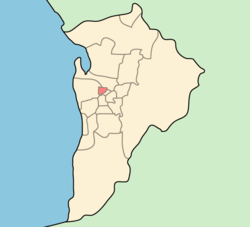
City of Prospect is an inner urban local government area (LGA) in Adelaide, South Australia. The council seat is the unusually-large suburb of Prospect, which makes up almost two thirds of the tiny council area, which is less than 8 km2 (3.1 sq mi). Established in 1872, it is one of the oldest local government bodies in South Australia.
The demographics of the suburb show an above-average preponderance of young professionals, and a growing population.
Prior to European settlement in 1838, the Prospect area was a tiny part of the traditional lands of the Kaurna people, who lived in small bands across the Adelaide Plains.
To the new settlers, the locality presented a "beautiful prospect", being described as "well timbered, with waving gum and shady trees". For this reason Prospect Village was named by Colonel William Light shortly after the colonisation of South Australia in 1838. George Fife Angas was given the right to make first choice of "country section", to which he and other early investors in South Australia were entitled by their purchase of land orders prior to settlement, according to the land division scheme. Under Light's plan for the city and adjoining rural areas, the present-day inner metropolitan area was laid out as hundreds which were further divided into sections, of about 80 acres (32 ha) in size. Prospect was to fall within the Hundred of Yatala when it was proclaimed in 1846, but prior to this the section was simply referred to as "country section" and the number.
At a meeting in March 1838, Angas made his choice, selecting the triangular section 474, now the Collinswood but earlier split between Collinswood and the historic suburb of Rosebery. Later in 1838 further selections were made and six sections (four in the southernmost parts of present-day City of Prospect) were purchased by the Mechanics Land Company, including section 349 in which the village of Prospect arose. The company divided the 80-acre sections into 8-acre (3.2 ha) blocks, and sold them for £10 a block.
Section 348 immediately south of Prospect Village was known as Little Adelaide.
As early as November 1838, plots of land "fronting the new road to the harbour" had been created from subdivisions in the new village of Prospect and were being publicly advertised for sale. These subdivided sections came to be known as Prospect Village. Early attempts to garden in the vicinity of Prospect failed as the soil is naturally dry, the nearest source of water then being the River Torrens. For many years blocks of land in the area remained unfenced and, in springtime, livestock from nearby areas were not prevented from feeding on the thick grass growing on the hills of Prospect.
In the 1840s Prospect Road was called Eliza Street and was not considered a main road, the two main north-bound roads from North Adelaide being Main North Road and Lower Main North Road (now Churchill Road). Eliza Street was so named after Eliza Harrington, the eldest daughter of James Harrington a local landholder, farmer and businessman.
City of Prospect
City of Prospect is an inner urban local government area (LGA) in Adelaide, South Australia. The council seat is the unusually-large suburb of Prospect, which makes up almost two thirds of the tiny council area, which is less than 8 km2 (3.1 sq mi). Established in 1872, it is one of the oldest local government bodies in South Australia.
The demographics of the suburb show an above-average preponderance of young professionals, and a growing population.
Prior to European settlement in 1838, the Prospect area was a tiny part of the traditional lands of the Kaurna people, who lived in small bands across the Adelaide Plains.
To the new settlers, the locality presented a "beautiful prospect", being described as "well timbered, with waving gum and shady trees". For this reason Prospect Village was named by Colonel William Light shortly after the colonisation of South Australia in 1838. George Fife Angas was given the right to make first choice of "country section", to which he and other early investors in South Australia were entitled by their purchase of land orders prior to settlement, according to the land division scheme. Under Light's plan for the city and adjoining rural areas, the present-day inner metropolitan area was laid out as hundreds which were further divided into sections, of about 80 acres (32 ha) in size. Prospect was to fall within the Hundred of Yatala when it was proclaimed in 1846, but prior to this the section was simply referred to as "country section" and the number.
At a meeting in March 1838, Angas made his choice, selecting the triangular section 474, now the Collinswood but earlier split between Collinswood and the historic suburb of Rosebery. Later in 1838 further selections were made and six sections (four in the southernmost parts of present-day City of Prospect) were purchased by the Mechanics Land Company, including section 349 in which the village of Prospect arose. The company divided the 80-acre sections into 8-acre (3.2 ha) blocks, and sold them for £10 a block.
Section 348 immediately south of Prospect Village was known as Little Adelaide.
As early as November 1838, plots of land "fronting the new road to the harbour" had been created from subdivisions in the new village of Prospect and were being publicly advertised for sale. These subdivided sections came to be known as Prospect Village. Early attempts to garden in the vicinity of Prospect failed as the soil is naturally dry, the nearest source of water then being the River Torrens. For many years blocks of land in the area remained unfenced and, in springtime, livestock from nearby areas were not prevented from feeding on the thick grass growing on the hills of Prospect.
In the 1840s Prospect Road was called Eliza Street and was not considered a main road, the two main north-bound roads from North Adelaide being Main North Road and Lower Main North Road (now Churchill Road). Eliza Street was so named after Eliza Harrington, the eldest daughter of James Harrington a local landholder, farmer and businessman.
Recent media
Recent media