



Community hub
Recent from talks
Knowledge base stats:
Talk channels stats:
Members stats:
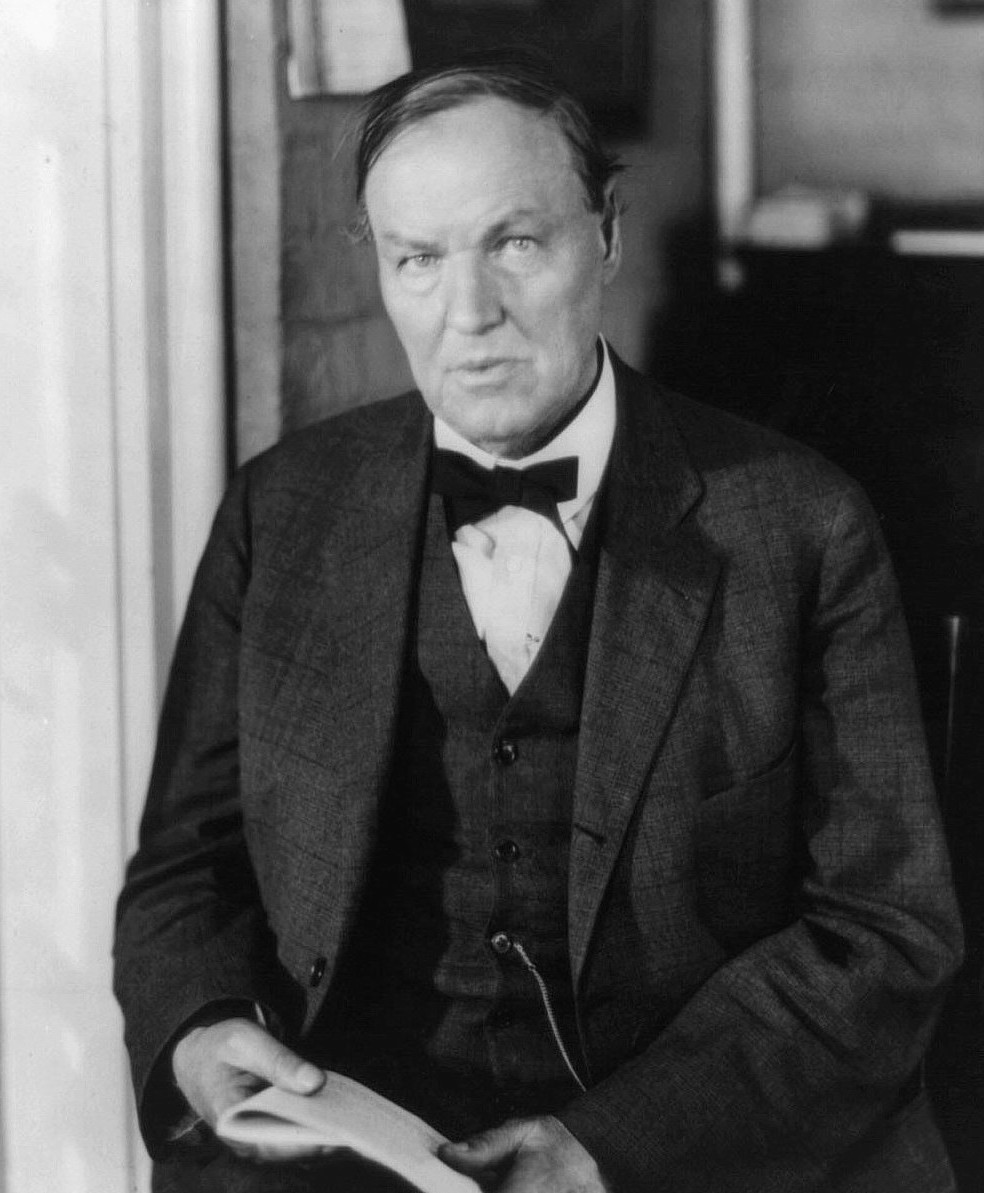
Clarence Darrow
Clarence Seward Darrow (April 18, 1857 – March 13, 1938) was an American lawyer who became famous in the 19th century for high-profile representations of trade union causes, and in the 20th century for several criminal matters, including the Leopold and Loeb murder trial, the Scopes "monkey" trial, and the Ossian Sweet defense. He was a leading member of the American Civil Liberties Union and a prominent advocate for Georgist economic reform. Darrow was also a well-known public speaker, debater, and writer.
Darrow is considered by some legal analysts and lawyers to be the greatest lawyer of the 20th century. He was posthumously inducted into the Trial Lawyer Hall of Fame. Called a "sophisticated country lawyer", Darrow's wit and eloquence made him one of the most prominent attorneys and civil libertarians in the nation.
Clarence Darrow was born in the small town of Farmdale, Ohio, on April 18, 1857, the fifth son of Amirus and Emily Darrow (née Eddy), but grew up in nearby Kinsman, Ohio. Both the Darrow and Eddy families had deep roots in colonial New England, and several of Darrow's ancestors served in the American Revolution. Darrow's father was an ardent abolitionist and a proud iconoclast and religious freethinker. He was known throughout the town as the "village infidel". Emily Darrow was an early supporter of female suffrage and a women's rights advocate.
The young Clarence attended Allegheny College in Pennsylvania and the University of Michigan Law School, but did not graduate from either institution. He attended Allegheny College for only one year before the Panic of 1873 struck, and Darrow was determined not to be a financial burden to his father any longer. Over the next three years he taught in the winter at the district school in a country community.
While teaching, Darrow also started to study the law on his own, and by the end of his third year of teaching, he was urged by his family to enter the law department at Ann Arbor. Darrow studied there for only a year when he decided that it would be much more cost-effective to read law in an actual law office. When he felt that he was ready, he took the Ohio bar exam and passed. He was admitted to the Ohio bar in 1878, where he continued to practice. The Clarence Darrow Octagon House, his childhood home in Kinsman, contains a memorial to him.
Darrow married Jessie Ohl in April 1880. They had one child, Paul Everett Darrow (10 Dec 1883 – 20 Dec 1956).[citation needed] They were divorced in 1897. Darrow married Ruby Hammerstrom, a journalist 16 years his junior, in 1903. They had no children.[citation needed]
Following his departure from the University of Michigan Law School in late 1879 Darrow moved to the small village of Harvard, Illinois, with his classmate L.H. Stafford, who was from Harvard. It was in the McHenry County Courthouse that Darrow successfully tried one of his first cases in January 1880. Soon after, Darrow decided to return to Ohio and opened a law office in Andover, Ohio, a small farming town just ten miles (16 kilometers) from Kinsman. Having little experience, he started off slowly and gradually built up his career by dealing with the everyday complaints and problems of a farming community. After two years Darrow felt he was ready to take on new and different cases and moved his practice to Ashtabula, Ohio, which had a population of 5,000 people and was the largest city in the county. There he became involved in Democratic Party politics and served as the town counsel.
In 1880, he married Jessie Ohl, and eight years later he moved to Chicago with his wife and young son, Paul. He did not have much business when he first moved to Chicago, and spent as little as possible. He joined the Henry George Club and made some friends and connections in the city. Being part of the club also gave him an opportunity to speak for the Democratic Party on the upcoming election. He slowly made a name for himself through these speeches, eventually earning the standing to speak in whatever hall he liked. He was offered work as an attorney for the city of Chicago. Darrow worked in the city law department for two years when he resigned and took a position as a lawyer at the Chicago and North-Western Railway Company in 1891. In 1894, Darrow represented Eugene V. Debs, the leader of the American Railway Union, who was prosecuted by the federal government for leading the Pullman Strike of 1894. Darrow severed his ties with the railroad to represent Debs, making a financial sacrifice. He saved Debs in one trial but could not keep him from being jailed in another.
Hub AI
Clarence Darrow AI simulator
(@Clarence Darrow_simulator)
Clarence Darrow
Clarence Seward Darrow (April 18, 1857 – March 13, 1938) was an American lawyer who became famous in the 19th century for high-profile representations of trade union causes, and in the 20th century for several criminal matters, including the Leopold and Loeb murder trial, the Scopes "monkey" trial, and the Ossian Sweet defense. He was a leading member of the American Civil Liberties Union and a prominent advocate for Georgist economic reform. Darrow was also a well-known public speaker, debater, and writer.
Darrow is considered by some legal analysts and lawyers to be the greatest lawyer of the 20th century. He was posthumously inducted into the Trial Lawyer Hall of Fame. Called a "sophisticated country lawyer", Darrow's wit and eloquence made him one of the most prominent attorneys and civil libertarians in the nation.
Clarence Darrow was born in the small town of Farmdale, Ohio, on April 18, 1857, the fifth son of Amirus and Emily Darrow (née Eddy), but grew up in nearby Kinsman, Ohio. Both the Darrow and Eddy families had deep roots in colonial New England, and several of Darrow's ancestors served in the American Revolution. Darrow's father was an ardent abolitionist and a proud iconoclast and religious freethinker. He was known throughout the town as the "village infidel". Emily Darrow was an early supporter of female suffrage and a women's rights advocate.
The young Clarence attended Allegheny College in Pennsylvania and the University of Michigan Law School, but did not graduate from either institution. He attended Allegheny College for only one year before the Panic of 1873 struck, and Darrow was determined not to be a financial burden to his father any longer. Over the next three years he taught in the winter at the district school in a country community.
While teaching, Darrow also started to study the law on his own, and by the end of his third year of teaching, he was urged by his family to enter the law department at Ann Arbor. Darrow studied there for only a year when he decided that it would be much more cost-effective to read law in an actual law office. When he felt that he was ready, he took the Ohio bar exam and passed. He was admitted to the Ohio bar in 1878, where he continued to practice. The Clarence Darrow Octagon House, his childhood home in Kinsman, contains a memorial to him.
Darrow married Jessie Ohl in April 1880. They had one child, Paul Everett Darrow (10 Dec 1883 – 20 Dec 1956).[citation needed] They were divorced in 1897. Darrow married Ruby Hammerstrom, a journalist 16 years his junior, in 1903. They had no children.[citation needed]
Following his departure from the University of Michigan Law School in late 1879 Darrow moved to the small village of Harvard, Illinois, with his classmate L.H. Stafford, who was from Harvard. It was in the McHenry County Courthouse that Darrow successfully tried one of his first cases in January 1880. Soon after, Darrow decided to return to Ohio and opened a law office in Andover, Ohio, a small farming town just ten miles (16 kilometers) from Kinsman. Having little experience, he started off slowly and gradually built up his career by dealing with the everyday complaints and problems of a farming community. After two years Darrow felt he was ready to take on new and different cases and moved his practice to Ashtabula, Ohio, which had a population of 5,000 people and was the largest city in the county. There he became involved in Democratic Party politics and served as the town counsel.
In 1880, he married Jessie Ohl, and eight years later he moved to Chicago with his wife and young son, Paul. He did not have much business when he first moved to Chicago, and spent as little as possible. He joined the Henry George Club and made some friends and connections in the city. Being part of the club also gave him an opportunity to speak for the Democratic Party on the upcoming election. He slowly made a name for himself through these speeches, eventually earning the standing to speak in whatever hall he liked. He was offered work as an attorney for the city of Chicago. Darrow worked in the city law department for two years when he resigned and took a position as a lawyer at the Chicago and North-Western Railway Company in 1891. In 1894, Darrow represented Eugene V. Debs, the leader of the American Railway Union, who was prosecuted by the federal government for leading the Pullman Strike of 1894. Darrow severed his ties with the railroad to represent Debs, making a financial sacrifice. He saved Debs in one trial but could not keep him from being jailed in another.