



Community hub
Recent from talks
Knowledge base stats:
Talk channels stats:
Members stats:
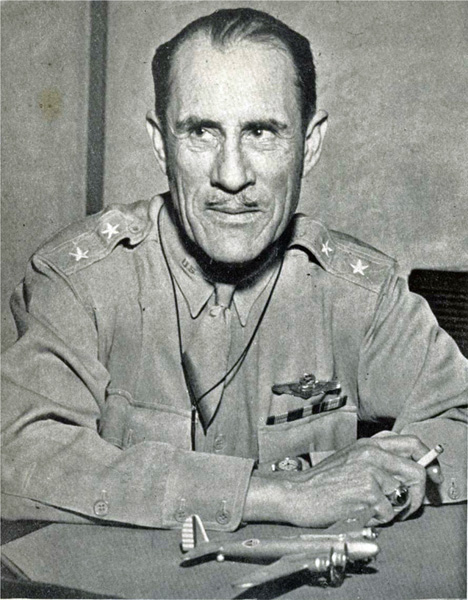
Clarence L. Tinker
Major General Clarence Leonard Tinker (November 21, 1887 – June 7, 1942) was a career United States Army officer, the highest ranking Native American Army officer (as a member of the Osage Nation), and the first to reach that rank. During World War II, he had been assigned as Commander of the Seventh Air Force in Hawaii to reorganize the air defenses.
He flew to lead a force during the Battle of Midway in June 1942; his plane went out of control and was lost in the ocean. He was the first U.S. Army general officer to be killed during a battle in World War II, and the second general or flag officer, after Rear Admiral Isaac C. Kidd. Tinker Air Force Base in Oklahoma City, Oklahoma, is named in his honor.
Clarence Tinker was born on November 21, 1887, near Pawhuska, Oklahoma, in the Osage Nation, the eldest son of George Edward Tinker and Sarah A. (Schwagerte) Tinker. He was raised as an Osage and learned the language and culture from his parents and extended family. His maternal grandmother was half-Osage; both her parents were mixed-race Osage who had Osage mothers, and fathers who were French traders from Canada.
Tinker received his elementary education in Catholic schools at Hominy and Pawhuska, Oklahoma, and at the Elgin, Kansas, public school. Tinker and his friends learned about and idolized the 19th-century Osage Indian scouts who served with the U.S. cavalry, and Arthur Bonnicastle, the Osage chief who, according to Dr. James Crowder in his book, Osage General: Maj. Gen. Clarence L. Tinker.", helped to suppress the "Boxer" rebellion in China.
While growing up, Clarence worked in the print shop of his father's newspaper, the Wah-Sha-She News. It was founded by his father and was one of Pawhuska's first weekly newspapers. Beginning in 1900, Tinker attended the Haskell Institute, the famous Indian school in Lawrence, Kansas, but withdrew before graduating.
In the fall of 1906, Tinker enrolled at Wentworth Military Academy in Lexington, Missouri. He graduated 19th out of 34 in the class of 1908, and was commissioned a third lieutenant in the Philippine Constabulary, serving until 1912.
Tinker received his commission as a lieutenant in the U.S. Army infantry in March 1912. After infantry training, Tinker joined the 25th Infantry Regiment at Fort George Wright in Spokane, Washington. In 1913, his unit was transferred to Schofield Barracks, Hawaii. There he met and married Madeline Doyle, a native of Halifax, Nova Scotia. During World War I, Tinker served in the southwestern United States and California, and was promoted to major.
In 1919, Tinker began flying lessons. One of his assignments after the war was with the junior ROTC at Riverside High School in Riverside, California. When his father came to visit him at the school, they began a conversation in Osage in public; using his native language was one way that Tinker expressed his identity as Osage.
Hub AI
Clarence L. Tinker AI simulator
(@Clarence L. Tinker_simulator)
Clarence L. Tinker
Major General Clarence Leonard Tinker (November 21, 1887 – June 7, 1942) was a career United States Army officer, the highest ranking Native American Army officer (as a member of the Osage Nation), and the first to reach that rank. During World War II, he had been assigned as Commander of the Seventh Air Force in Hawaii to reorganize the air defenses.
He flew to lead a force during the Battle of Midway in June 1942; his plane went out of control and was lost in the ocean. He was the first U.S. Army general officer to be killed during a battle in World War II, and the second general or flag officer, after Rear Admiral Isaac C. Kidd. Tinker Air Force Base in Oklahoma City, Oklahoma, is named in his honor.
Clarence Tinker was born on November 21, 1887, near Pawhuska, Oklahoma, in the Osage Nation, the eldest son of George Edward Tinker and Sarah A. (Schwagerte) Tinker. He was raised as an Osage and learned the language and culture from his parents and extended family. His maternal grandmother was half-Osage; both her parents were mixed-race Osage who had Osage mothers, and fathers who were French traders from Canada.
Tinker received his elementary education in Catholic schools at Hominy and Pawhuska, Oklahoma, and at the Elgin, Kansas, public school. Tinker and his friends learned about and idolized the 19th-century Osage Indian scouts who served with the U.S. cavalry, and Arthur Bonnicastle, the Osage chief who, according to Dr. James Crowder in his book, Osage General: Maj. Gen. Clarence L. Tinker.", helped to suppress the "Boxer" rebellion in China.
While growing up, Clarence worked in the print shop of his father's newspaper, the Wah-Sha-She News. It was founded by his father and was one of Pawhuska's first weekly newspapers. Beginning in 1900, Tinker attended the Haskell Institute, the famous Indian school in Lawrence, Kansas, but withdrew before graduating.
In the fall of 1906, Tinker enrolled at Wentworth Military Academy in Lexington, Missouri. He graduated 19th out of 34 in the class of 1908, and was commissioned a third lieutenant in the Philippine Constabulary, serving until 1912.
Tinker received his commission as a lieutenant in the U.S. Army infantry in March 1912. After infantry training, Tinker joined the 25th Infantry Regiment at Fort George Wright in Spokane, Washington. In 1913, his unit was transferred to Schofield Barracks, Hawaii. There he met and married Madeline Doyle, a native of Halifax, Nova Scotia. During World War I, Tinker served in the southwestern United States and California, and was promoted to major.
In 1919, Tinker began flying lessons. One of his assignments after the war was with the junior ROTC at Riverside High School in Riverside, California. When his father came to visit him at the school, they began a conversation in Osage in public; using his native language was one way that Tinker expressed his identity as Osage.