Hubbry Logo
Claude SamuelClaude SamuelMain
Open search
Claude Samuel
Community hub
Claude Samuel
logo
8 pages, 0 posts
0 subscribers
Be the first to start a discussion here.
Claude Samuel
Claude Samuel
from Wikipedia
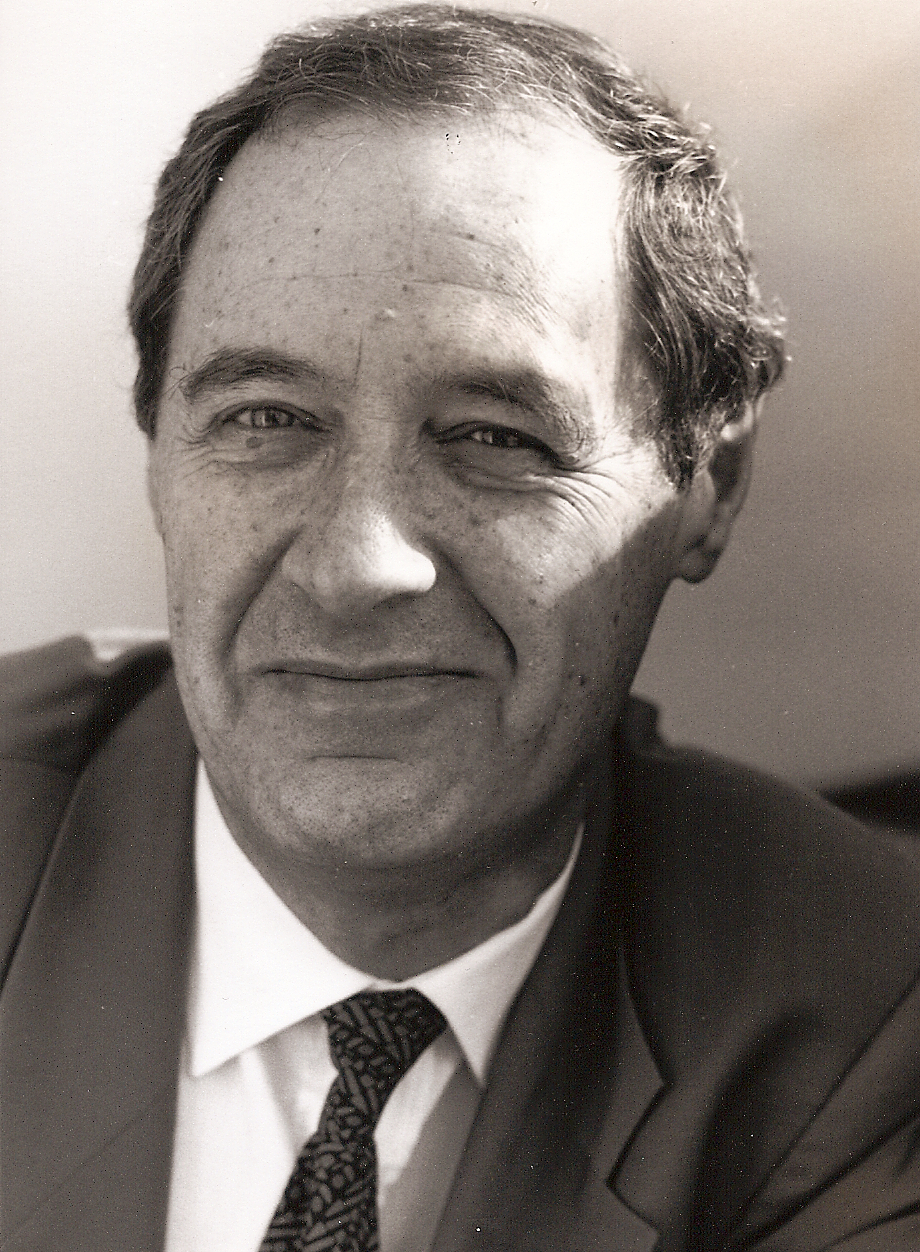
Claude Samuel (Guy Vivien)

Claude Samuel (23 June 1931 – 14 June 2020[1]) was a French music critic and radio personality.

Biography

[edit]

Born in Paris, after medical studies and graduating as a dental surgeon, Samuel chose to devote himself to classical music journalism. He was a regular contributor to various newspapers of the daily press (Paris-Presse, from 1961 to 1970; Le Matin de Paris, from 1977 to 1987), of the weekly press (L’Express in 1959 and 1960; Le Nouveau Candide from 1961 to 1967; Le Point, from 1974 to 1989), the monthly press (Revue Réalités, and discs collection Philips-Réalités from 1957 to 1960) and the music press (Harmonie, Le Panorama de la Musique, Musiques, La Lettre du musicien, Diapason, where he has been responsible for the "Ce jour-là" column since 2001). He also commented on cultural news since 2007 until November 2018 in a weekly blog.[2][1]

A producer of programs at the R.T.F. then at the O.R.T.F. (more than a thousand broadcasts from 1957 to 2007 for France Culture and France Musique), he was Director of Music (appointed under the presidency of Jean Maheu) from 1989 to 1996; in this capacity, he was vice-president of the Théâtre des Champs-Élysées.

Devoting an important part of his activity, in different forms, to contemporary creation, he was responsible for the programming of the Royan Festival from 1965 to 1972 and then, after a dispute with the Royan authorities, he continued this work in La Rochelle from 1973 to 1977.

Creator of the "Centre Acanthes", an annual educational session for young composers and performers held successively at the Conservatoire d'Aix-en-Provence (1977–1986), at the Chartreuse de Villeneuve-lez-Avignon (1987–2003) and then at the Arsenal de Metz (2004–2011), he has invited a number of leading figures of contemporary music to attend: (Karlheinz Stockhausen, Iannis Xenakis, György Ligeti, Henri Dutilleux, Witold Lutosławski, Mauricio Kagel, Pierre Henry, Luciano Berio, Olivier Messiaen, Pierre Boulez, Luigi Nono, Tōru Takemitsu, Elliott Carter, Sofia Gubaidulina, Helmut Lachenmann, György Kurtág, Péter Eötvös, Wolfgang Rihm). At Radio France, he created and directed the Festival Présences [fr] from 1991 to 1997.

Very committed in the field of musical competitions, Claude Samuel created and directed the Olivier Messiaen Competition for contemporary piano (1977–2007) and the Concours de violoncelle Rostropovitch (1977–2009). Samuel has directed the "Concours de la Ville de Paris" from 1990 to 2014 (flute competition Jean-Pierre Rampal, trumpet competition Maurice André, piano-jazz competition Martial Solal, luthiery and arcèterie competition Étienne Vatelot).

Awards

[edit]

Works

[edit]
  • Sergueï Prokofiev. Solfèges (in French). Paris: Éditions du Seuil. 1995. p. 222. ISBN 2-02-024580-9. OCLC 610818402. Samuel1995. (ed. reworked and extended)
  • Panorama de l’art musical contemporain, Éditions Gallimard (1962)
  • Entretiens avec Olivier Messiaen, Éditions Belfond (1967)
  • Expanded edition under the title Olivier Messiaen – Musique et couleur
  • Olivier Messiaen, nouveaux entretiens, Belfond, (1986)
  • Permanences d’Olivier Messiaen - dialogues et commentaires, Actes Sud (1999)
  • Olivier Messiaen/Le livre du Centenaire (in coll. with Anik Lesure),[4] Symétrie (2008)
  • Le Grand Macabre de Ligeti, Hubschmid and Bouret (1981)
  • Éclats/Boulez, Ed. du Centre Georges Pompidou (1986)
  • Pierre Boulez/Eclats 2002, Ed. Mémoire du Livre (2002)
  • Interviews with Mstislav Rostropovitch and Galina Vishnevskaya, Éditions Robert Laffont (1983)
  • Clara S./Les secrets d’une passion, Éditions Flammarion (2006)

References

[edit]
[edit]
Revisions and contributorsEdit on WikipediaRead on Wikipedia
from Grokipedia
Claude Samuel was a French music critic, journalist, and radio producer known for his tireless advocacy of contemporary classical music, his founding of major festivals dedicated to avant-garde works, and his influential interviews with leading composers of the 20th century. He was born on June 23, 1931, in Paris and died on June 14, 2020, in Paris. Samuel initially trained in medicine and music before dedicating his career to music journalism, where he contributed to specialized publications including Diapason, Harmonie, and La Lettre du musicien. He produced nearly a thousand radio programs for France Culture and France Musique, serving as Directeur de la Musique at Radio France from 1989 to 1996. In this role, he launched the Présences festival in 1990, which became a central annual event for contemporary musical creation in France and attracted diverse audiences through its free access and focus on new works. A key figure in promoting contemporary music during a period of limited institutional support, Samuel founded or directed several landmark festivals, including the Festival international d’art contemporain de Royan (1965–1972), the Festival des arts de Persépolis (1967–1970), and the Rencontres internationales d’art contemporain de La Rochelle (1973–1979). These events established international platforms for avant-garde composers and performers. He also initiated major competitions, such as the concours Messiaen for contemporary piano in 1967, as well as contests honoring musicians like Jean-Pierre Rampal and Maurice André. Samuel maintained close relationships with prominent composers including Olivier Messiaen, Pierre Boulez, and Iannis Xenakis, publishing notable collections of conversations with Messiaen that provided deep insights into their creative processes. He further founded the Centre Acanthes summer academy in 1977 for young composers and performers, and established the Prix des Muses to honor books on music. His work as an organizer, critic, and broadcaster earned him recognition as a vital bridge between innovative music and wider audiences, with honors including Chevalier de la Légion d’honneur and Officier des Arts et des Lettres.

Early Life and Education

Birth and Early Years

Claude Samuel was born on June 23, 1931, in the 12th arrondissement of Paris, France.

Medical Training and Shift to Music

Claude Samuel completed his medical studies and graduated as a dental surgeon (chirurgien-dentiste). He pursued this training to fulfill the wishes of his family. He also pursued musical studies at the Schola Cantorum in Paris under Daniel-Lesur. He practiced the profession only briefly before abandoning it entirely. Claude Samuel then turned to his passion for music and dedicated himself full-time to music journalism and criticism. This shift marked the beginning of his lifelong commitment to the promotion and analysis of music.

Journalism Career

Claude Samuel established himself as a music critic in the French general press beginning in the late 1950s, contributing regularly to daily and weekly publications. His earliest work included collaborations with the Philips-Réalités record collection from 1957 to 1960 and the magazine Réalités from 1958 to 1961. He wrote for L’Express from 1959 to 1960. He contributed to Le Nouveau Candide from 1961 to 1967 and to Paris-Presse from 1960 to 1970, outlets that provided platforms for his music criticism in the broader daily and weekly press. Later, he wrote for Le Point from 1974 to 1989 and Le Matin de Paris from 1977 to 1988. Samuel maintained a weekly cultural news blog until November 2018, extending his commentary into digital media. These contributions to general press outlets ran parallel to his work in specialized music publications.

Specialized Music Criticism

Claude Samuel distinguished himself as a critic specializing in contemporary music through his regular contributions to several dedicated French music periodicals. He wrote for Harmonie, Le Panorama de la Musique, Musiques, and La Lettre du musicien, outlets focused on classical and modern repertoires where he analyzed new works, performances, and trends in the field. He also served as Directeur de la rédaction of the music magazine Mélomane from 1992 to 1996. His criticism consistently championed 20th-century and living composers, positioning him as a key advocate for contemporary creation amid broader musical discourse. Since 2001, Samuel served as a chronicler for Diapason magazine, contributing the long-running column “Ce jour-là,” which presents notable small and great dates from music history with insightful commentary. This feature allowed him to connect historical events to ongoing musical conversations, reflecting his deep knowledge across eras while maintaining his commitment to promoting modern music.

Radio Broadcasting Career

Production and On-Air Work

Claude Samuel maintained a prolific career as a radio producer and on-air presenter for four decades, contributing extensively to French public broadcasting. He produced and presented more than 1,000 broadcasts for France Culture and France Musique from 1959 to 1997. A central focus of his radio output was the promotion of contemporary music, through which he championed 20th-century composers and new creations at a time when such repertoire received limited mainstream exposure. As a hands-on producer and host, he crafted programs that combined commentary, interviews, and musical presentations to foster greater appreciation for modern works among listeners. His on-air work complemented his broader efforts to advance contemporary music, though his later administrative positions at Radio France are covered separately.

Leadership at Radio France

Claude Samuel served as Director of Music at Radio France from 1989 to 1996, having been appointed to the position on November 12, 1989, by Jean Maheu shortly after Maheu assumed the presidency of Radio France. He succeeded André Jouve, who had held the role since 1987. In this executive role, Samuel oversaw music programming and production across Radio France's networks. As Director of Music, Samuel concurrently held the position of Vice-President of the Théâtre des Champs-Élysées from 1989 to 1996, reflecting his institutional influence in French musical administration during this period. This leadership role at Radio France built upon his prior advisory responsibilities there for programming and production.

Promotion of Contemporary Music

Festival Leadership

Claude Samuel distinguished himself as a key figure in the promotion of contemporary music through his leadership of major festivals in France. From 1965 to 1972, he served as programming director of the Festival international d'art contemporain de Royan, establishing it as an internationally renowned platform that attracted the avant-garde elite and showcased groundbreaking works by leading composers. Tensions arose with the Royan authorities, particularly the festival president Dr. Cachet, over Samuel's proposals for technical and organizational improvements, which went unanswered and led to accusations of deliberate obstruction and a "childish" conflict; as a result, he resigned and redirected his efforts to La Rochelle. He founded and directed the Rencontres internationales d'art contemporain de La Rochelle from 1973 to 1979, maintaining a strong emphasis on contemporary creation through multidisciplinary programming and regional outreach. In his later role as Directeur de la Musique at Radio France, Samuel created the Festival Présences in 1991 and directed it until 1997, building a major annual event dedicated to the discovery of contemporary music that was initially free and succeeded in attracting diverse and substantial audiences.

Centre Acanthes Academy

The Centre Acanthes was an annual summer academy founded by Claude Samuel in 1977, which he directed until 2011. Conceived as an intensive educational platform, it enabled young composers and performers to engage directly with major figures in contemporary music through three-week sessions featuring workshops, masterclasses, conferences, and concerts. Participants lived and worked together, allowing in-depth questioning and discussion of compositional processes in a way not possible in conventional concert settings or public forums. The academy relocated several times over its history. It was initially based in Aix-en-Provence from 1977 to 1986, then moved to the Chartreuse de Villeneuve-lès-Avignon from 1987 to 2011, where it maintained close ties to the Festival d'Avignon. Among the distinguished composers who led sessions or served as central figures were Karlheinz Stockhausen in 1977, Iannis Xenakis in 1978, György Ligeti in 1979, Henri Dutilleux in 1980, Olivier Messiaen in 1987, Pierre Boulez in 1988, and others such as Luciano Berio, Luigi Nono, and Toru Takemitsu. The academy's focus on direct mentorship helped establish it as a key international institution for the transmission and development of contemporary music creation.

Founded Competitions

Claude Samuel founded and directed several international music competitions dedicated to championing contemporary music, instrumental mastery, and young talent. He created the Concours Olivier-Messiaen for contemporary piano in 1967 within the Festival de Royan, which emphasized the performance of modern piano works and continued (with changes in location and organization) until 2007. He also established the Concours de violoncelle Rostropovitch, named in honor of the legendary cellist, to support emerging cellists and operated from 1977 to 2009. From 1990 to 2014, Samuel directed the Concours de la Ville de Paris, which grouped several specialized international competitions under its umbrella. These included the Concours de flûte Jean-Pierre Rampal for flute, the Concours de trompette Maurice André for trumpet, the Concours de piano-jazz Martial Solal for jazz piano, and the Concours de lutherie Étienne Vatelot for violin making and bow making. Through these initiatives, Samuel provided structured opportunities for performers and makers to gain visibility and advance their careers in diverse musical fields.

Publications

Interviews and Books on Olivier Messiaen

Claude Samuel maintained a close personal and professional relationship with Olivier Messiaen over more than thirty years, resulting in several influential publications centered on extended interviews and in-depth reflections about the composer's life, aesthetics, and works. His first major contribution in this area was Entretiens avec Olivier Messiaen, published in 1967 by Éditions Pierre Belfond as part of the "Entretiens" collection. This 236-page volume presented a series of conversations that captured Messiaen's thoughts on his music, influences, and creative process during a period when his reputation was still evolving. Nearly two decades later, Samuel revisited and expanded this material in Musique et couleur: nouveaux entretiens avec Claude Samuel, issued by Pierre Belfond in 1986. The 308-page book incorporated revisions to the earlier interviews alongside new chapters, reflecting the intervening years in which Messiaen's oeuvre had achieved widespread acceptance as a cornerstone of contemporary music, particularly following the 1983 premiere of his opera Saint François d'Assise. In 1999, Samuel published Permanences d’Olivier Messiaen: dialogues et commentaires with Actes Sud, a 488-page work that combined dialogues with the composer and Samuel's own commentaries to explore Messiaen's enduring significance seven years after his death. Samuel described Messiaen in the book's introduction as a secretive yet benevolent figure whose music had transitioned from initial controversy to canonical status, citing examples such as the eventual embrace of Turangalîla-Symphonie and other major scores. Samuel also published Olivier Messiaen : Les couleurs du temps with INA-Radio France in 2000, further exploring the composer's synaesthetic associations and creative world. Samuel contributed to Messiaen scholarship further by co-coordinating Olivier Messiaen, le livre du centenaire with Anik Lesure for Éditions Symétrie in 2008, issued to mark the centenary of the composer's birth. This richly illustrated collective volume assembled tributes, analyses, and documents from leading figures including Pierre Boulez, Pierre-Laurent Aimard, and Messiaen's family, covering themes such as his synaesthesia, birdsong integration, religious faith, and pedagogical influence.

Other Monographs and Collaborations

Claude Samuel's writings on music extended to monographs and collaborations addressing a range of composers and topics beyond Olivier Messiaen. His early work Panorama de l’art musical contemporain (1962, Gallimard) offered a broad survey of contemporary art music, incorporating inédits texts from figures including Pierre Boulez and Iannis Xenakis. He produced a monograph on Sergei Prokofiev, reworked in a 1995 edition published by Éditions du Seuil. In 1981, Samuel published Le Grand Macabre de Ligeti with Hubschmid et Bouret, devoted to György Ligeti's operatic masterpiece. Samuel conducted and published Entretiens avec Mstislav Rostropovitch et Galina Vichnevskaïa (1983, Robert Laffont), featuring in-depth conversations with the cellist and his wife, the soprano, covering their lives, careers, and experiences in Soviet Russia. He also directed the collective volume Éclats/Boulez (1986, Éditions du Centre Georges Pompidou), centered on Pierre Boulez through interviews and contributions, which he later updated and reissued as Pierre Boulez / Éclats 2002 (2002, Mémoire du livre). In 2006, Samuel released Clara S. / Les secrets d’une passion with Flammarion, a biographical exploration of the passionate life in music of Clara Schumann.

Awards and Honors

National Orders and Decorations

Claude Samuel was the recipient of several prestigious French national decorations in recognition of his extensive contributions to music criticism, radio broadcasting, and the promotion of contemporary music. He was appointed Chevalier de la Légion d'honneur in 1985. He was also named Officier de l'Ordre national du Mérite in 1993 and was an Officier des Arts et des Lettres. These distinctions underscored his influential role in French cultural life, particularly his efforts to advance modern composition through media, festivals, and educational initiatives.

Naming of the Prix France Musique - Claude Samuel

The Prix du Livre France Musique - Claude Samuel is an annual literary prize that rewards outstanding books devoted to music—encompassing classical music, jazz, and traditional musics—published in French, including musicological studies, biographies, essays, novels, and other genres. Claude Samuel founded the prize in 1996 under the name Prix des Muses, which he presided over to promote high-quality music literature in the French language. In 2016, Claude Samuel transferred the organization of the prize to France Musique, after which it was known as Prix France Musique des Muses. Following Claude Samuel's death on June 14, 2020, France Musique rebaptized the award Prix du Livre France Musique - Claude Samuel in order to pay homage to its founder and recognize his role in establishing and guiding the prize for over two decades. The renaming reflects his foundational contributions to the award, which remains a key distinction in French-language music publishing.

Death and Legacy

Passing

Claude Samuel died on 14 June 2020 in Paris at the age of 88. His passing occurred in a Parisian hospital on the morning of that Sunday. Born on 23 June 1931 in Paris, he died just days before his 89th birthday.

Influence on Music Criticism and Broadcasting

Claude Samuel emerged as a central figure in French music broadcasting through his nearly fifty-year tenure at Radio France, where he produced and presented over a thousand programs on France Culture and France Musique dedicated to contemporary creation. These broadcasts featured historic interviews with major 20th-century composers including Pierre Boulez, Karlheinz Stockhausen, John Cage, Iannis Xenakis, and Olivier Messiaen, providing rare insights into their work and significantly advancing the visibility of avant-garde music during a period of limited institutional support. As Director of Music at Radio France from 1989 to 1996, he launched the Festival Présences, which quickly established itself as a key annual platform for new music and drew substantial audiences through radio dissemination. In music criticism, Samuel distinguished himself as a militant advocate for contemporary repertoire, writing for publications such as Le Point and Paris-Presse, where he placed demanding avant-garde works on equal footing with the classical canon. His journalistic approach combined rigorous analysis with passionate defense of modern creation, influencing public and professional perceptions of 20th-century music through press articles and his role as a trusted interlocutor for leading composers. Samuel's legacy endures in French musical journalism and radio history as a tireless builder of institutions that continue to promote contemporary music, including the Centre Acanthes academy and the Prix du Livre France Musique-Claude Samuel, which he founded in 1996 to recognize outstanding books on music. Through these efforts and his broader work in festivals, competitions, and broadcasts, he profoundly shaped the dissemination and appreciation of 20th-century composition in France.

Television and Documentary Appearances

Claude Samuel's television and documentary appearances were infrequent and limited to roles as himself, reflecting his primary focus on radio broadcasting and print criticism rather than on-screen media. He appeared as an interviewee in the 2015 documentary For the Love of Mahler: The Inspired Life of Henry-Louis de La Grange, which explored the life and work of the prominent Mahler scholar Henry-Louis de La Grange. His television credits include a single episode of Victoires de la musique in 1990, one episode of Grâce à la musique in 1979, and one episode of Chroniques de France in 1978 (segment "Rencontres à La Rochelle"). Samuel held no production, directing, writing, or other behind-the-scenes credits in these formats.

References

Add your contribution
Related Hubs
User Avatar
No comments yet.