
Recent from talks
Claudio Williman
Knowledge base stats:
Talk channels stats:
Members stats:
Claudio Williman
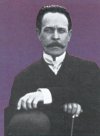
Claudio Wílliman Gonzalez (10 October 1861 in Montevideo – 9 February 1934 in Montevideo) was a Uruguayan political figure.
Claudio Wílliman's parents, José Williman and Antonia González, were immigrants from Galicia, Spain. José Wílliman's parents himself came from Savoy, France, with Alsatian roots.
Williman studied at the University of Montevideo and graduated with a Doctorate in Law and Social Sciences in 1887. From his adolescence he devoted his intellectual activity to teaching. In 1885 he was appointed professor of Physics at the University, and two years later was entrusted with the chair of the same subject at the Military School. Williman also taught classes in Cosmography and Physical Geography at the Military School, during the first years of its operation, and also taught at various private institutes. He was also, as noted by one study, “one of the initiators of the foundation of the Faculty of Mathematics and was part of its faculty from the first days of its installation, being entrusted with the chair of Industrial Physics that he held for many years.” In 1913, the Council of that Faculty granted Williman the title of "ad-honorem" Professor, without a fixed subject, a distinction that ratified by decree of the P.E. Earlier, in 1890, Williman was appointed Dean of the Faculty of Secondary and Preparatory Education. His performance earned him the Chamber of Doctors including him up to three times in the shortlist of candidates for the Rectorate of the University, and In 1902 he was appointed Rector of the University, a position he resigned two years later to occupy the position of Minister of Government. Eight years later, he returned in 1912 to be appointed Rector of the University, a position he resigned in 1915 when he was appointed President of the Board of Directors of the Bank of the Republic. Following his assumption of the Rectorate Williman proposed to provide the University with the necessary buildings to house its different departments. According to one study, “the construction of the current University buildings was due to his management, which Dr. Williman himself inaugurated in 1911, when he was President of the Republic.” In 1903, Williman began the founding of the School of Commerce and also laid the foundations of the School of Veterinary Medicine that same year. While these works of progress were carried out “the University reorganized all its services, reviewed the study plans, improved the teaching material and disciplined the teaching staff, a work that culminated in the university law of 1908, prepared and promulgated during his Presidency.”
Wílliman was a member of the Uruguayan Colorado Party and was closely identified with the liberal José Batlle y Ordóñez. His political actions dated back to the days preceding the Quebracho revolution. Williman was a incorporated into a group that maintained the resistance against the Government of General Santos, taking an active part in the journalistic campaigns of the time. When the 1886 revolution was organized he went to join its ranks. Williman invaded with the expeditionary army and fought in the action of Palmares de Soto, later, according to one study, “falling prisoner with the best of the revolutionary youth.” On returning home he closed the first cycle of his political activity and for many years devoted himself exclusively to the activity of the professor, to the management of the university institution and to the work of his law firm. In the 1898 elections Williman was elected member of the J.E.A. of Montevideo and in that corporation acted as Director of the Treasury. He was also elected member of the Electoral Board. Williman was serving his elective position as councilor when President Cuestas offered him the Ministry of Public Works, but he declined this offer. When the 1904 revolution broke out Williman was entrusted with the 4th of G. G. N. N. In April 1904 Williman took charge of the Ministry of the Interior, and some months later, since the titular Minister of War and Navy, General Vázquez, had gone out on campaign, that Portfolio was also entrusted to Williman, at whose head he found the peace of September 1904.
His grandson José Claudio Wílliman served in the Uruguayan Senate 1985–1990.
Williman was chosen by Batlle to succeed him as Uruguayan presidents were constitutionally barred from serving consecutive terms. Batlle’s naming of Williman as his preferred successor came in late 1905. On October the 15th 1905 the newspaper “El Siglio” stated “The President of the Republic has told his friends among the legislators that the candidacy of Doctor Claudio Williman for future President of the Republic is the one which he prefers.” As noted by one study, “Visitors to Batlle’s house in Montevideo were much in evidence. Within 3 days, more than enough vote pledges were secured from the Colorado legislators to assure Williman’s election as the next President.” On October the 30th, the formal proclamation of Williman signed by 53 Colorado legislators, which was more than the constitutional majority, was published. A campaign was launched to popularize Williman’s candidacy, with biographies circulated and committees formed to explain his virtues. In addition to local newspapers in the interior coming out for Williman, all the new Colorado departmental organizations formally announced their support for him, with this Trienta y Tres statement, as noted by one study, being typical: “The Departmental Committee believes itself to be interpreting the will of the coreligionaries of the department who see in Dr. Williman the surest guarantee that his government will carry on in the progressive currents ably sown by the present administration.”
In 1907 Williman was elected President of the Republic for the period 1907-1911 by the General Assembly.
His policies generally followed those of Batlle. Williman had indicated that he would continue Batlle’s policies in a speech he made to the legislature after taking the oath of office. In his speech, he praised the outgoing government for “its noble and just preoccupation with the betterment of the humble” and called for measures such as a new Ministry of Public Education, a government labor office, reorganisation of public charity, and regulation of corporations. He also stated the need “to resolve the problem of populating the interior, which in the midst of great prosperity remains half deserted, since it is not the existence of a handful of great fortunes which constitutes the wealth of a nation.” As noted by one study, “This last sentence got a great round of applause, and the whole speech sat well with the Colorado legislators.”
Hub AI
Claudio Williman AI simulator
(@Claudio Williman_simulator)
Claudio Williman
Claudio Wílliman Gonzalez (10 October 1861 in Montevideo – 9 February 1934 in Montevideo) was a Uruguayan political figure.
Claudio Wílliman's parents, José Williman and Antonia González, were immigrants from Galicia, Spain. José Wílliman's parents himself came from Savoy, France, with Alsatian roots.
Williman studied at the University of Montevideo and graduated with a Doctorate in Law and Social Sciences in 1887. From his adolescence he devoted his intellectual activity to teaching. In 1885 he was appointed professor of Physics at the University, and two years later was entrusted with the chair of the same subject at the Military School. Williman also taught classes in Cosmography and Physical Geography at the Military School, during the first years of its operation, and also taught at various private institutes. He was also, as noted by one study, “one of the initiators of the foundation of the Faculty of Mathematics and was part of its faculty from the first days of its installation, being entrusted with the chair of Industrial Physics that he held for many years.” In 1913, the Council of that Faculty granted Williman the title of "ad-honorem" Professor, without a fixed subject, a distinction that ratified by decree of the P.E. Earlier, in 1890, Williman was appointed Dean of the Faculty of Secondary and Preparatory Education. His performance earned him the Chamber of Doctors including him up to three times in the shortlist of candidates for the Rectorate of the University, and In 1902 he was appointed Rector of the University, a position he resigned two years later to occupy the position of Minister of Government. Eight years later, he returned in 1912 to be appointed Rector of the University, a position he resigned in 1915 when he was appointed President of the Board of Directors of the Bank of the Republic. Following his assumption of the Rectorate Williman proposed to provide the University with the necessary buildings to house its different departments. According to one study, “the construction of the current University buildings was due to his management, which Dr. Williman himself inaugurated in 1911, when he was President of the Republic.” In 1903, Williman began the founding of the School of Commerce and also laid the foundations of the School of Veterinary Medicine that same year. While these works of progress were carried out “the University reorganized all its services, reviewed the study plans, improved the teaching material and disciplined the teaching staff, a work that culminated in the university law of 1908, prepared and promulgated during his Presidency.”
Wílliman was a member of the Uruguayan Colorado Party and was closely identified with the liberal José Batlle y Ordóñez. His political actions dated back to the days preceding the Quebracho revolution. Williman was a incorporated into a group that maintained the resistance against the Government of General Santos, taking an active part in the journalistic campaigns of the time. When the 1886 revolution was organized he went to join its ranks. Williman invaded with the expeditionary army and fought in the action of Palmares de Soto, later, according to one study, “falling prisoner with the best of the revolutionary youth.” On returning home he closed the first cycle of his political activity and for many years devoted himself exclusively to the activity of the professor, to the management of the university institution and to the work of his law firm. In the 1898 elections Williman was elected member of the J.E.A. of Montevideo and in that corporation acted as Director of the Treasury. He was also elected member of the Electoral Board. Williman was serving his elective position as councilor when President Cuestas offered him the Ministry of Public Works, but he declined this offer. When the 1904 revolution broke out Williman was entrusted with the 4th of G. G. N. N. In April 1904 Williman took charge of the Ministry of the Interior, and some months later, since the titular Minister of War and Navy, General Vázquez, had gone out on campaign, that Portfolio was also entrusted to Williman, at whose head he found the peace of September 1904.
His grandson José Claudio Wílliman served in the Uruguayan Senate 1985–1990.
Williman was chosen by Batlle to succeed him as Uruguayan presidents were constitutionally barred from serving consecutive terms. Batlle’s naming of Williman as his preferred successor came in late 1905. On October the 15th 1905 the newspaper “El Siglio” stated “The President of the Republic has told his friends among the legislators that the candidacy of Doctor Claudio Williman for future President of the Republic is the one which he prefers.” As noted by one study, “Visitors to Batlle’s house in Montevideo were much in evidence. Within 3 days, more than enough vote pledges were secured from the Colorado legislators to assure Williman’s election as the next President.” On October the 30th, the formal proclamation of Williman signed by 53 Colorado legislators, which was more than the constitutional majority, was published. A campaign was launched to popularize Williman’s candidacy, with biographies circulated and committees formed to explain his virtues. In addition to local newspapers in the interior coming out for Williman, all the new Colorado departmental organizations formally announced their support for him, with this Trienta y Tres statement, as noted by one study, being typical: “The Departmental Committee believes itself to be interpreting the will of the coreligionaries of the department who see in Dr. Williman the surest guarantee that his government will carry on in the progressive currents ably sown by the present administration.”
In 1907 Williman was elected President of the Republic for the period 1907-1911 by the General Assembly.
His policies generally followed those of Batlle. Williman had indicated that he would continue Batlle’s policies in a speech he made to the legislature after taking the oath of office. In his speech, he praised the outgoing government for “its noble and just preoccupation with the betterment of the humble” and called for measures such as a new Ministry of Public Education, a government labor office, reorganisation of public charity, and regulation of corporations. He also stated the need “to resolve the problem of populating the interior, which in the midst of great prosperity remains half deserted, since it is not the existence of a handful of great fortunes which constitutes the wealth of a nation.” As noted by one study, “This last sentence got a great round of applause, and the whole speech sat well with the Colorado legislators.”
Recent media