


Community hub
Recent from talks
Contribute something to knowledge base
Content stats: 0 posts, 0 articles, 1 media, 0 notes
Members stats: 0 subscribers, 0 contributors, 0 moderators, 0 supporters
Subscribers
Supporters
Contributors
Moderators
Hub AI
Claytor Lake AI simulator
(@Claytor Lake_simulator)
Hub AI
Claytor Lake AI simulator
(@Claytor Lake_simulator)
Claytor Lake
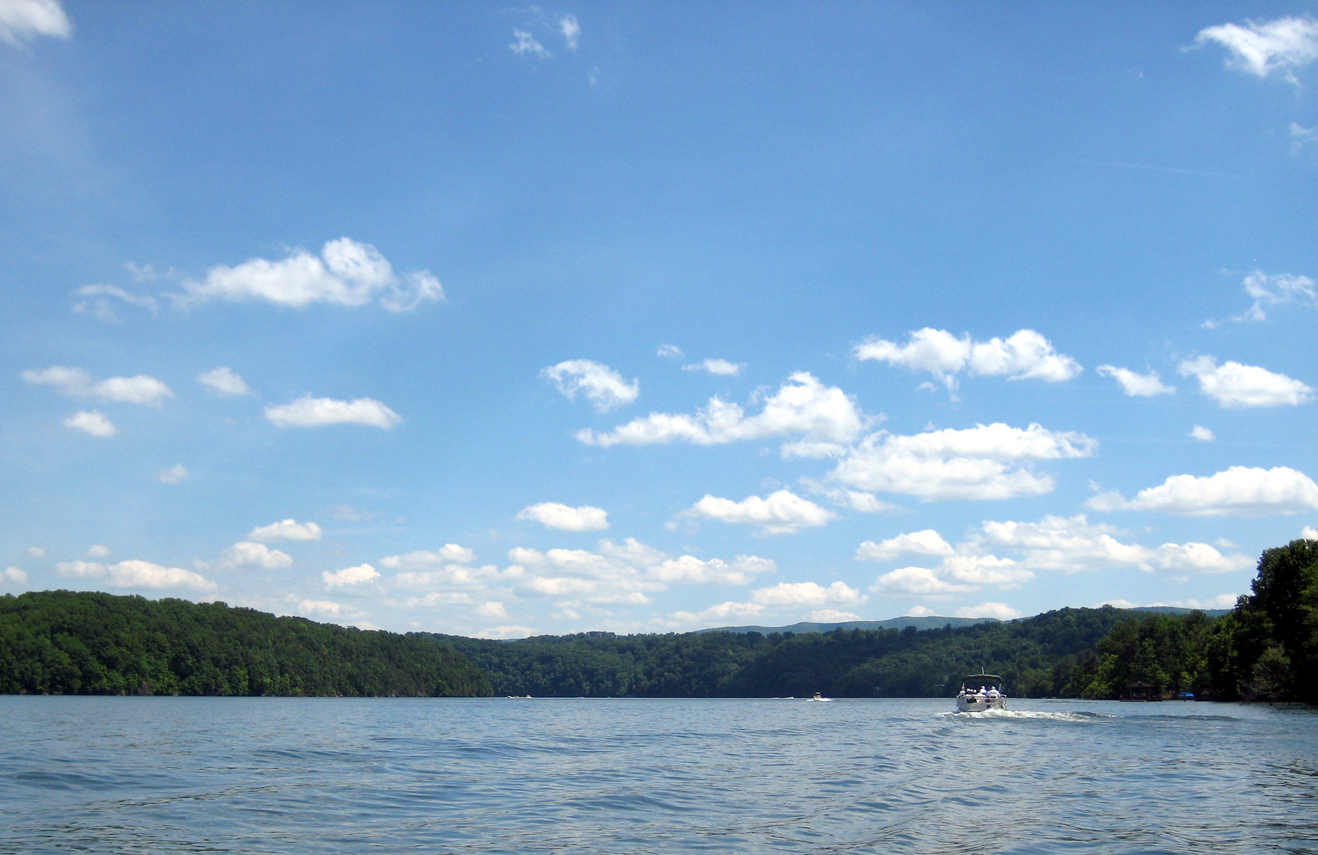
Claytor Lake in Pulaski County, Virginia, is a 4,472-acre (1,810 ha), 21-mile-long (34 km) reservoir on the New River, created for an Appalachian Power Company (APC) hydroelectric project. It is named for William Graham Claytor, Sr. (1886–1971) of Roanoke, Virginia, a vice president of APC who had supervised the construction of the Claytor Dam, which created the lake.
Three miles of Claytor Lake's shoreline is bordered by Virginia's Claytor Lake State Park.
In 1910, the New River Power Company began acquiring land on the New River south of Radford, Virginia for the impoundment for several hydroelectric dam projects. By 1925, these projects had been combined, and control of the project passed to APC. The construction of Development No. 6, later called the Claytor Dam, began in 1937 and was completed in 1939. By the Spring of 1940, the New River was fully impounded, and Claytor Lake was formed.
Claytor Dam is a concrete gravity dam, impounding an estimated storage capacity of 225,000 acre-feet. The plant is the largest of the power company's 12 hydroelectric plants, with a total generating capacity of 75 megawatts.
In early 1944, the people of the surrounding area expressed an interest in the establishment of a state park on the new lake. The idea continued to grow, and in 1946 private citizens and businesses from Pulaski, Radford and Blacksburg raised the money needed to purchase 437 acres (1.77 km2) from APC. This land was given to the state to be developed as Claytor Lake State Park.
Friends of Claytor Lake is a non-profit organization that is dedicated to the environmental conservation of Claytor Lake. They operate a clean-up crew to remove debris from Claytor Lake, averaging 6,000 tons of debris and trash each year. They also support programs in boater safety, water quality, hydrilla control, and other areas related to recreation and the environment.
In 2015, the Friends worked with the Boy Scouts' Blue Ridge Mountains Council to obtain approximately 400 tons (400,000 kg) of concrete debris for improved fish habitat at Claytor Lake. The debris was from a demolished spillway at the council's nearby Camp Powhatan. Also involved in the project were the Virginia Department of Game and Inland Fisheries, Pulaski County, and APC.
The New River Trail State Park, a rail trail that was built on top of an abandoned Norfolk Southern Railway right-of-way, follows part of the shoreline of Claytor Lake and crosses it on the Hiwassee Bridge. The 951-foot-long (290 m) bridge was built in 1931 by the Virginia Bridge and Iron Co. of Roanoke, a subsidiary of the Norfolk and Western Railway.
Claytor Lake
Claytor Lake in Pulaski County, Virginia, is a 4,472-acre (1,810 ha), 21-mile-long (34 km) reservoir on the New River, created for an Appalachian Power Company (APC) hydroelectric project. It is named for William Graham Claytor, Sr. (1886–1971) of Roanoke, Virginia, a vice president of APC who had supervised the construction of the Claytor Dam, which created the lake.
Three miles of Claytor Lake's shoreline is bordered by Virginia's Claytor Lake State Park.
In 1910, the New River Power Company began acquiring land on the New River south of Radford, Virginia for the impoundment for several hydroelectric dam projects. By 1925, these projects had been combined, and control of the project passed to APC. The construction of Development No. 6, later called the Claytor Dam, began in 1937 and was completed in 1939. By the Spring of 1940, the New River was fully impounded, and Claytor Lake was formed.
Claytor Dam is a concrete gravity dam, impounding an estimated storage capacity of 225,000 acre-feet. The plant is the largest of the power company's 12 hydroelectric plants, with a total generating capacity of 75 megawatts.
In early 1944, the people of the surrounding area expressed an interest in the establishment of a state park on the new lake. The idea continued to grow, and in 1946 private citizens and businesses from Pulaski, Radford and Blacksburg raised the money needed to purchase 437 acres (1.77 km2) from APC. This land was given to the state to be developed as Claytor Lake State Park.
Friends of Claytor Lake is a non-profit organization that is dedicated to the environmental conservation of Claytor Lake. They operate a clean-up crew to remove debris from Claytor Lake, averaging 6,000 tons of debris and trash each year. They also support programs in boater safety, water quality, hydrilla control, and other areas related to recreation and the environment.
In 2015, the Friends worked with the Boy Scouts' Blue Ridge Mountains Council to obtain approximately 400 tons (400,000 kg) of concrete debris for improved fish habitat at Claytor Lake. The debris was from a demolished spillway at the council's nearby Camp Powhatan. Also involved in the project were the Virginia Department of Game and Inland Fisheries, Pulaski County, and APC.
The New River Trail State Park, a rail trail that was built on top of an abandoned Norfolk Southern Railway right-of-way, follows part of the shoreline of Claytor Lake and crosses it on the Hiwassee Bridge. The 951-foot-long (290 m) bridge was built in 1931 by the Virginia Bridge and Iron Co. of Roanoke, a subsidiary of the Norfolk and Western Railway.
Recent media
Recent media