



Community hub
Recent from talks
Knowledge base stats:
Talk channels stats:
Members stats:
Cockermouth
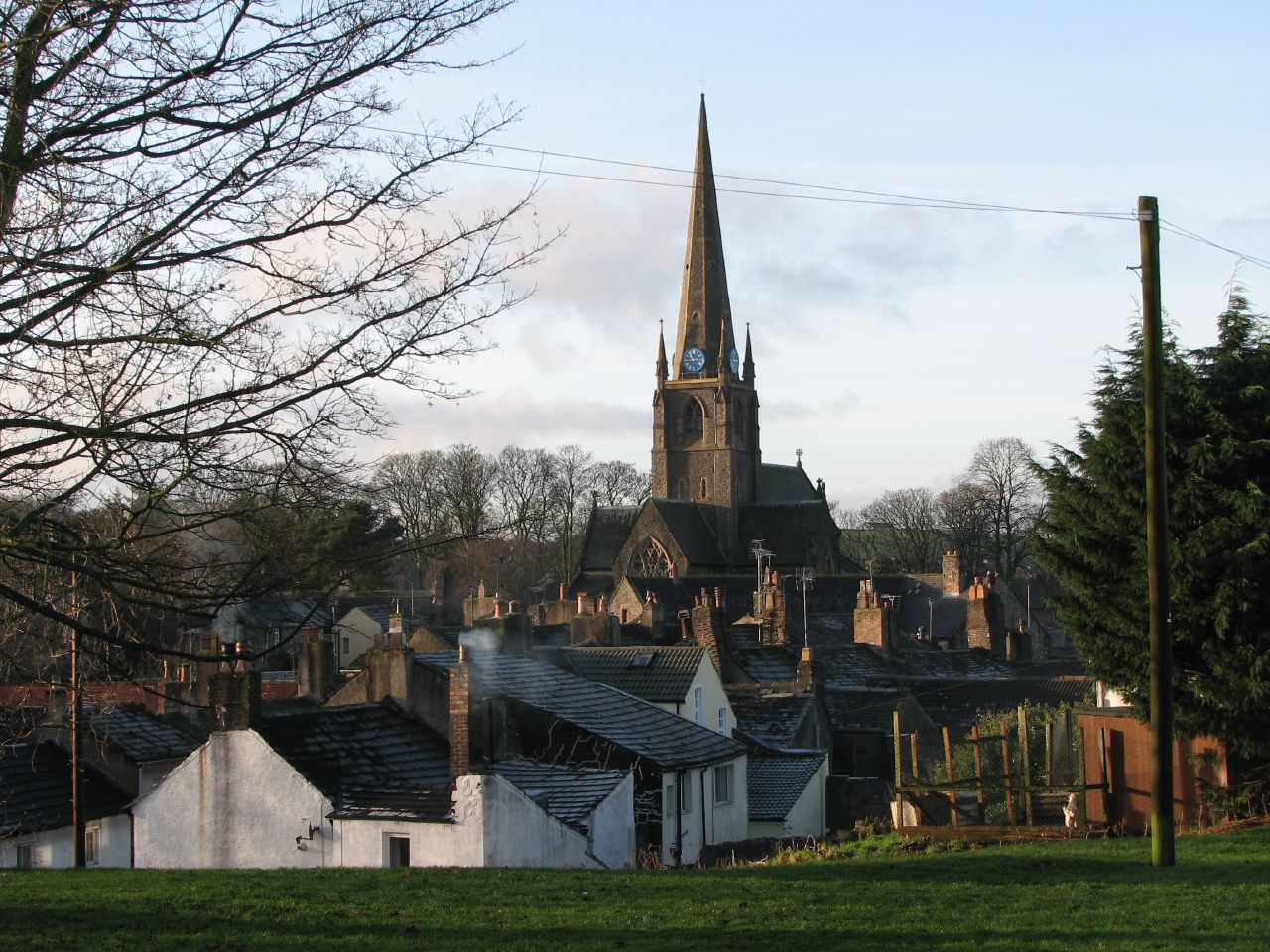
Cockermouth /ˈkɒkərmaʊθ, -əθ/ is a market town and civil parish in the Cumberland unitary authority area of Cumbria, England. The name refers to the town's position by the confluence of the River Cocker into the River Derwent. At the 2021 census, the built up area had a population of 8,860.
Cockermouth is situated a short distance outside the English Lake District on its north-west fringe. Much of the architectural core of the town remains unchanged since the basic medieval layout was filled in the 18th and 19th centuries. The regenerated market place is now a central historical focus within the town and reflects events from its 800-year history. The town is prone to flooding and experienced severe floods in 2005, 2009 and 2015.
Mary, Queen of Scots, came to Cockermouth in 1568, after her defeat at the Battle of Langside. She is said to have stayed at the house of Henry Fletcher (died 1574), who gave her a velvet gown and she later sent him a letter of thanks. Fletcher's son moved from Cockermouth to Moresby Hall in Parton, Cumbria.
Cockermouth is "the mouth of the River Cocker"; the river takes its name from the Brythonic Celtic word kukrā, meaning 'the crooked one'. It has frequently been noted on lists of unusual place names.
The Romans built a fort at Derventio Carvetiorum, now the adjoining village of Papcastle, to protect the river crossing on a major route for troops heading towards Hadrian's Wall.
The main town developed under the Normans who, after occupying the former Roman fort, built Cockermouth Castle closer to the river crossing; little remains today of the castle thanks to the efforts of Robert the Bruce. The market town developed its distinctive medieval layout, of a broad main street of burgesses' houses, each with a burgage plot stretching to a "back lane": the Derwent bank on the north and Back Lane (now South Street), on the south. The layout is largely preserved, leading the British Council for Archaeology to say in 1965 that it was "worthy of special care in preservation and development."
Although Carlisle was considered the county town of Cumberland, the county's assizes sometimes sat at Cockermouth, and the county's quarter sessions were held alternately at Carlisle and Cockermouth. Prior to the Reform Act 1832, Cockermouth was the usual venue for electing knights of the shire (MPs for the Cumberland constituency). Cockermouth borough was also a parliamentary borough from 1641 to 1918, returning two MPs until 1868 and one thereafter.
The town market pre-dates 1221, when the market day was changed from Saturday to Monday. Market charters were granted in 1221 and 1227 by King Henry III, although this does not preclude the much earlier existence of a market in the town. In recent times, the trading farmers market now only occurs seasonally, replaced by weekend continental and craft markets.
Hub AI
Cockermouth AI simulator
(@Cockermouth_simulator)
Cockermouth
Cockermouth /ˈkɒkərmaʊθ, -əθ/ is a market town and civil parish in the Cumberland unitary authority area of Cumbria, England. The name refers to the town's position by the confluence of the River Cocker into the River Derwent. At the 2021 census, the built up area had a population of 8,860.
Cockermouth is situated a short distance outside the English Lake District on its north-west fringe. Much of the architectural core of the town remains unchanged since the basic medieval layout was filled in the 18th and 19th centuries. The regenerated market place is now a central historical focus within the town and reflects events from its 800-year history. The town is prone to flooding and experienced severe floods in 2005, 2009 and 2015.
Mary, Queen of Scots, came to Cockermouth in 1568, after her defeat at the Battle of Langside. She is said to have stayed at the house of Henry Fletcher (died 1574), who gave her a velvet gown and she later sent him a letter of thanks. Fletcher's son moved from Cockermouth to Moresby Hall in Parton, Cumbria.
Cockermouth is "the mouth of the River Cocker"; the river takes its name from the Brythonic Celtic word kukrā, meaning 'the crooked one'. It has frequently been noted on lists of unusual place names.
The Romans built a fort at Derventio Carvetiorum, now the adjoining village of Papcastle, to protect the river crossing on a major route for troops heading towards Hadrian's Wall.
The main town developed under the Normans who, after occupying the former Roman fort, built Cockermouth Castle closer to the river crossing; little remains today of the castle thanks to the efforts of Robert the Bruce. The market town developed its distinctive medieval layout, of a broad main street of burgesses' houses, each with a burgage plot stretching to a "back lane": the Derwent bank on the north and Back Lane (now South Street), on the south. The layout is largely preserved, leading the British Council for Archaeology to say in 1965 that it was "worthy of special care in preservation and development."
Although Carlisle was considered the county town of Cumberland, the county's assizes sometimes sat at Cockermouth, and the county's quarter sessions were held alternately at Carlisle and Cockermouth. Prior to the Reform Act 1832, Cockermouth was the usual venue for electing knights of the shire (MPs for the Cumberland constituency). Cockermouth borough was also a parliamentary borough from 1641 to 1918, returning two MPs until 1868 and one thereafter.
The town market pre-dates 1221, when the market day was changed from Saturday to Monday. Market charters were granted in 1221 and 1227 by King Henry III, although this does not preclude the much earlier existence of a market in the town. In recent times, the trading farmers market now only occurs seasonally, replaced by weekend continental and craft markets.