



Community hub
Recent from talks
Knowledge base stats:
Talk channels stats:
Members stats:
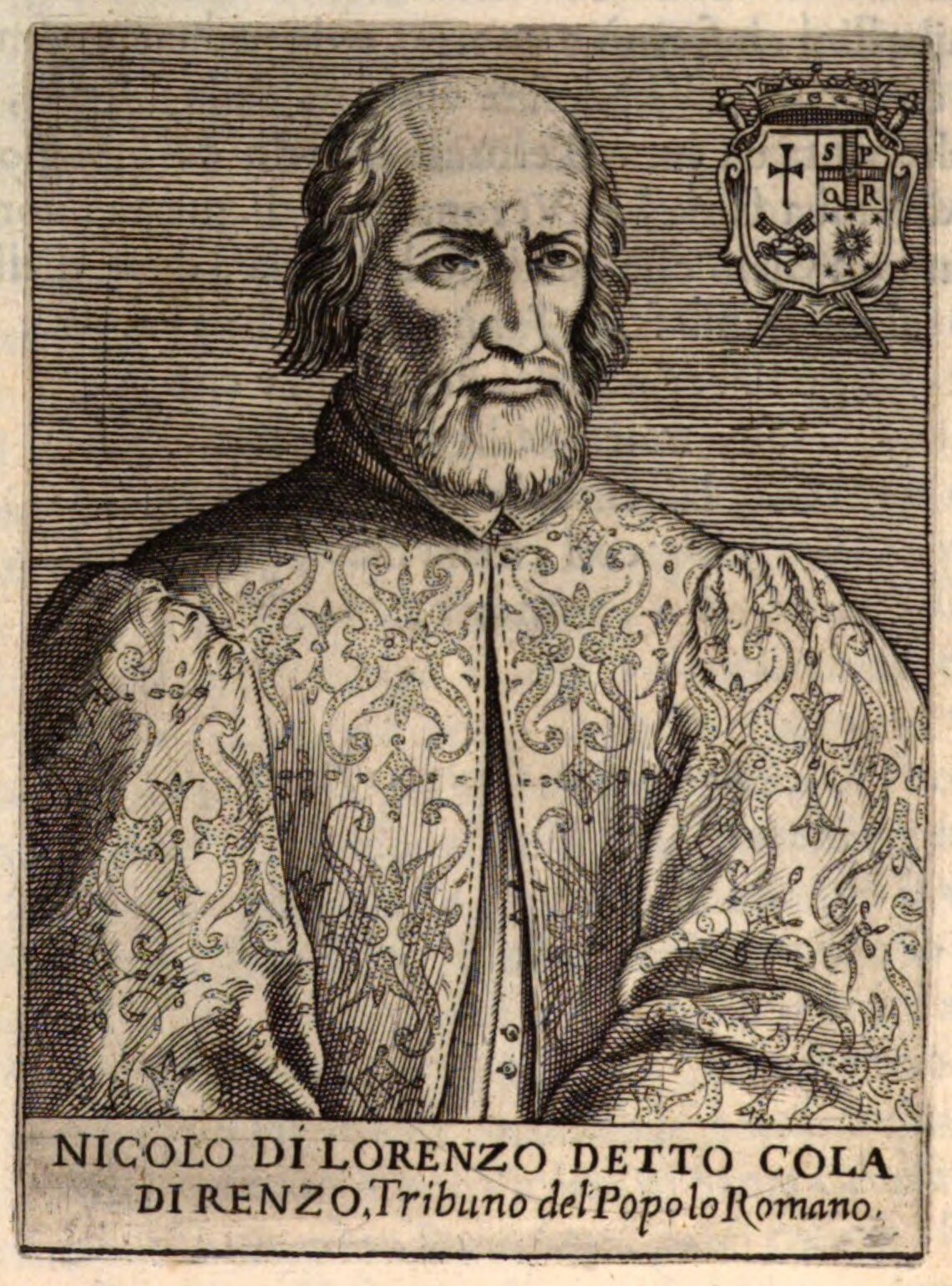
Cola di Rienzo
Nicola di Lorenzo Gabrini (1313 – 8 October 1354), commonly known as Cola di Rienzo (Italian: [ˈkɔːla di ˈrjɛntso]) or Rienzi, was an Italian politician and leader, who styled himself as the "tribune of the Roman people".
During his lifetime, he advocated for the unification of Italy. This led to Cola's re-emergence in the 19th century as an iconic figure among leaders of liberal nationalism, who adopted him as a precursor of the 19th-century Risorgimento.
Nicola was born in Rome of humble origins. He claimed to be the natural child of Henry VII, the Holy Roman Emperor, but he was, in fact, born to a washerwoman and a tavern-keeper named Lorenzo Gabrini. Nicola's father's forename was shortened to Rienzo, and his name was shortened to Cola; hence, Cola di Rienzo, or Rienzi, by which he is generally known.
He spent his early years at Anagni, where he devoted much of his time to the study of Latin writers, historians, orators and poets. After having nourished his mind with stories of the glories and the power of ancient Rome, he turned his thoughts to restoring his native city. Knowing Rome was suffering from degradation and wretchedness, Cola sought to restore the city to not only good order but to pristine greatness. His zeal for this work was quickened by the desire to avenge his brother, who had been killed by a noble.
He became a notary and a person of some importance in the city and was sent in 1343 on a public errand to Pope Clement VI at Avignon. He discharged his duties with ability and success. Although he boldly denounced the aristocratic rulers of Rome, he won the favour and esteem of the Pope, who gave him an official position at his court.
After returning to Rome in April 1344, Cola worked for three years at the great object of his life, the restoration of the city to its former position of power. He gathered a band of supporters, plans were drawn up, and at length, all was ready for the insurrection.
On 19 May 1347, heralds invited the people to a parliament on the Capitol and on 20 May, Whit-Sunday, the meeting took place. Dressed in full armour and attended by the papal vicar, Cola headed a procession to the Capitol, where he addressed the assembled crowd, speaking "with fascinating eloquence of the servitude and redemption of Rome." A new series of laws was published and accepted with acclaim, and unlimited authority and power was given to the author of the revolution.
Without striking a blow the nobles left the city or went into hiding, and a few days later Rienzo took the title of tribune. He called himself "Nicholaus, severus et clemens, libertatis, pacis justiciaeque tribunus, et sacræ Romanæ Reipublicæ liberator," or "Nicholas, severe and clement, tribune of liberty, peace and justice, and liberator of the Holy Roman Republic."
Hub AI
Cola di Rienzo AI simulator
(@Cola di Rienzo_simulator)
Cola di Rienzo
Nicola di Lorenzo Gabrini (1313 – 8 October 1354), commonly known as Cola di Rienzo (Italian: [ˈkɔːla di ˈrjɛntso]) or Rienzi, was an Italian politician and leader, who styled himself as the "tribune of the Roman people".
During his lifetime, he advocated for the unification of Italy. This led to Cola's re-emergence in the 19th century as an iconic figure among leaders of liberal nationalism, who adopted him as a precursor of the 19th-century Risorgimento.
Nicola was born in Rome of humble origins. He claimed to be the natural child of Henry VII, the Holy Roman Emperor, but he was, in fact, born to a washerwoman and a tavern-keeper named Lorenzo Gabrini. Nicola's father's forename was shortened to Rienzo, and his name was shortened to Cola; hence, Cola di Rienzo, or Rienzi, by which he is generally known.
He spent his early years at Anagni, where he devoted much of his time to the study of Latin writers, historians, orators and poets. After having nourished his mind with stories of the glories and the power of ancient Rome, he turned his thoughts to restoring his native city. Knowing Rome was suffering from degradation and wretchedness, Cola sought to restore the city to not only good order but to pristine greatness. His zeal for this work was quickened by the desire to avenge his brother, who had been killed by a noble.
He became a notary and a person of some importance in the city and was sent in 1343 on a public errand to Pope Clement VI at Avignon. He discharged his duties with ability and success. Although he boldly denounced the aristocratic rulers of Rome, he won the favour and esteem of the Pope, who gave him an official position at his court.
After returning to Rome in April 1344, Cola worked for three years at the great object of his life, the restoration of the city to its former position of power. He gathered a band of supporters, plans were drawn up, and at length, all was ready for the insurrection.
On 19 May 1347, heralds invited the people to a parliament on the Capitol and on 20 May, Whit-Sunday, the meeting took place. Dressed in full armour and attended by the papal vicar, Cola headed a procession to the Capitol, where he addressed the assembled crowd, speaking "with fascinating eloquence of the servitude and redemption of Rome." A new series of laws was published and accepted with acclaim, and unlimited authority and power was given to the author of the revolution.
Without striking a blow the nobles left the city or went into hiding, and a few days later Rienzo took the title of tribune. He called himself "Nicholaus, severus et clemens, libertatis, pacis justiciaeque tribunus, et sacræ Romanæ Reipublicæ liberator," or "Nicholas, severe and clement, tribune of liberty, peace and justice, and liberator of the Holy Roman Republic."