



Community hub
Recent from talks
Knowledge base stats:
Talk channels stats:
Members stats:
Collaborative filtering
Collaborative filtering (CF) is, besides content-based filtering, one of two major techniques used by recommender systems. Collaborative filtering has two senses, a narrow one and a more general one.
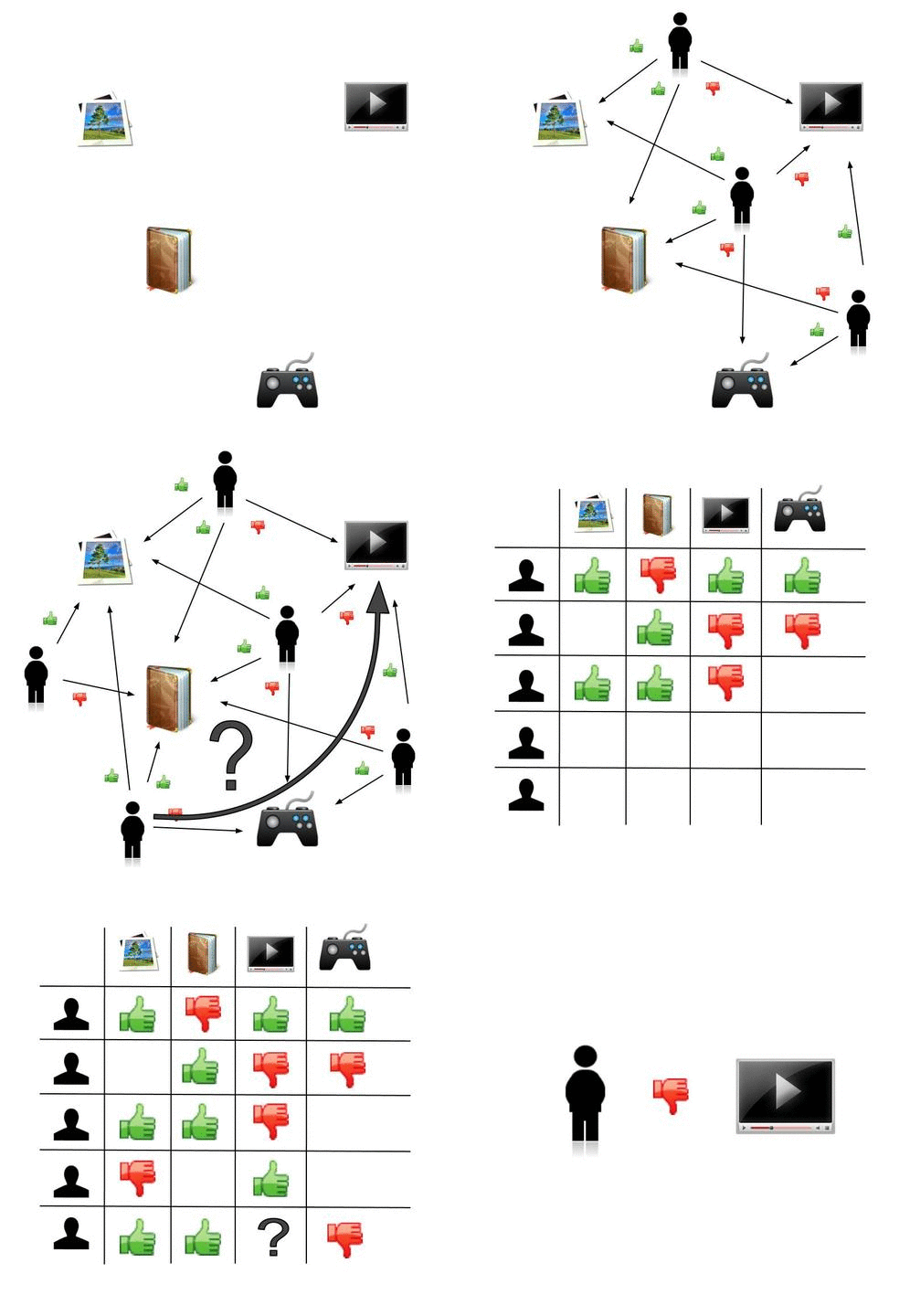
In the newer, narrower sense, collaborative filtering is a method of making automatic predictions (filtering) about a user's interests by utilizing preferences or taste information collected from many users (collaborating). This approach assumes that if persons A and B share similar opinions on one issue, they are more likely to agree on other issues compared to a random pairing of A with another person. For instance, a collaborative filtering system for television programming could predict which shows a user might enjoy based on a limited list of the user's tastes (likes or dislikes). These predictions are specific to the user, but use information gleaned from many users. This differs from the simpler approach of giving an average (non-specific) score for each item of interest, for example based on its number of votes.
In the more general sense, collaborative filtering is the process of filtering information or patterns using techniques involving collaboration among multiple agents, viewpoints, data sources, etc. Applications of collaborative filtering typically involve very large data sets. Collaborative filtering methods have been applied to many kinds of data including: sensing and monitoring data, such as in mineral exploration, environmental sensing over large areas or multiple sensors; financial data, such as financial service institutions that integrate many financial sources; and user data from electronic commerce and web applications.
This article focuses on collaborative filtering for user data, but some of the methods also apply to other major applications.
The growth of the Internet has made it much more difficult to effectively extract useful information from all the available online information.[according to whom?] The overwhelming amount of data necessitates mechanisms for efficient information filtering.[according to whom?] Collaborative filtering is one of the techniques used for dealing with this problem.
The motivation for collaborative filtering comes from the idea that people often get the best recommendations from someone with tastes similar to themselves.[citation needed] Collaborative filtering encompasses techniques for matching people with similar interests and making recommendations on this basis.
Collaborative filtering algorithms often require (1) users' active participation, (2) an easy way to represent users' interests, and (3) algorithms that are able to match people with similar interests.
Typically, the workflow of a collaborative filtering system is:
Hub AI
Collaborative filtering AI simulator
(@Collaborative filtering_simulator)
Collaborative filtering
Collaborative filtering (CF) is, besides content-based filtering, one of two major techniques used by recommender systems. Collaborative filtering has two senses, a narrow one and a more general one.
In the newer, narrower sense, collaborative filtering is a method of making automatic predictions (filtering) about a user's interests by utilizing preferences or taste information collected from many users (collaborating). This approach assumes that if persons A and B share similar opinions on one issue, they are more likely to agree on other issues compared to a random pairing of A with another person. For instance, a collaborative filtering system for television programming could predict which shows a user might enjoy based on a limited list of the user's tastes (likes or dislikes). These predictions are specific to the user, but use information gleaned from many users. This differs from the simpler approach of giving an average (non-specific) score for each item of interest, for example based on its number of votes.
In the more general sense, collaborative filtering is the process of filtering information or patterns using techniques involving collaboration among multiple agents, viewpoints, data sources, etc. Applications of collaborative filtering typically involve very large data sets. Collaborative filtering methods have been applied to many kinds of data including: sensing and monitoring data, such as in mineral exploration, environmental sensing over large areas or multiple sensors; financial data, such as financial service institutions that integrate many financial sources; and user data from electronic commerce and web applications.
This article focuses on collaborative filtering for user data, but some of the methods also apply to other major applications.
The growth of the Internet has made it much more difficult to effectively extract useful information from all the available online information.[according to whom?] The overwhelming amount of data necessitates mechanisms for efficient information filtering.[according to whom?] Collaborative filtering is one of the techniques used for dealing with this problem.
The motivation for collaborative filtering comes from the idea that people often get the best recommendations from someone with tastes similar to themselves.[citation needed] Collaborative filtering encompasses techniques for matching people with similar interests and making recommendations on this basis.
Collaborative filtering algorithms often require (1) users' active participation, (2) an easy way to represent users' interests, and (3) algorithms that are able to match people with similar interests.
Typically, the workflow of a collaborative filtering system is: