
Recent from talks
Colorado Labor Wars
Knowledge base stats:
Talk channels stats:
Members stats:
Colorado Labor Wars
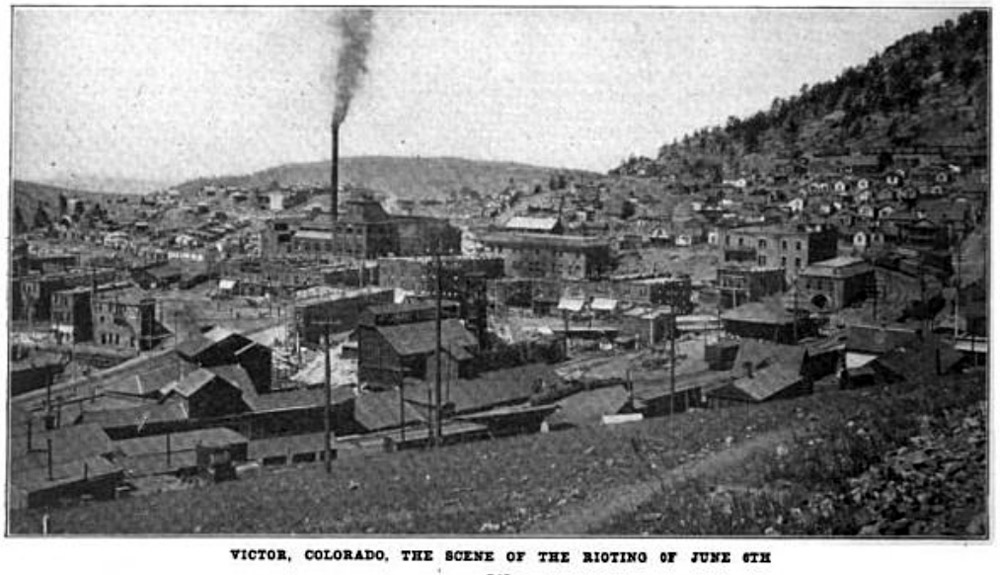
The Colorado Labor Wars were a series of labor strikes in 1903 and 1904 in the U.S. state of Colorado, by gold and silver miners and mill workers represented by the Western Federation of Miners (WFM). Opposing the WFM were associations of mine owners and businessmen at each location, supported by the Colorado state government. The strikes were notable and controversial for the accompanying violence, and the imposition of martial law by the Colorado National Guard in order to put down the strikes.
A nearly simultaneous strike in Colorado's northern and southern coal fields was also met with a military response by the Colorado National Guard.
Colorado's most significant battles between labor and capital occurred between miners and mine operators. In these battles the state government, with one exception, sided with the mine operators. Additional participants have included the National Guard, often informally called the militia; private contractors such as the Pinkertons, Baldwin–Felts, and Thiel detective agencies; and various labor entities, Mine Owners' Associations, and vigilante groups and business-dominated groups such as the Citizens' Alliance.
The WFM strikes considered part of the Colorado labor wars include:
Two scholars of American labor violence concluded, "There is no episode in American labor history in which violence was as systematically used by employers as in the Colorado labor war of 1903 and 1904." The WFM as well embraced more violent strike tactics, and "entered into one of the most insurgent and violent stages that American labor history had ever seen."Page 93
In late 1902, the Western Federation of Miners boasted seventeen thousand members in one hundred locals.p. 58p. 15
In January 1894, mine owners tried to lengthen the workday for Cripple Creek miners from eight to ten hours without raising pay. This action provoked a strike by the miners. In response, mine owners brought in strike breakers. The miners intimidated the strike breakers, so the mine owners raised a private army of an estimated 1,200 armed men. The gunmen were deputized by El Paso County Sheriff F. M. Bowers.p. 19 The miners were also armed, and were prepared for a confrontation.
Colorado Governor Davis Waite convinced the mine owners to go back to the shorter workday in what was called the "Waite agreement."p. 19 Governor Waite also called out the state militia to disarm the 1,200 gunmen who were no longer taking orders from the sheriff. The Waite agreement on miners' hours and wages subsequently went into effect, and lasted nearly a decade.p. 19-20
Hub AI
Colorado Labor Wars AI simulator
(@Colorado Labor Wars_simulator)
Colorado Labor Wars
The Colorado Labor Wars were a series of labor strikes in 1903 and 1904 in the U.S. state of Colorado, by gold and silver miners and mill workers represented by the Western Federation of Miners (WFM). Opposing the WFM were associations of mine owners and businessmen at each location, supported by the Colorado state government. The strikes were notable and controversial for the accompanying violence, and the imposition of martial law by the Colorado National Guard in order to put down the strikes.
A nearly simultaneous strike in Colorado's northern and southern coal fields was also met with a military response by the Colorado National Guard.
Colorado's most significant battles between labor and capital occurred between miners and mine operators. In these battles the state government, with one exception, sided with the mine operators. Additional participants have included the National Guard, often informally called the militia; private contractors such as the Pinkertons, Baldwin–Felts, and Thiel detective agencies; and various labor entities, Mine Owners' Associations, and vigilante groups and business-dominated groups such as the Citizens' Alliance.
The WFM strikes considered part of the Colorado labor wars include:
Two scholars of American labor violence concluded, "There is no episode in American labor history in which violence was as systematically used by employers as in the Colorado labor war of 1903 and 1904." The WFM as well embraced more violent strike tactics, and "entered into one of the most insurgent and violent stages that American labor history had ever seen."Page 93
In late 1902, the Western Federation of Miners boasted seventeen thousand members in one hundred locals.p. 58p. 15
In January 1894, mine owners tried to lengthen the workday for Cripple Creek miners from eight to ten hours without raising pay. This action provoked a strike by the miners. In response, mine owners brought in strike breakers. The miners intimidated the strike breakers, so the mine owners raised a private army of an estimated 1,200 armed men. The gunmen were deputized by El Paso County Sheriff F. M. Bowers.p. 19 The miners were also armed, and were prepared for a confrontation.
Colorado Governor Davis Waite convinced the mine owners to go back to the shorter workday in what was called the "Waite agreement."p. 19 Governor Waite also called out the state militia to disarm the 1,200 gunmen who were no longer taking orders from the sheriff. The Waite agreement on miners' hours and wages subsequently went into effect, and lasted nearly a decade.p. 19-20
Recent media