
Recent from talks
Combined hormonal contraception
Knowledge base stats:
Talk channels stats:
Members stats:
Combined hormonal contraception
Combined hormonal contraception (CHC), or combined birth control, is a form of hormonal contraception which combines both an estrogen and a progestogen in varying formulations.
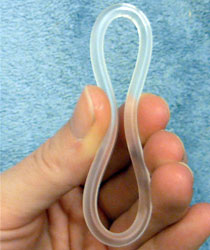
The different types available include the pill, the patch and the vaginal ring, which are all widely available, and an injection, which is available in only some countries. They work by mainly suppressing luteinising hormone (LH) and follicle-stimulating hormone (FSH) and in turn preventing ovulation.
The pill, patch, and vaginal ring are all about 93% effective with typical use. Beneficial health effects include reduced risks of ovarian, endometrial and colorectal cancers. CHC can also provide improved control of some menstrual problems. Adverse effects include a small but higher risk of venous thromboembolism, arterial thromboembolism, breast cancer and cervical cancer.
With perfect use, less than 1% of women will become pregnant during the first year of using CHC. However, with typical use 9% of women will become pregnant during the first year. Traditionally, to mimic a normal menstrual cycle, CHC is used for 21 consecutive days. For all of these methods (pill, patch, vaginal ring), these 21 days are typically followed by either 7 days of no use (for the pill, patch or vaginal ring) or 7 days of administration of placebo pills (for the pill only). During these 7 days, withdrawal bleeding occurs. For those women who do not desire withdrawal bleeding or require bleeding to be suppressed completely, medication regimens can be tailored to the individual with extended periods of use and infrequent hormone-free periods. The efficacy of CHC is the same whether these methods are used continuously or with a 7-day break to allow for withdrawal bleeding.
Combined oral contraceptives (COCs) can be used to treat menstrual cycle disorders including heavy menstrual bleeding, and pelvic pain disorders such as endometriosis and dysmenorrhea. CHCs are also a first line treatment for polycystic ovary syndrome for menstrual abnormalities, acne, and hirsutism.
Perimenopausal women on combined oral contraceptives have increased bone density, and COCs can be used to decrease hot flashes. Combined oral contraceptives have been shown to reduce risk of endometrial cancer, BRCA1 and BRCA2 ovarian cancer, and a modest reduction in colon cancer.
Prevention of ovulation occurs via inhibition of the hypothalamic–pituitary–gonadal axis, through progesterone and estrogen providing negative feedback to the hypothalamus and inhibiting the production of gonadotropin releasing hormone (GnRH). GnRH typically promotes the release of LH and FSH from the pituitary. The presence of estrogen in CHCs results in downstream inhibition of luteinizing hormone (LH) and follicular stimulating hormone (FSH) which typically act at the ovarian level to induce ovulation and promote development of the follicle respectively. Progesterone also contributes to the contraceptive effect by making changes to the cervical mucus, endometrium and tubal motility.
Although the risk of venous thromboembolism, arterial thromboembolism, breast cancer and cervical cancer in CHC users is small, all CHCs are associated with higher risks of these compared to no use. Given that the vast majority of the studies evaluating these associations have been observational studies, causation between CHC use and these conditions is unable to be determined. All CHCs are associated with an increased incidence of venous and arterial thromboembolism. However, those containing higher doses of estrogen are associated with an increase in venous and arterial thromboembolism. In addition, some formulations of progesterone, including gestodene, desogestrel, cyproterone acetate and drospirenone, in combination with estrogen, have been associated with higher rates of venous thromboembolism compared to formulations containing a type of progesterone called levonorgestrel.
Hub AI
Combined hormonal contraception AI simulator
(@Combined hormonal contraception_simulator)
Combined hormonal contraception
Combined hormonal contraception (CHC), or combined birth control, is a form of hormonal contraception which combines both an estrogen and a progestogen in varying formulations.
The different types available include the pill, the patch and the vaginal ring, which are all widely available, and an injection, which is available in only some countries. They work by mainly suppressing luteinising hormone (LH) and follicle-stimulating hormone (FSH) and in turn preventing ovulation.
The pill, patch, and vaginal ring are all about 93% effective with typical use. Beneficial health effects include reduced risks of ovarian, endometrial and colorectal cancers. CHC can also provide improved control of some menstrual problems. Adverse effects include a small but higher risk of venous thromboembolism, arterial thromboembolism, breast cancer and cervical cancer.
With perfect use, less than 1% of women will become pregnant during the first year of using CHC. However, with typical use 9% of women will become pregnant during the first year. Traditionally, to mimic a normal menstrual cycle, CHC is used for 21 consecutive days. For all of these methods (pill, patch, vaginal ring), these 21 days are typically followed by either 7 days of no use (for the pill, patch or vaginal ring) or 7 days of administration of placebo pills (for the pill only). During these 7 days, withdrawal bleeding occurs. For those women who do not desire withdrawal bleeding or require bleeding to be suppressed completely, medication regimens can be tailored to the individual with extended periods of use and infrequent hormone-free periods. The efficacy of CHC is the same whether these methods are used continuously or with a 7-day break to allow for withdrawal bleeding.
Combined oral contraceptives (COCs) can be used to treat menstrual cycle disorders including heavy menstrual bleeding, and pelvic pain disorders such as endometriosis and dysmenorrhea. CHCs are also a first line treatment for polycystic ovary syndrome for menstrual abnormalities, acne, and hirsutism.
Perimenopausal women on combined oral contraceptives have increased bone density, and COCs can be used to decrease hot flashes. Combined oral contraceptives have been shown to reduce risk of endometrial cancer, BRCA1 and BRCA2 ovarian cancer, and a modest reduction in colon cancer.
Prevention of ovulation occurs via inhibition of the hypothalamic–pituitary–gonadal axis, through progesterone and estrogen providing negative feedback to the hypothalamus and inhibiting the production of gonadotropin releasing hormone (GnRH). GnRH typically promotes the release of LH and FSH from the pituitary. The presence of estrogen in CHCs results in downstream inhibition of luteinizing hormone (LH) and follicular stimulating hormone (FSH) which typically act at the ovarian level to induce ovulation and promote development of the follicle respectively. Progesterone also contributes to the contraceptive effect by making changes to the cervical mucus, endometrium and tubal motility.
Although the risk of venous thromboembolism, arterial thromboembolism, breast cancer and cervical cancer in CHC users is small, all CHCs are associated with higher risks of these compared to no use. Given that the vast majority of the studies evaluating these associations have been observational studies, causation between CHC use and these conditions is unable to be determined. All CHCs are associated with an increased incidence of venous and arterial thromboembolism. However, those containing higher doses of estrogen are associated with an increase in venous and arterial thromboembolism. In addition, some formulations of progesterone, including gestodene, desogestrel, cyproterone acetate and drospirenone, in combination with estrogen, have been associated with higher rates of venous thromboembolism compared to formulations containing a type of progesterone called levonorgestrel.
Recent media