
Recent from talks
Conservation and restoration of insect specimens
Knowledge base stats:
Talk channels stats:
Members stats:
Conservation and restoration of insect specimens
The conservation and restoration of insect specimens is the process of caring for and preserving insects as a part of a collection. Conservation concerns begin at collection and continue through preparation, storage, examination, documentation, research and treatment when restoration is needed.
Insect collecting can be done in many different ways depending on the kind of insects being collected and from which habitats. Both hobbyists and professional entomologist have found particular ways to collect with minimal damage to their specimens. Following established techniques helps begin the conservation of insect specimens from the beginning by eliminating as much potential damage as possible. It must be done delicately to ensure that neither the collector nor the live insect itself will cause harm to the distinctive features such as wings, legs and antennae that give purpose to the collection. Special collection nets, traps and techniques must be utilized in consideration of how easily breakage can happen. A kill jar is often used to immediately immobilize the insect before it can damage itself.
The way an insect specimen is prepared is often the first step in their conservation. They have to be carefully prepared with the appropriate methods depending on their size, anatomy, and potentially delicate features to ensure they will not break before they begin their role as a specimen available for study, research and display. Some specimens must be prepared using a dry method and others with liquid to preserve. The choice made will preserve key features necessary for identification and represent the insect's living form as closely as possible.
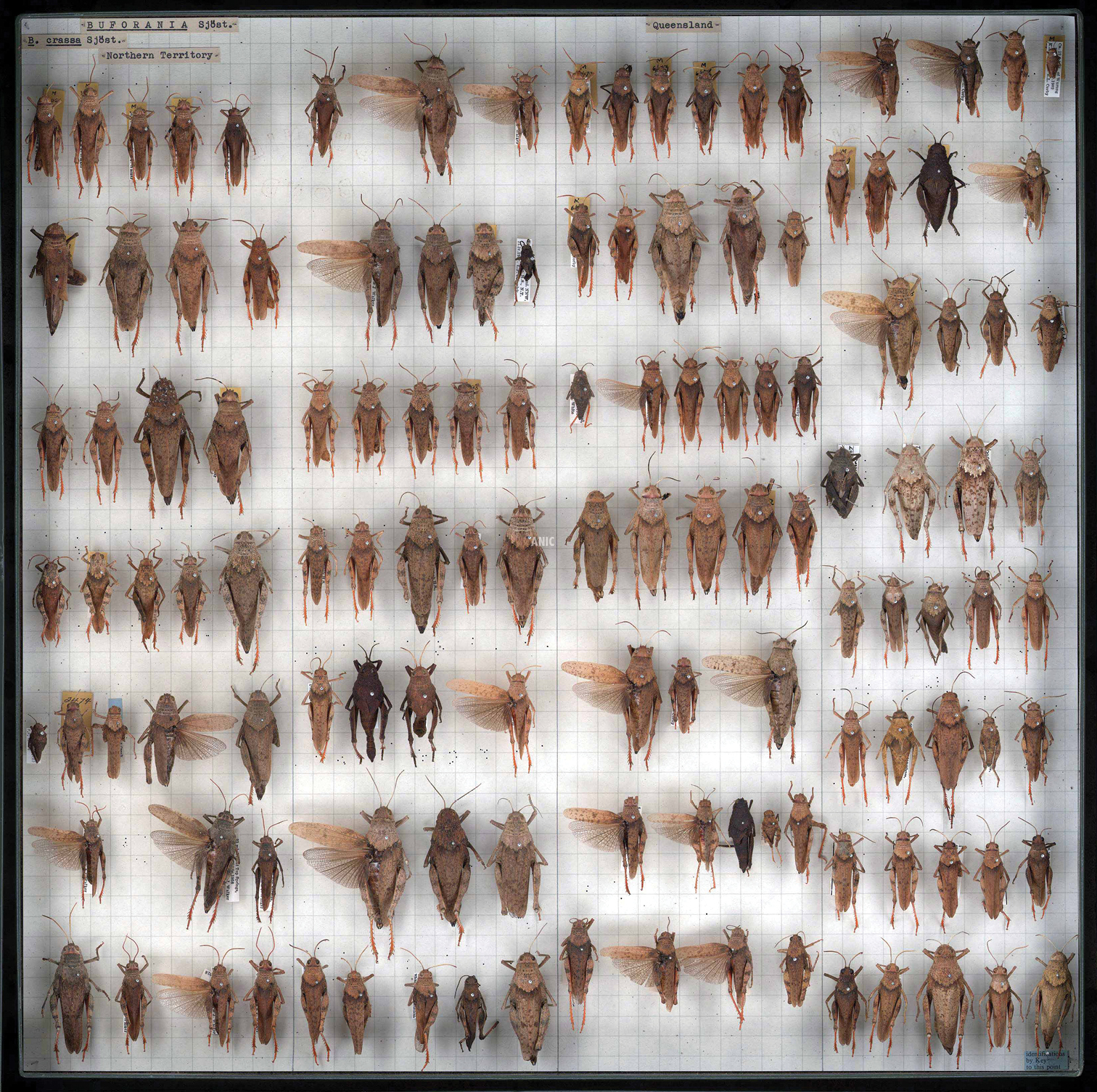
The process of pinning insect specimens is a dry method to preserve and display collections and requires special entomological equipment to accomplish effectively. It is used primarily for hard-bodied, medium to large specimens and is beneficial for easier study and color preservation. Flies and butterflies, though they are partially soft-bodied, are also best preserved through pinning because when preserved in fluid their hairs and/or scales will either clot or fall off. Some smaller specimens may still be pinned use minuten pins, which are much thinner, to avoid breakage. Insects are pinned on foam block or specialized pinning blocks that provide support for the limbs while drying and may be moved to another specialized, protected display case after they have dried completely, at which point they will be more brittle. The pin is most often driven through the thorax of the insect just to the right of the mid-line to preserve the appearance of at least one side should any damage occur from pinning. The exception is butterflies, dragonflies and damselflies, which are pinned through the middle of the thorax. Enough of the pin must be left both above and below the specimen to allow for labeling below and handling.
Carding is used when pinning would destroy too much of the specimen because its size is quite small. A triangular point is cut from acid free card to ensure best conservation practice because it comes in direct contact with the specimen. A pin is then driven through the broad side of the point for mounting. A soluble glue that can be removed with solvents when necessary is used to adhere the right side of the thorax of the specimen to the point opposite the pinned side. The point is sometimes bent to allow the specimen to present in the same position as normally pinned specimens.
A wet specimen is a specimen preserved in fluid, often 70% alcohol. Specimens that would receive this preservation technique are usually soft-bodied, such as caterpillars, larva, and spiders because of their soft abdomens. This is done to minimize shriveling allowing the identifying characteristics to be preserved as true to life as possible. Hard-bodied insects may also be preserved temporarily in alcohol before pinning.
Slides of very small insects are also kept as part of insect collections.
The American Institute for Conservation (AIC) describes in their Code of Ethics the aspects of conservation to include: preventive conservation, examination, documentation, treatment, research and education. Each of these areas also apply to the conservation and restoration of insect specimens.
Hub AI
Conservation and restoration of insect specimens AI simulator
(@Conservation and restoration of insect specimens_simulator)
Conservation and restoration of insect specimens
The conservation and restoration of insect specimens is the process of caring for and preserving insects as a part of a collection. Conservation concerns begin at collection and continue through preparation, storage, examination, documentation, research and treatment when restoration is needed.
Insect collecting can be done in many different ways depending on the kind of insects being collected and from which habitats. Both hobbyists and professional entomologist have found particular ways to collect with minimal damage to their specimens. Following established techniques helps begin the conservation of insect specimens from the beginning by eliminating as much potential damage as possible. It must be done delicately to ensure that neither the collector nor the live insect itself will cause harm to the distinctive features such as wings, legs and antennae that give purpose to the collection. Special collection nets, traps and techniques must be utilized in consideration of how easily breakage can happen. A kill jar is often used to immediately immobilize the insect before it can damage itself.
The way an insect specimen is prepared is often the first step in their conservation. They have to be carefully prepared with the appropriate methods depending on their size, anatomy, and potentially delicate features to ensure they will not break before they begin their role as a specimen available for study, research and display. Some specimens must be prepared using a dry method and others with liquid to preserve. The choice made will preserve key features necessary for identification and represent the insect's living form as closely as possible.
The process of pinning insect specimens is a dry method to preserve and display collections and requires special entomological equipment to accomplish effectively. It is used primarily for hard-bodied, medium to large specimens and is beneficial for easier study and color preservation. Flies and butterflies, though they are partially soft-bodied, are also best preserved through pinning because when preserved in fluid their hairs and/or scales will either clot or fall off. Some smaller specimens may still be pinned use minuten pins, which are much thinner, to avoid breakage. Insects are pinned on foam block or specialized pinning blocks that provide support for the limbs while drying and may be moved to another specialized, protected display case after they have dried completely, at which point they will be more brittle. The pin is most often driven through the thorax of the insect just to the right of the mid-line to preserve the appearance of at least one side should any damage occur from pinning. The exception is butterflies, dragonflies and damselflies, which are pinned through the middle of the thorax. Enough of the pin must be left both above and below the specimen to allow for labeling below and handling.
Carding is used when pinning would destroy too much of the specimen because its size is quite small. A triangular point is cut from acid free card to ensure best conservation practice because it comes in direct contact with the specimen. A pin is then driven through the broad side of the point for mounting. A soluble glue that can be removed with solvents when necessary is used to adhere the right side of the thorax of the specimen to the point opposite the pinned side. The point is sometimes bent to allow the specimen to present in the same position as normally pinned specimens.
A wet specimen is a specimen preserved in fluid, often 70% alcohol. Specimens that would receive this preservation technique are usually soft-bodied, such as caterpillars, larva, and spiders because of their soft abdomens. This is done to minimize shriveling allowing the identifying characteristics to be preserved as true to life as possible. Hard-bodied insects may also be preserved temporarily in alcohol before pinning.
Slides of very small insects are also kept as part of insect collections.
The American Institute for Conservation (AIC) describes in their Code of Ethics the aspects of conservation to include: preventive conservation, examination, documentation, treatment, research and education. Each of these areas also apply to the conservation and restoration of insect specimens.
Recent media