
Recent from talks
Corneal transplantation
Knowledge base stats:
Talk channels stats:
Members stats:
Corneal transplantation
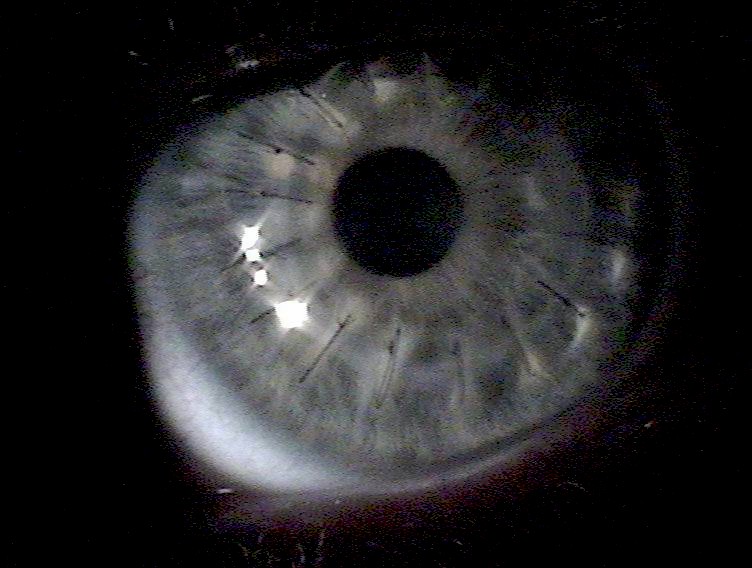
Corneal transplantation, also known as corneal grafting, is a surgical procedure where a damaged or diseased cornea is replaced by donated corneal tissue (the graft). When the entire cornea is replaced it is known as penetrating keratoplasty and when only part of the cornea is replaced it is known as lamellar keratoplasty. Keratoplasty simply means surgery to the cornea. The graft is taken from a recently deceased individual with no known diseases or other factors that may affect the chance of survival of the donated tissue or the health of the recipient.
The cornea is the transparent front part of the eye that covers the iris, pupil and anterior chamber. The surgical procedure is performed by ophthalmologists, physicians who specialize in eyes, and is often done on an outpatient basis. Donors can be of any age, as is shown in the case of Janis Babson, who donated her eyes after dying at the age of 10. Corneal transplantation is performed when medicines, keratoconus conservative surgery and cross-linking can no longer heal the cornea.
This surgical procedure usually treats corneal blindness, with success rates of at least 41% as of 2021.
Indications include the following:
The risks are similar to other intraocular procedures, but additionally include graft rejection (lifelong), detachment or displacement of lamellar transplants and primary graft failure. Use of immunosuppressants including cyclosporine A, tacrolimus, mycophenolate mofetil, sirolimus, and leflunomide to prevent graft rejection is increasing but there is insufficient evidence to ascertain which immunosuppressant is better. In a Cochrane review which included low to moderate quality evidence, adverse effects were found to be common with systemic mycophenolate mofetil, but less common with topical cyclosporine A or tacrolimus.
There is also a risk of infection. Since the cornea has no blood vessels (it takes its nutrients from the aqueous humor) it heals much more slowly than a cut on the skin. While the wound is healing, it is possible that it might become infected by various microorganisms. This risk is minimized by antibiotic prophylaxis (using antibiotic eyedrops, even when no infection exists).
There is a risk of cornea rejection, which occurs in about 10% of cases. Graft failure can occur at any time after the cornea has been transplanted, even years or decades later. The causes can vary, though it is usually due to new injury or illness. Treatment can be either medical or surgical, depending on the individual case. An early, technical cause of failure may be an excessively tight stitch cheesewiring through the sclera.
Infectious disease transmission through corneal transplantation is exceedingly rare. All corneal grafts are screened for the presence of viruses such as HIV or hepatitis through antibody or nucleic acid testing, and there has never been a reported case of HIV transmission through corneal transplant surgery. Prior to the development of reliable HIV testing, many countries instituted bans on corneal donation by gay men. For example, on 20 May 1994, the United States banned corneal donation by any man who has had sex with another man in the preceding 5 years, even if all HIV testing is negative (a policy which continues to be enforced today).
Hub AI
Corneal transplantation AI simulator
(@Corneal transplantation_simulator)
Corneal transplantation
Corneal transplantation, also known as corneal grafting, is a surgical procedure where a damaged or diseased cornea is replaced by donated corneal tissue (the graft). When the entire cornea is replaced it is known as penetrating keratoplasty and when only part of the cornea is replaced it is known as lamellar keratoplasty. Keratoplasty simply means surgery to the cornea. The graft is taken from a recently deceased individual with no known diseases or other factors that may affect the chance of survival of the donated tissue or the health of the recipient.
The cornea is the transparent front part of the eye that covers the iris, pupil and anterior chamber. The surgical procedure is performed by ophthalmologists, physicians who specialize in eyes, and is often done on an outpatient basis. Donors can be of any age, as is shown in the case of Janis Babson, who donated her eyes after dying at the age of 10. Corneal transplantation is performed when medicines, keratoconus conservative surgery and cross-linking can no longer heal the cornea.
This surgical procedure usually treats corneal blindness, with success rates of at least 41% as of 2021.
Indications include the following:
The risks are similar to other intraocular procedures, but additionally include graft rejection (lifelong), detachment or displacement of lamellar transplants and primary graft failure. Use of immunosuppressants including cyclosporine A, tacrolimus, mycophenolate mofetil, sirolimus, and leflunomide to prevent graft rejection is increasing but there is insufficient evidence to ascertain which immunosuppressant is better. In a Cochrane review which included low to moderate quality evidence, adverse effects were found to be common with systemic mycophenolate mofetil, but less common with topical cyclosporine A or tacrolimus.
There is also a risk of infection. Since the cornea has no blood vessels (it takes its nutrients from the aqueous humor) it heals much more slowly than a cut on the skin. While the wound is healing, it is possible that it might become infected by various microorganisms. This risk is minimized by antibiotic prophylaxis (using antibiotic eyedrops, even when no infection exists).
There is a risk of cornea rejection, which occurs in about 10% of cases. Graft failure can occur at any time after the cornea has been transplanted, even years or decades later. The causes can vary, though it is usually due to new injury or illness. Treatment can be either medical or surgical, depending on the individual case. An early, technical cause of failure may be an excessively tight stitch cheesewiring through the sclera.
Infectious disease transmission through corneal transplantation is exceedingly rare. All corneal grafts are screened for the presence of viruses such as HIV or hepatitis through antibody or nucleic acid testing, and there has never been a reported case of HIV transmission through corneal transplant surgery. Prior to the development of reliable HIV testing, many countries instituted bans on corneal donation by gay men. For example, on 20 May 1994, the United States banned corneal donation by any man who has had sex with another man in the preceding 5 years, even if all HIV testing is negative (a policy which continues to be enforced today).
Recent media