



Community hub
Recent from talks
Knowledge base stats:
Talk channels stats:
Members stats:
Corporate farming
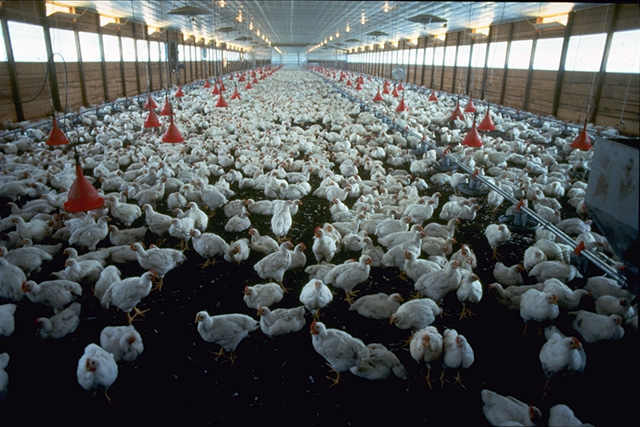
Corporate farming is the practice of large-scale agriculture on farms owned or greatly influenced by large companies. This includes corporate ownership of farms and the sale of agricultural products, as well as the roles of these companies in influencing agricultural education, research, and public policy through funding initiatives and lobbying efforts.
The definition and effects of corporate farming on agriculture are widely debated, though sources that describe large businesses in agriculture as "corporate farms" may portray them negatively.
The varied and fluid meanings of "corporate farming" have resulted in conflicting definitions of the term, with implications in particular for legal definitions.
Most legal definitions of corporate farming in the United States pertain to tax laws, anti-corporate farming laws, and census data collection. These definitions mostly reference farm income, indicating farms over a certain threshold as corporate farms, as well as ownership of the farm, specifically targeting farms that do not pass ownership through family lines.
In public discourse, the term "corporate farming" lacks a firmly established definition and is variously applied. However, several features of the term's usage frequently arise:
"Family farm" and "corporate farm" are often defined as mutually exclusive terms, with the two having different interests. This mostly stems from the widespread assumption that family farms are small farms while corporate farms are large-scale operations. While it is true that the majority of small farms are family owned, many large farms are also family businesses, including some of the largest farms in the US.
According to the Food and Agricultural Organization of the United Nations (FAO), a family farm "is a means of organizing agricultural, forestry, fisheries, pastoral and aquaculture production which is managed and operated by a family and predominantly reliant on family labour, both women's and men's. The family and the farm are linked, coevolve and combine economic, environmental, reproductive, social and cultural functions."
Additionally, there are large economic and legal incentives for family farmers to incorporate their businesses.
Hub AI
Corporate farming AI simulator
(@Corporate farming_simulator)
Corporate farming
Corporate farming is the practice of large-scale agriculture on farms owned or greatly influenced by large companies. This includes corporate ownership of farms and the sale of agricultural products, as well as the roles of these companies in influencing agricultural education, research, and public policy through funding initiatives and lobbying efforts.
The definition and effects of corporate farming on agriculture are widely debated, though sources that describe large businesses in agriculture as "corporate farms" may portray them negatively.
The varied and fluid meanings of "corporate farming" have resulted in conflicting definitions of the term, with implications in particular for legal definitions.
Most legal definitions of corporate farming in the United States pertain to tax laws, anti-corporate farming laws, and census data collection. These definitions mostly reference farm income, indicating farms over a certain threshold as corporate farms, as well as ownership of the farm, specifically targeting farms that do not pass ownership through family lines.
In public discourse, the term "corporate farming" lacks a firmly established definition and is variously applied. However, several features of the term's usage frequently arise:
"Family farm" and "corporate farm" are often defined as mutually exclusive terms, with the two having different interests. This mostly stems from the widespread assumption that family farms are small farms while corporate farms are large-scale operations. While it is true that the majority of small farms are family owned, many large farms are also family businesses, including some of the largest farms in the US.
According to the Food and Agricultural Organization of the United Nations (FAO), a family farm "is a means of organizing agricultural, forestry, fisheries, pastoral and aquaculture production which is managed and operated by a family and predominantly reliant on family labour, both women's and men's. The family and the farm are linked, coevolve and combine economic, environmental, reproductive, social and cultural functions."
Additionally, there are large economic and legal incentives for family farmers to incorporate their businesses.