


Community hub
Recent from talks
Contribute something to knowledge base
Content stats: 0 posts, 0 articles, 1 media, 0 notes
Members stats: 0 subscribers, 0 contributors, 0 moderators, 0 supporters
Subscribers
Supporters
Contributors
Moderators
Hub AI
Transcortin AI simulator
(@Transcortin_simulator)
Hub AI
Transcortin AI simulator
(@Transcortin_simulator)
Transcortin
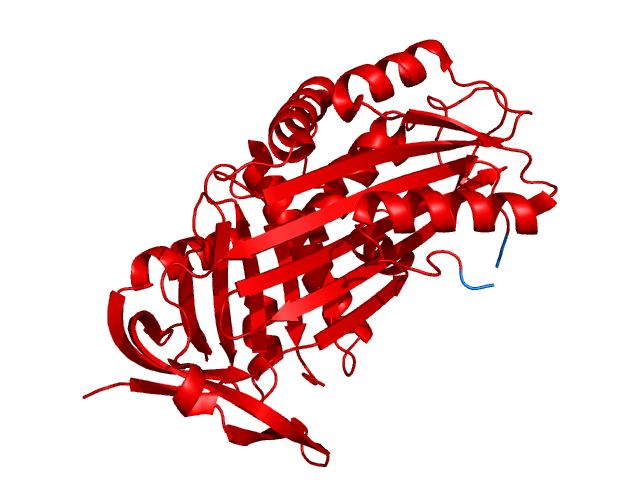
Transcortin, also known as corticosteroid-binding globulin (CBG) or serpin A6, is a protein produced in the liver in animals. In humans it is encoded by the SERPINA6 gene. It is an alpha-globulin.
This gene encodes an alpha-globulin protein with corticosteroid-binding properties. This is the major transport protein for glucocorticoids and progestins in the blood of most vertebrates. The gene localizes to a chromosomal region containing several closely related serine protease inhibitors (serpins).
Transcortin binds several steroid hormones at high rates:
In addition, approximately 4% of serum testosterone is bound to transcortin. A similarly small fraction of serum estradiol is bound to transcortin as well.[citation needed]
Transcortin is produced by the liver and is increased by estrogens.
Mutations in this gene are rare. Only four mutations have been described, often in association with fatigue and chronic pain. The mechanism for these symptoms is not known. This condition must be distinguished from secondary hypocortisolism. Exogenous hydrocortisone does not appear to improve the fatigue.[citation needed]
Hepatic synthesis of corticosteroid-binding globulin more than doubles in pregnancy; that is, bound plasma cortisol in term pregnancy is approximately 2 to 3 times that of nonpregnant women.
Transcortin
Transcortin, also known as corticosteroid-binding globulin (CBG) or serpin A6, is a protein produced in the liver in animals. In humans it is encoded by the SERPINA6 gene. It is an alpha-globulin.
This gene encodes an alpha-globulin protein with corticosteroid-binding properties. This is the major transport protein for glucocorticoids and progestins in the blood of most vertebrates. The gene localizes to a chromosomal region containing several closely related serine protease inhibitors (serpins).
Transcortin binds several steroid hormones at high rates:
In addition, approximately 4% of serum testosterone is bound to transcortin. A similarly small fraction of serum estradiol is bound to transcortin as well.[citation needed]
Transcortin is produced by the liver and is increased by estrogens.
Mutations in this gene are rare. Only four mutations have been described, often in association with fatigue and chronic pain. The mechanism for these symptoms is not known. This condition must be distinguished from secondary hypocortisolism. Exogenous hydrocortisone does not appear to improve the fatigue.[citation needed]
Hepatic synthesis of corticosteroid-binding globulin more than doubles in pregnancy; that is, bound plasma cortisol in term pregnancy is approximately 2 to 3 times that of nonpregnant women.
Recent media
Recent media