Hubbry Logo
logo
Transcortin
Community hub

Transcortin

logo
0 subscribers
Read side by side
from Wikipedia
SERPINA6
Available structures
PDBOrtholog search: PDBe RCSB
Identifiers
AliasesSERPINA6, CBG, serpin family A member 6
External IDsOMIM: 122500; MGI: 88278; HomoloGene: 20417; GeneCards: SERPINA6; OMA:SERPINA6 - orthologs
Orthologs
SpeciesHumanMouse
Entrez
Ensembl
UniProt
RefSeq (mRNA)

NM_001756

NM_007618

RefSeq (protein)

NP_001747

NP_031644

Location (UCSC)Chr 14: 94.3 – 94.32 MbChr 12: 103.61 – 103.62 Mb
PubMed search[3][4]
Wikidata
View/Edit HumanView/Edit Mouse

Transcortin, also known as corticosteroid-binding globulin (CBG) or serpin A6, is a protein produced in the liver in animals. In humans it is encoded by the SERPINA6 gene. It is an alpha-globulin.[5][6][7]

Function

[edit]

This gene encodes an alpha-globulin protein with corticosteroid-binding properties. This is the major transport protein for glucocorticoids and progestins in the blood of most vertebrates. The gene localizes to a chromosomal region containing several closely related serine protease inhibitors (serpins).[7]

Binding

[edit]

Transcortin binds several steroid hormones at high rates:

In addition, approximately 4% of serum testosterone is bound to transcortin.[11] A similarly small fraction of serum estradiol is bound to transcortin as well.[citation needed]

Synthesis

[edit]

Transcortin is produced by the liver and is increased by estrogens.[12]

Clinical significance

[edit]

Mutations in this gene are rare. Only four mutations have been described, often in association with fatigue and chronic pain.[13] The mechanism for these symptoms is not known. This condition must be distinguished from secondary hypocortisolism. Exogenous hydrocortisone does not appear to improve the fatigue.[citation needed]

Hepatic synthesis of corticosteroid-binding globulin more than doubles in pregnancy; that is, bound plasma cortisol in term pregnancy is approximately 2 to 3 times that of nonpregnant women.[14][15]

See also

[edit]

References

[edit]

Further reading

[edit]
[edit]
Revisions and contributorsEdit on WikipediaRead on Wikipedia
from Grokipedia
Transcortin, also known as corticosteroid-binding globulin (CBG) or serpin A6, is a plasma glycoprotein primarily synthesized in the liver that functions as the major transport protein for glucocorticoids such as cortisol and progestins such as progesterone in the bloodstream of vertebrates. Encoded by the SERPINA6 gene located on chromosome 14q32.13, it belongs to the serpin superfamily of protease inhibitors and binds these steroid hormones with high affinity, thereby regulating their bioavailability and preventing rapid clearance while only allowing the unbound fraction to interact with target tissues.[1][2][3] As an α1-globulin with a molecular weight of approximately 52 kDa, transcortin features a single steroid-binding site and is N-glycosylated at five sites, which contributes to its stability and function in circulation.[3] Its structure includes a reactive center loop (RCL) that, upon proteolytic cleavage—often by enzymes like neutrophil elastase—undergoes a stressed-to-relaxed conformational transition, significantly reducing steroid-binding affinity and facilitating hormone release at sites of inflammation or injury.[4] This mechanism underscores transcortin's role not only as a passive carrier but as an active regulator of glucocorticoid access during physiological stress, with binding affinities notably high for cortisol (Ka ≈ 76 × 10⁶ M⁻¹) and progesterone (Ka ≈ 24 × 10⁶ M⁻¹), but lower for mineralocorticoids like aldosterone.[3] Expression is highest in the liver, though it is also detected in glucocorticoid-responsive tissues, and its levels fluctuate with conditions such as pregnancy, acute inflammation, and estrogen exposure, influencing overall hormone dynamics.[1][2] Genetically, the SERPINA6 gene is part of a clustered serpin locus on chromosome 14 and exhibits conservation across species, reflecting its evolutionary importance in hormone transport.[3] Pathogenic variants in SERPINA6 can lead to corticosteroid-binding globulin deficiency, a rare condition characterized by reduced plasma CBG levels, resulting in clinical features like hypotension, chronic fatigue, and exercise intolerance due to altered glucocorticoid availability.[1][5] Polymorphisms in the gene have also been associated with variations in cortisol-binding capacity, potentially impacting stress responses.[2][6] Overall, transcortin plays a critical role in maintaining hormonal homeostasis, with implications for endocrinology, inflammation, and reproductive physiology.

Structure and Genetics

Gene and Expression

The SERPINA6 gene, which encodes transcortin (also known as corticosteroid-binding globulin or CBG), is located on the long arm of human chromosome 14 at the q32.13 cytogenetic band.[1] The gene spans approximately 19 kilobases and consists of five exons, with the coding sequence distributed across these exons to produce a mature mRNA transcript.[7] This genomic organization reflects the evolutionary duplication events within the serpin gene cluster on chromosome 14, where SERPINA6 resides alongside related protease inhibitor genes.[2] Transcription of SERPINA6 is primarily regulated in the liver, its main site of expression, through hormonal influences on promoter elements. Estrogen upregulates SERPINA6 expression by stimulating the gene via estrogen receptor alpha (ERα) binding to specific response sequences in the promoter region, contributing to higher CBG levels in females.[8] Glucocorticoids also modulate SERPINA6 transcription in a tissue-specific manner; for instance, dexamethasone (a synthetic glucocorticoid) downregulates CBG mRNA in hepatic cell lines, potentially through indirect interactions with nuclear factors binding cis-regulatory elements in the promoter, though no direct glucocorticoid response element (GRE) is present.[9][10] At the post-transcriptional level, SERPINA6 produces multiple mRNA isoforms due to alternative splicing, with at least eight transcripts identified, some of which exhibit tissue-specific patterns that may influence local CBG production.[11] mRNA stability is further regulated by hormones; thyroid hormone enhances Serpina6 mRNA stability in hepatic tissues, thereby increasing overall CBG synthesis.[12] The SERPINA6 gene demonstrates strong evolutionary conservation across vertebrates, underscoring its fundamental role in steroid hormone transport. Orthologs in rodents, such as mouse and rat, share approximately 75% amino acid sequence identity with the human protein, particularly in the steroid-binding and serpin domains, while broader vertebrate homologs maintain functional synteny and core structural features.[13]

Protein Composition

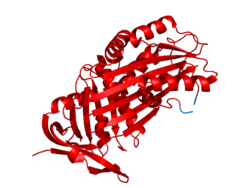
Transcortin, also known as corticosteroid-binding globulin (CBG), is a member of the serpin superfamily encoded by the SERPINA6 gene. The mature protein comprises 383 amino acids following cleavage of a 22-residue signal peptide, resulting in an unglycosylated polypeptide with a calculated molecular weight of approximately 42.6 kDa.[14][15] As a serpin, transcortin features a characteristic tertiary structure dominated by a central β-sheet A flanked by additional β-sheets and α-helices, with a flexible reactive center loop (RCL) positioned near the top of the molecule. This RCL, comprising residues around the P1-P1' cleavage site (Val344-Thr345 in human CBG), plays a critical role in maintaining the protein's native conformation, while the β-sheets provide structural rigidity essential for stability.[1][16] The protein contains six conserved N-glycosylation sites at asparagine residues (Asn9, Asn74, Asn132, Asn216, Asn238, and Asn325 in the mature sequence), which account for 20-30% of its total molecular mass in the plasma form, elevating the apparent size to about 52 kDa on SDS-PAGE. These complex N-linked glycans, primarily bi- and triantennary structures, are crucial for proper folding, secretion, and solubility, as well as influencing overall protein half-life in circulation.[17][18][19] High-resolution crystal structures of human transcortin, such as the 1.8 Å structure of the cleaved form in complex with cortisol (PDB ID: 2VDX), illustrate the serpin fold with the RCL incorporated into β-sheet A post-cleavage. The steroid-binding pocket is a hydrophobic cavity at the protein's surface, lined by key residues including Arg-238, which forms hydrogen bonds, and Tyr-173, which contributes to π-stacking interactions with the ligand.[20][21]

Binding Properties

Ligands and Specificity

Transcortin, also known as corticosteroid-binding globulin (CBG), primarily binds glucocorticoids such as cortisol and corticosterone, progestogens including progesterone, and mineralocorticoids like aldosterone. Of these, cortisol is the principal ligand in humans, with approximately 75-90% of circulating cortisol bound to transcortin, which serves as the main transport protein regulating its bioavailability. Corticosterone represents a major ligand in rodents, while progesterone and aldosterone are bound with notable but lower capacity compared to cortisol.[22][23] The binding selectivity of transcortin favors glucocorticoids and progestogens, exhibiting high affinity for these classes while showing low affinity for sex steroids such as testosterone and estradiol. This specificity arises from structural features in the ligand-binding site, which accommodate the characteristic steroid backbone and functional groups of glucocorticoids and progestogens but poorly interact with androgens or estrogens. For instance, aldosterone binding accounts for about 17% of its serum levels associated with transcortin, underscoring its moderate selectivity within mineralocorticoids.[22][24] Each transcortin monomer contains a single ligand-binding site, characterized by non-covalent hydrophobic interactions within a cleft near the protein surface, supplemented by hydrogen bonds that stabilize the complex. The stoichiometry is 1:1, ensuring efficient transport without excess capacity.[25] Ligand release from transcortin is modulated by environmental factors, including pH and temperature. Lower pH, as occurs in acidosis (e.g., from 7.4 to 7.0), and elevated temperatures (e.g., during fever up to 39°C) reduce binding affinity, promoting dissociation of cortisol and other ligands at inflammatory or stressed sites. As a member of the serpin family, transcortin undergoes a stressed-to-relaxed (S-to-R) conformational transition upon proteolytic cleavage of its reactive center loop, significantly reducing steroid-binding affinity and facilitating hormone release.[26][27][25]

Affinity and Kinetics

Transcortin, also known as corticosteroid-binding globulin (CBG), exhibits high-affinity binding to cortisol with a dissociation constant (Kd) of approximately 1-5 nM under physiological conditions at pH 7.4 and 37°C.[28] This tight binding ensures that the majority of circulating cortisol (80-90%) remains sequestered, modulating its bioavailability.[29] The affinity is temperature-sensitive, with Kd values increasing to around 30-300 nM at elevated temperatures, reflecting conformational changes that facilitate ligand release during physiological stress.[30] The kinetics of cortisol-transcortin interactions are characterized by a rapid association rate constant (ka) on the order of 10^7 M^{-1} s^{-1}, enabling efficient capture of free cortisol in plasma.[30] The dissociation rate constant (kd) ranges from 10^{-2} to 10^{-3} s^{-1} at ambient temperatures, resulting in a relatively short half-life for the bound complex on the scale of seconds to minutes, which supports dynamic equilibrium in circulation.[30] These parameters contribute to transcortin's role in buffering cortisol levels, preventing rapid fluctuations while allowing controlled dissociation as needed.[31] Proteolysis at the reactive center loop (RCL) induces an allosteric S-to-R conformational transition in transcortin, dramatically enhancing ligand release. Cleavage by neutrophil elastase, common at inflammatory sites, reduces binding affinity by approximately 10-fold, thereby increasing cortisol dissociation by a similar magnitude and promoting local hormone availability.[21] This mechanism exemplifies transcortin's adaptation for targeted delivery during immune responses.[28] Glycosylation significantly influences transcortin's binding efficiency, with N-linked glycans at key sites like Asn238 stabilizing the steroid-binding pocket. Deglycosylated forms, achieved through enzymatic treatment such as with Endo H, exhibit up to 50% reduced affinity for cortisol, as evidenced by 2- to 5-fold increases in Kd values.[28] This post-translational modification thus fine-tunes the protein's transport function under varying physiological states.[28]

Physiological Role

Synthesis Sites

Transcortin, also known as corticosteroid-binding globulin (CBG), is primarily synthesized by hepatocytes in the liver, which serves as the main source of circulating protein in the bloodstream. Hepatic production accounts for the majority of plasma transcortin levels, with hepatocytes secreting the glycoprotein into the circulation to facilitate steroid hormone transport.[3][32][33] Extrahepatic synthesis occurs in specific reproductive tissues, particularly during physiological states such as pregnancy. In the human uterus, transcortin mRNA expression has been detected in endometrial cells, with higher levels observed predominantly in the secretory phase of the menstrual cycle, suggesting local production influenced by hormonal ratios like estrogen and progesterone. Ovarian granulosa luteal cells also secrete transcortin, as evidenced by measurable protein release and corresponding mRNA levels in these cells, contributing to steroid modulation in the ovarian environment.[34][35] During pregnancy, placental production of transcortin becomes significant, particularly in late gestation, where syncytiotrophoblast cells express and synthesize the protein, adding to maternal circulating levels alongside hepatic output. Immunohistochemical and molecular analyses confirm transcortin immunoreactivity and mRNA in placental chorionic villi, indicating a role in modulating glucocorticoids at the maternal-fetal interface. This extrahepatic contribution supports elevated plasma transcortin observed in pregnancy, though the precise proportion varies.[36][37] Species differences in transcortin synthesis patterns are notable, with rodents exhibiting higher extrahepatic expression compared to humans. In mice, intrinsic transcortin production is prominent in neural tissues such as the brain, including regions like the periaqueductal gray and spinal cord, in addition to hepatic sites. Ovine fetal studies further highlight extrahepatic sites like the pituitary, where mRNA levels are detectable, contrasting with the more liver-dominant pattern in adult humans. These variations underscore evolutionary adaptations in steroid transport across species.[38][39]

Regulation and Function

Transcortin, also known as corticosteroid-binding globulin (CBG), is primarily regulated at the transcriptional level in the liver, with key hormonal and inflammatory signals modulating its plasma concentrations. Estrogens upregulate transcortin expression through activation of hepatic estrogen receptors, leading to a 2- to 3-fold increase in plasma levels during pregnancy.[40] This elevation enhances cortisol-binding capacity to accommodate the heightened glucocorticoid demands of gestation. In contrast, inflammatory cytokines such as interleukin-6 (IL-6) downregulate transcortin during the acute-phase response, resulting in a 30- to 50% reduction in plasma concentrations, which facilitates increased availability of free cortisol at sites of inflammation.[41] The core function of transcortin is to serve as the principal transport protein for cortisol in the bloodstream, binding approximately 90% of circulating cortisol with high affinity and thereby regulating the biologically active free hormone fraction, which constitutes only 5-10% of total cortisol. By sequestering cortisol, transcortin protects it from rapid hepatic clearance and metabolism, extending its plasma half-life and ensuring sustained delivery to target tissues. This binding dynamic maintains hormonal homeostasis under normal physiological conditions, preventing excessive free cortisol exposure that could otherwise lead to tissue damage. In the context of the stress response, transcortin plays a specialized role by enabling targeted cortisol release at inflamed or injured sites through proteolytic cleavage by neutrophil elastase, an enzyme released from activated neutrophils.[42] This cleavage reduces transcortin's affinity for cortisol, allowing gradual dissociation and local elevation of free hormone levels to support anti-inflammatory and immune-modulatory actions without systemic overexposure. Furthermore, transcortin's high-affinity binding contributes to the total plasma cortisol capacity, influencing diurnal variations in free cortisol and providing negative feedback to the hypothalamic-pituitary-adrenal (HPA) axis, thereby fine-tuning glucocorticoid rhythms essential for metabolic and behavioral adaptation.

Clinical Aspects

Genetic Variants

Transcortin, also known as corticosteroid-binding globulin (CBG), is encoded by the SERPINA6 gene, and inherited mutations in this gene can lead to CBG deficiency or altered function. Null mutations, which abolish CBG production, are rare and result in complete deficiency in homozygotes and approximately 50% reduction in plasma levels in heterozygotes. A seminal example is the c.121G>A mutation reported in an Italian-Australian family, causing a premature termination codon and undetectable CBG in three homozygotes, with associated fatigue and relative hypotension but no severe clinical impairment. The prevalence of complete CBG deficiency is estimated at less than 1 in 1,000,000 individuals.[43][44] Common polymorphisms in SERPINA6 also influence transcortin levels and function, contributing to interindividual variation in cortisol binding. For instance, the A51V variant (rs146744332) impairs CBG secretion without affecting steroid binding affinity, leading to roughly 50% lower plasma CBG concentrations in heterozygotes compared to wild-type individuals. Genome-wide association studies have identified variants in the SERPINA6/SERPINA1 locus, such as rs12589136, that explain less than 1% of variation in total cortisol levels across populations. These polymorphisms occur at higher frequencies, with A51V detected in about 3% of Chinese subjects, and generally result in mild reductions in cortisol-binding capacity without complete loss of function.[6][45] Certain variants affect post-translational modifications, such as N-glycosylation, which are critical for transcortin stability and circulating levels. Mutations at conserved N-glycosylation sites, like N238Q in human CBG, disrupt steroid binding and increase susceptibility to proteolysis by enzymes such as neutrophil elastase, reducing functional protein by up to 50% through enhanced degradation. This leads to lower plasma CBG concentrations and diminished cortisol transport efficiency, as deglycosylated CBG shows 2- to 10-fold lower binding affinity depending on the site affected. Such variants highlight glycosylation's role in protecting CBG from proteolytic cleavage in circulation.[46] SERPINA6 variants follow an autosomal codominant inheritance pattern, where heterozygotes exhibit intermediate phenotypes, such as halved CBG levels, compared to wild-type homozygotes. This mode was evident in the 2001 family study of the null mutation, where 19 heterozygotes showed partial deficiency and variable symptoms, including asymptomatic carriers. Early case studies from the 2000s, including de novo mutations like D367N, further demonstrated haploinsufficiency without lethality, underscoring the gene's dosage sensitivity.[44][47]

Pathological Implications

Transcortin, also known as corticosteroid-binding globulin (CBG), exhibits reduced serum levels in sepsis and septic shock, typically dropping by 50-70% from normal concentrations of 450-650 nmol/L to below 200 nmol/L, with the extent of reduction correlating directly with disease severity. This decline is associated with increased mortality risk, as CBG deficiency at ICU admission independently predicts higher norepinephrine requirements and a 3.2-fold increase in ICU mortality, particularly when assessed alongside free cortisol levels through assays that account for altered binding.[48] Recent 2023 studies emphasize that measuring free cortisol, rather than total cortisol, provides a more accurate prognostic indicator in these states, as low CBG elevates the free cortisol fraction despite potentially normal or low total levels.[49] In contrast, transcortin levels are elevated in pregnancy and estrogen-related conditions, often increasing twofold to threefold due to estrogen-induced hepatic synthesis, which can mask the true status of free cortisol by elevating total cortisol without proportional changes in bioactive fractions.[50] For instance, oral contraceptives containing ethinylestradiol raise CBG by 90-100% even during pill-free intervals, complicating adrenal function assessments and necessitating free cortisol measurements for accurate evaluation.[51] As a negative acute-phase reactant, transcortin is downregulated during inflammation through cytokine signaling, such as interleukin-6, leading to reduced glucocorticoid bioavailability and amplified inflammatory responses.[52] This downregulation occurs in conditions like COVID-19 and acute pancreatitis, where CBG levels fall early (e.g., below 16.8 μg/mL within 48 hours in pancreatitis), predicting complications such as infected pancreatic necrosis and correlating with systemic inflammation severity.[53] In COVID-19, altered CBG contributes to dysregulated cortisol delivery at inflammatory sites, exacerbating cytokine storms.[49] The diagnostic utility of measuring CBG lies in calculating the free cortisol index (total cortisol divided by CBG concentration), which better reflects adrenal adequacy in critical illness than total cortisol alone, especially when CBG is low.[54] In critical care, this approach informs therapeutic decisions, such as avoiding unnecessary hydrocortisone supplementation in low-CBG states where free cortisol is already elevated, aligning with 2024 guidelines on critical illness-related corticosteroid insufficiency that prioritize free cortisol assessment to prevent overtreatment.[55] Post-2020 research has highlighted glycosylation variants of CBG in chronic inflammation, where reduced N-glycosylation at key sites like the reactive center loop impairs cortisol release at inflammatory tissues, sustaining disease activity.[56] These variants show promise as biomarkers in autoimmune diseases, such as rheumatoid arthritis, where glycosylation-deficient CBG correlates with treatment response and disease flares, offering potential for personalized monitoring.[57]

References

User Avatar
No comments yet.