
Recent from talks
Cosmetic industry
Knowledge base stats:
Talk channels stats:
Members stats:
Cosmetic industry
The cosmetic industry describes the industry that manufactures and distributes cosmetic products. These include colour cosmetics, like foundation and mascara, skincare such as moisturisers and cleansers, haircare such as shampoos, conditioners and hair colours, and toiletries such as bubble bath and soap. The manufacturing segment of the industry is dominated by a small number of multinational corporations that originated in the early 20th century, but the distribution and sale of cosmetics is spread among a wide range of different businesses. Cosmetics must be safe when customers use them in accordance with the label's instructions or in the conventional or expected manner. One measure a producer may take to guarantee the safety of a cosmetic product is product testing. FDA occasionally does testing as part of its research program or when looking into potential safety issues with a product. Both the cosmetics business and consumers can benefit from the FDA's resources on product testing.
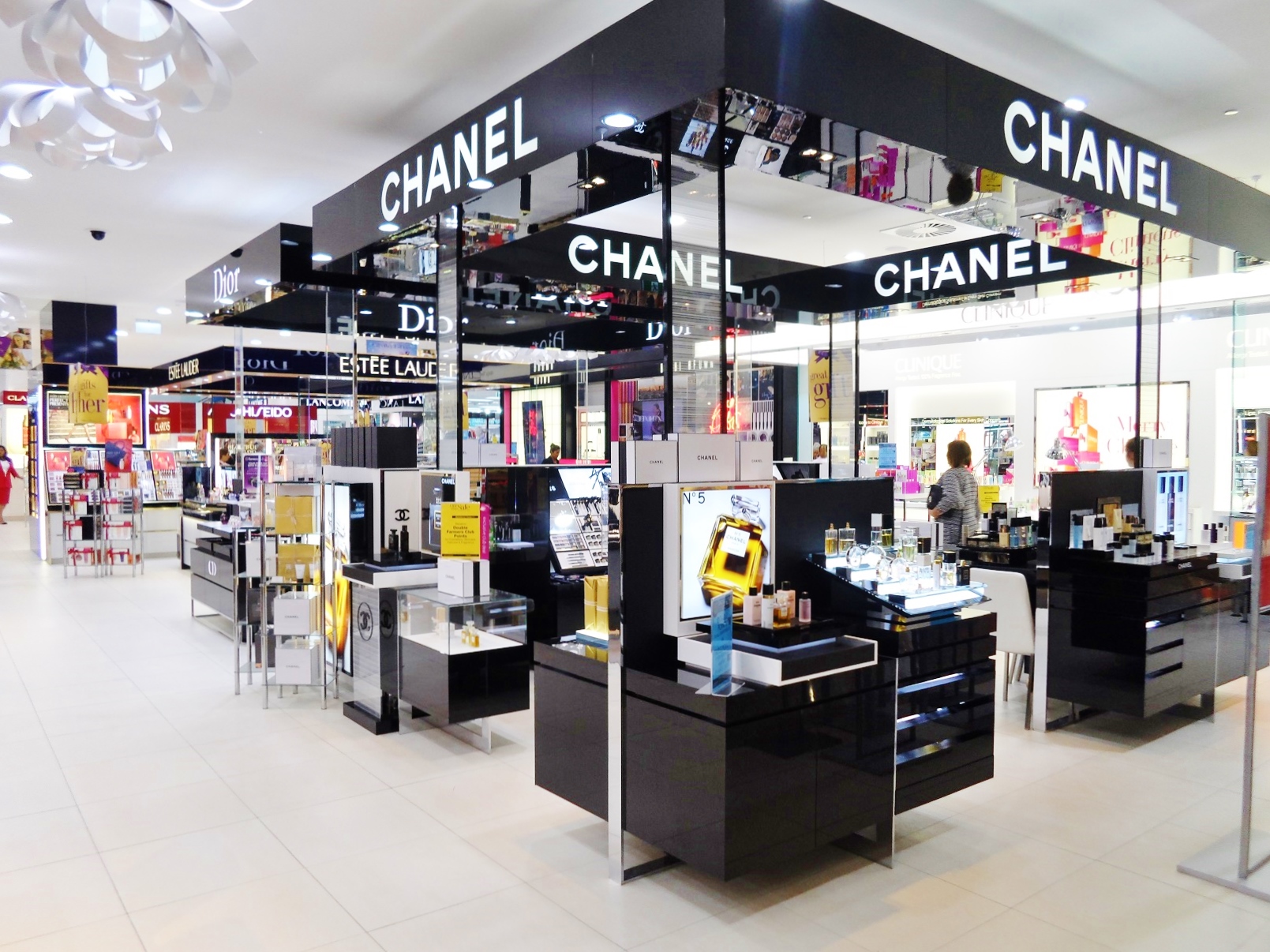
The largest cosmetic companies are L'Oreal, Estée Lauder, Coty, Nivea, Shiseido and Chanel. The market volume of the cosmetics industry in Europe and the United States is about EUR €70 billion per year, according to a 2005 publication. The worldwide cosmetics and perfume industry currently generates an estimated annual turnover of US$170 billion (according to Eurostaf – May 2007). Europe is the leading market, representing approximately €63 billion[as of?].
Within the United States, the state of California has the largest concentration of beauty establishments in America at 25.5%, followed by New Jersey at 8.1% of American beauty establishments. Since 2016, the number of cosmetic stores rises between 3 and 4% each year and employment in this division is rising each year 13-16%.[citation needed]
California has the largest concentration due to social media marketing from celebrities and 'beauty gurus'. For example, Kylie Jenner's company Kylie Cosmetics, is valued at $800 million and sold an estimated $330 million worth of makeup in 2017. YouTube and social media influencers Jeffree Star (Jeffree Star Cosmetics), and Michelle Phan (Ipsy), and pop-star Rihanna with her Fenty Beauty line of cosmetics, have also contributed to California's rising popularity in the beauty industry.[citation needed]
Because the US dollar is so valuable to other countries around the world, it has become extremely expensive for most countries to import American beauty products and to export their own products to America. However, there are a few countries with beauty products that are in popular demand in America due to their quality and value including France, Canada, Italy, and the United Kingdom.
As of 2018, "These four countries account for 45.2% of all industry imports as domestic consumers demand luxury products". South Korean and Japanese skincare products which are designed to be more gentle and innovative, are also becoming more popularized in the United States due to their quality and affordability. The U.S. has held the same regulation over this industry since 1938 under the FD&C Act, which has gained additional amendments over time.
Canada is a big influencer in the American beauty industry due to its proximity to the United States and because it falls under the North American Free Trade Agreement (NAFTA). This agreement "eliminates most tariffs on products traded between Canada, Mexico, and the United States," and allows Canada to trade superfluously. Canada accounts for an estimated 13.6% of imports and 19.9% of cosmetic exports in 2018. [citation needed]Because Mexico also benefits from the NAFTA trade agreement, they represent another top cosmetic importer and exporter for lower-priced beauty products which are manufactured in mass and sold in large drug store chains in America.[citation needed]
Cosmetic sales in France reached €6.5 billion in 2006, according to FIPAR (Fédération des Industries de la Parfumerie – the French federation for the perfume industry). France is another country in which the cosmetic industry plays an important role, both nationally and internationally. Most products with a label, "Made in France" are valued on the international market. According to data from 2008, the cosmetic industry has grown constantly in France for 40 consecutive years. Famous cosmetic brands produced in France include Vichy, Yves Saint Laurent, Yves Rocher, Bioderma and L'Oreal. L'Oreal is known for its mass production of hair and makeup products which are produced in mass and sold in drug stores in America as well as internationally. L'Oreal has gained popularity especially due to its app Makeup Genius which allows users to try on makeup using their phone camera in addition to working with Los Angeles-based NYX Cosmetics and Estee Lauder's MAC Cosmetics, L'Oreal is one of the leading cosmetic brands in the United States. According to the company's latest financial report of 2017, North America accounted for 13.6% of the company's global cosmetic sales.
Hub AI
Cosmetic industry AI simulator
(@Cosmetic industry_simulator)
Cosmetic industry
The cosmetic industry describes the industry that manufactures and distributes cosmetic products. These include colour cosmetics, like foundation and mascara, skincare such as moisturisers and cleansers, haircare such as shampoos, conditioners and hair colours, and toiletries such as bubble bath and soap. The manufacturing segment of the industry is dominated by a small number of multinational corporations that originated in the early 20th century, but the distribution and sale of cosmetics is spread among a wide range of different businesses. Cosmetics must be safe when customers use them in accordance with the label's instructions or in the conventional or expected manner. One measure a producer may take to guarantee the safety of a cosmetic product is product testing. FDA occasionally does testing as part of its research program or when looking into potential safety issues with a product. Both the cosmetics business and consumers can benefit from the FDA's resources on product testing.
The largest cosmetic companies are L'Oreal, Estée Lauder, Coty, Nivea, Shiseido and Chanel. The market volume of the cosmetics industry in Europe and the United States is about EUR €70 billion per year, according to a 2005 publication. The worldwide cosmetics and perfume industry currently generates an estimated annual turnover of US$170 billion (according to Eurostaf – May 2007). Europe is the leading market, representing approximately €63 billion[as of?].
Within the United States, the state of California has the largest concentration of beauty establishments in America at 25.5%, followed by New Jersey at 8.1% of American beauty establishments. Since 2016, the number of cosmetic stores rises between 3 and 4% each year and employment in this division is rising each year 13-16%.[citation needed]
California has the largest concentration due to social media marketing from celebrities and 'beauty gurus'. For example, Kylie Jenner's company Kylie Cosmetics, is valued at $800 million and sold an estimated $330 million worth of makeup in 2017. YouTube and social media influencers Jeffree Star (Jeffree Star Cosmetics), and Michelle Phan (Ipsy), and pop-star Rihanna with her Fenty Beauty line of cosmetics, have also contributed to California's rising popularity in the beauty industry.[citation needed]
Because the US dollar is so valuable to other countries around the world, it has become extremely expensive for most countries to import American beauty products and to export their own products to America. However, there are a few countries with beauty products that are in popular demand in America due to their quality and value including France, Canada, Italy, and the United Kingdom.
As of 2018, "These four countries account for 45.2% of all industry imports as domestic consumers demand luxury products". South Korean and Japanese skincare products which are designed to be more gentle and innovative, are also becoming more popularized in the United States due to their quality and affordability. The U.S. has held the same regulation over this industry since 1938 under the FD&C Act, which has gained additional amendments over time.
Canada is a big influencer in the American beauty industry due to its proximity to the United States and because it falls under the North American Free Trade Agreement (NAFTA). This agreement "eliminates most tariffs on products traded between Canada, Mexico, and the United States," and allows Canada to trade superfluously. Canada accounts for an estimated 13.6% of imports and 19.9% of cosmetic exports in 2018. [citation needed]Because Mexico also benefits from the NAFTA trade agreement, they represent another top cosmetic importer and exporter for lower-priced beauty products which are manufactured in mass and sold in large drug store chains in America.[citation needed]
Cosmetic sales in France reached €6.5 billion in 2006, according to FIPAR (Fédération des Industries de la Parfumerie – the French federation for the perfume industry). France is another country in which the cosmetic industry plays an important role, both nationally and internationally. Most products with a label, "Made in France" are valued on the international market. According to data from 2008, the cosmetic industry has grown constantly in France for 40 consecutive years. Famous cosmetic brands produced in France include Vichy, Yves Saint Laurent, Yves Rocher, Bioderma and L'Oreal. L'Oreal is known for its mass production of hair and makeup products which are produced in mass and sold in drug stores in America as well as internationally. L'Oreal has gained popularity especially due to its app Makeup Genius which allows users to try on makeup using their phone camera in addition to working with Los Angeles-based NYX Cosmetics and Estee Lauder's MAC Cosmetics, L'Oreal is one of the leading cosmetic brands in the United States. According to the company's latest financial report of 2017, North America accounted for 13.6% of the company's global cosmetic sales.
Recent media