
Recent from talks
County Ground (Swindon)
Knowledge base stats:
Talk channels stats:
Members stats:
County Ground (Swindon)
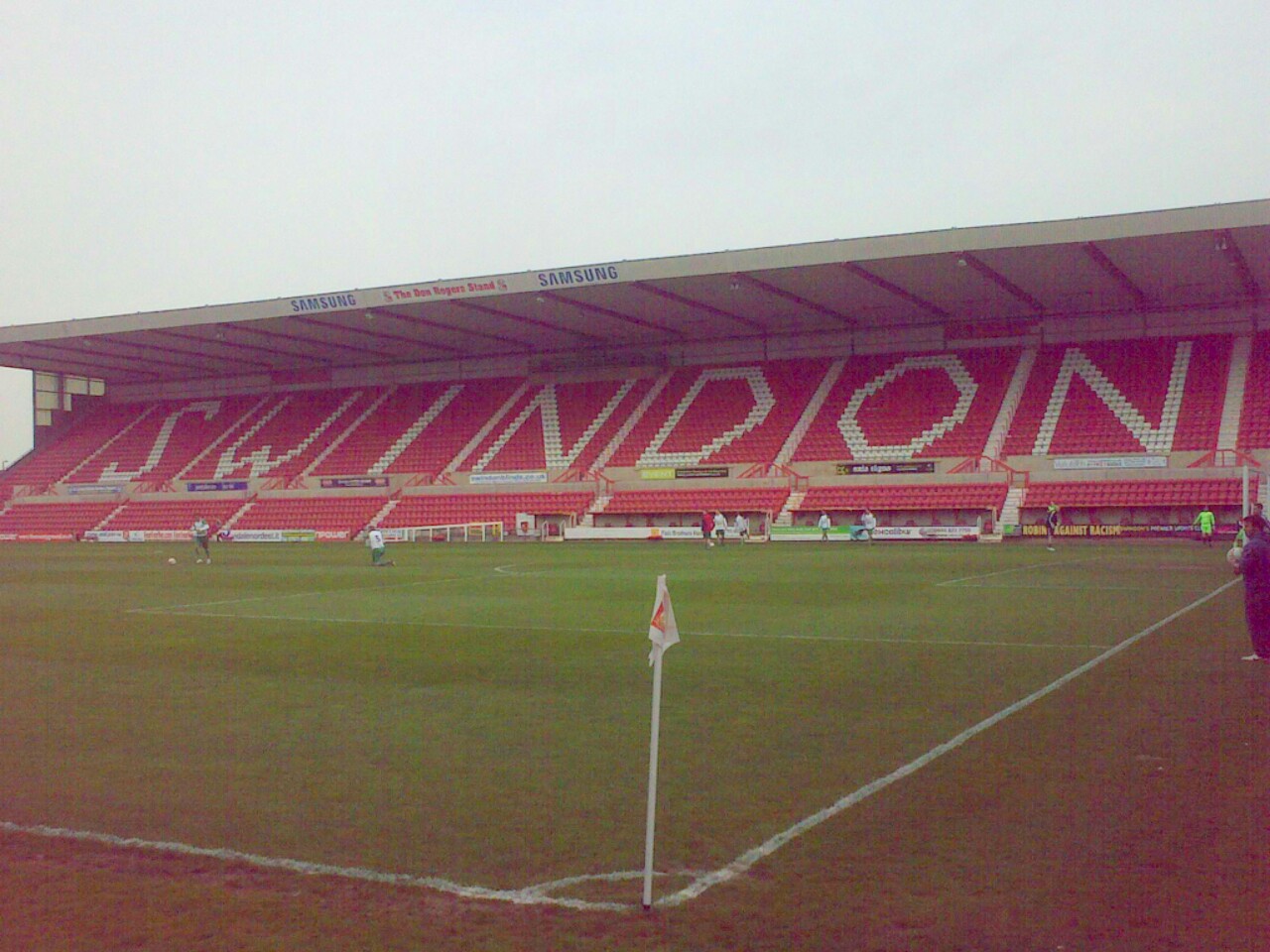
The County Ground, known as the Nigel Eady County Ground from the 2024-25 season, is a football stadium located in Swindon, Wiltshire, England, and has been home to Swindon Town Football Club since 1896. It has an all-seated capacity of 14,753 currently, which has been the same level since the mid-1990s. A record attendance of 32,000 was set on 15 January 1972 against Arsenal in the third round of the FA Cup. North of the football stadium is Swindon Cricket Club, with their pitch also named The County Ground, following its use by the football club from 1893 until 1896.
Thomas Arkell of Arkell's Brewery donated £300 to finance the construction of a stand on what was then known as the Wiltshire County Ground; this investment was enough to begin development of a purpose-built football stadium. Since its original construction, the ground has been periodically updated with new features or fittings. A covered stand on the Shrivenham Road side was erected in 1932, it was replaced in 1960 with one obtained second hand from Aldershot Military Tattoo. At a cost of £4,300 a roof was erected over the Town End, this was raised by the supporters' club, and was opened on 27 August 1938 by local MP W.W. Wakefield.
The War Department took over the ground in 1940, where for a while POWs were housed in huts placed on the pitch. For this the club received compensation of £4,570 in 1945.
The addition of floodlights in 1951, at a cost of £350, gave Swindon the honour of being the first League club to do so. These were first used against Bristol City on 2 April 1951, ahead of Arsenal by six months. These original set of lights were supplemented by lights on both side stand roofs, which were sufficient for the County Ground to stage its first floodlit league match on 29 February 1956 v Millwall, seven days after Fratton Park became the first ground to stage a floodlit league fixture. The present pylons date from 1960. In 1963, the Italian architect Pier Luigi Nervi, who had been responsible for stadia in Florence and Rome, was commissioned to design a replacement for the North Stand. However, his futuristic plan was never realised due to the high construction cost and the club's relegation.
Additions included the building of the "new" all-seater Arkell's Stand in 1971 (behind the original) and following the Hillsborough disaster; the County Ground was converted to an all-seater stadium, beginning with the addition of extra seating in front of the North Stand and the building of a sponsored stand (originally the Intel Stand, then the Nationwide Stand and now the Don Rogers Stand) in the early 1990s. The Nationwide Stand replaced the Shrivenham Road enclosure, a two-tiered terrace. In its last years, due to safety concerns, the upper tier was used by television cameras and for crowd monitoring purposes only.
A Rolex clock is located at the rear of the Stratton Bank stand, next to the scoreboard. Erected in 1963 following the club's promotion to the Second Division, it is the only Rolex clock to be found at any football stadium in the world.
The ground itself is on land previously owned by Swindon Borough Council to which the club had paid rent. In 2006 a redevelopment campaign for the County Ground began, with the club and TrustSTFC (the supporters' trust) raising a petition to Save Our Home urging the council to "facilitate the redevelopment of the stadium and do everything they can to keep the club within the borough", including the proposed upgrading of the adjacent cricket club to county standard and athletic club to Olympic standard.
On 24 March 2023, Swindon Town bought the County Ground for £2.3 million, with them giving fans the opportunity to own a percentage of the ground.
Hub AI
County Ground (Swindon) AI simulator
(@County Ground (Swindon)_simulator)
County Ground (Swindon)
The County Ground, known as the Nigel Eady County Ground from the 2024-25 season, is a football stadium located in Swindon, Wiltshire, England, and has been home to Swindon Town Football Club since 1896. It has an all-seated capacity of 14,753 currently, which has been the same level since the mid-1990s. A record attendance of 32,000 was set on 15 January 1972 against Arsenal in the third round of the FA Cup. North of the football stadium is Swindon Cricket Club, with their pitch also named The County Ground, following its use by the football club from 1893 until 1896.
Thomas Arkell of Arkell's Brewery donated £300 to finance the construction of a stand on what was then known as the Wiltshire County Ground; this investment was enough to begin development of a purpose-built football stadium. Since its original construction, the ground has been periodically updated with new features or fittings. A covered stand on the Shrivenham Road side was erected in 1932, it was replaced in 1960 with one obtained second hand from Aldershot Military Tattoo. At a cost of £4,300 a roof was erected over the Town End, this was raised by the supporters' club, and was opened on 27 August 1938 by local MP W.W. Wakefield.
The War Department took over the ground in 1940, where for a while POWs were housed in huts placed on the pitch. For this the club received compensation of £4,570 in 1945.
The addition of floodlights in 1951, at a cost of £350, gave Swindon the honour of being the first League club to do so. These were first used against Bristol City on 2 April 1951, ahead of Arsenal by six months. These original set of lights were supplemented by lights on both side stand roofs, which were sufficient for the County Ground to stage its first floodlit league match on 29 February 1956 v Millwall, seven days after Fratton Park became the first ground to stage a floodlit league fixture. The present pylons date from 1960. In 1963, the Italian architect Pier Luigi Nervi, who had been responsible for stadia in Florence and Rome, was commissioned to design a replacement for the North Stand. However, his futuristic plan was never realised due to the high construction cost and the club's relegation.
Additions included the building of the "new" all-seater Arkell's Stand in 1971 (behind the original) and following the Hillsborough disaster; the County Ground was converted to an all-seater stadium, beginning with the addition of extra seating in front of the North Stand and the building of a sponsored stand (originally the Intel Stand, then the Nationwide Stand and now the Don Rogers Stand) in the early 1990s. The Nationwide Stand replaced the Shrivenham Road enclosure, a two-tiered terrace. In its last years, due to safety concerns, the upper tier was used by television cameras and for crowd monitoring purposes only.
A Rolex clock is located at the rear of the Stratton Bank stand, next to the scoreboard. Erected in 1963 following the club's promotion to the Second Division, it is the only Rolex clock to be found at any football stadium in the world.
The ground itself is on land previously owned by Swindon Borough Council to which the club had paid rent. In 2006 a redevelopment campaign for the County Ground began, with the club and TrustSTFC (the supporters' trust) raising a petition to Save Our Home urging the council to "facilitate the redevelopment of the stadium and do everything they can to keep the club within the borough", including the proposed upgrading of the adjacent cricket club to county standard and athletic club to Olympic standard.
On 24 March 2023, Swindon Town bought the County Ground for £2.3 million, with them giving fans the opportunity to own a percentage of the ground.
Recent media