
Recent from talks
Suppressive fire
Knowledge base stats:
Talk channels stats:
Members stats:
Suppressive fire
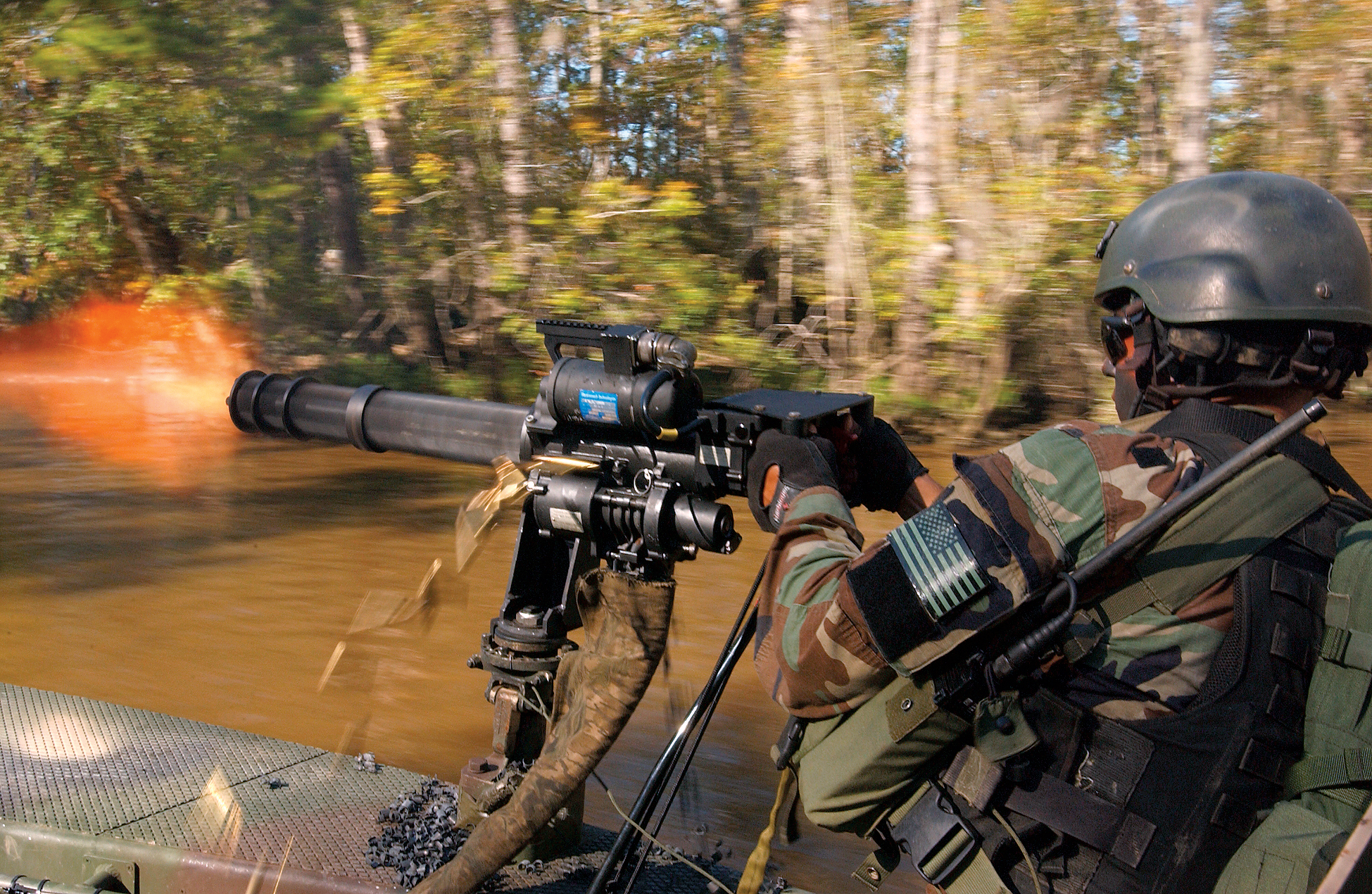
In military science, suppressive fire is "fire that degrades the performance of an enemy force below the level needed to fulfill its mission". When used to protect exposed friendly troops advancing on the battlefield, it is commonly called covering fire. Suppression is usually only effective for the duration of the fire. It is one of three types of fire support, which is defined by NATO as "the application of fire, coordinated with the maneuver of forces, to destroy, neutralise or suppress the enemy".
Before NATO defined the term, the British and Commonwealth armies generally used "neutralisation" with the same definition as suppression. NATO now defines neutralisation as "fire delivered to render a target temporarily ineffective or unusable".
Suppressive fire usually achieves its effect by threatening casualties to individuals who expose themselves to it, forcing them to inactivity and ineffectiveness by keeping their heads down, 'or else take a bullet'. Willingness to expose themselves varies depending on the morale, motivation and leadership of the target troops. Suppressive fire is often used as covering fire, defined by NATO as "Fire used to protect troops when they are within range of enemy small arms." This is sometimes called "winning the firefight" in an infantry-only action. However, suppressive fire may be used against indirect firers, enemy air defenses or other military activities such as construction work or logistic activities, or to deny an area to the enemy for a short period of time (it is unsuitable for prolonged area denial due to ammunition supply constraints). Using smoke to 'blind' enemy observation is a form of non-lethal suppression and at night illuminating flares may be used to suppress enemy activities by denying them the cover of darkness.
Suppression can be delivered by any weapon or group of weapons capable of delivering the required intensity of fire for the required period of suppression. Suppressive fire capabilities vary widely because the suppressive effect area varies widely. For example, a rifle or machine gun bullet may only have a suppressive effect within about one metre of its trajectory, whereas a single artillery shell may suppress a few thousand square metres around its burst. Furthermore, sustained suppression over more than a few minutes may be difficult to achieve with small arms fire for logistic reasons, air delivered suppression is similarly affected by payload limits. In contrast, artillery can suppress an area for an extended period.
The purpose of suppression is to stop or prevent the enemy from observing, shooting, moving or carrying out other military tasks that interfere (or could interfere) with the activities of friendly forces. An important feature of suppressive fire is that it is only effective while it lasts and while it has sufficient intensity.
Suppressive fire is a tactic to reduce casualties to friendly forces and enable them to conduct their immediate mission. For example, a suppressed target will be unable to engage vulnerable forces that are moving without cover. This enables forces to advance to new positions or close with the enemy. For example, a US Marines article notes that "communication and suppressive fire are what enables movement on the battlefield, giving Marines the upper hand." Suppressive fire may be used to enable a helicopter or boat to land or extract soldiers from a battle zone (the latter is called a "hot extraction").
Suppressive fire is typically used as covering fire against the enemy in the close combat zone. However, suppressive fire delivered by artillery and other indirect fire means can be used to suppress targets of any type, most notably as counter-battery fire against indirect fire units. NATO also defines 'suppression of enemy air defenses' (SEAD), which has a broader definition and includes materiel damage. An important consideration in the application of suppressive fire from indirect fire systems (e.g. mortars, artillery and ships) and aircraft is the safety of the attacking troops. Fragmenting munitions are indiscriminate and potentially lethal in all directions around the point of burst although the pattern and extent of the lethal area depends on several variable factors, some specific to each situation.
The primary intended effect of suppressive fire is psychological. Rather than directly trying to kill enemy soldiers, it makes the enemy soldiers feel unable to safely perform any actions other than seeking cover. Colloquially, this goal is expressed as "it makes them keep their heads down" or "it keeps them pinned down". However, depending on factors including the type of ammunition and the target's protection, suppressive fire may cause casualties and/or damage to enemy equipment.
Hub AI
Suppressive fire AI simulator
(@Suppressive fire_simulator)
Suppressive fire
In military science, suppressive fire is "fire that degrades the performance of an enemy force below the level needed to fulfill its mission". When used to protect exposed friendly troops advancing on the battlefield, it is commonly called covering fire. Suppression is usually only effective for the duration of the fire. It is one of three types of fire support, which is defined by NATO as "the application of fire, coordinated with the maneuver of forces, to destroy, neutralise or suppress the enemy".
Before NATO defined the term, the British and Commonwealth armies generally used "neutralisation" with the same definition as suppression. NATO now defines neutralisation as "fire delivered to render a target temporarily ineffective or unusable".
Suppressive fire usually achieves its effect by threatening casualties to individuals who expose themselves to it, forcing them to inactivity and ineffectiveness by keeping their heads down, 'or else take a bullet'. Willingness to expose themselves varies depending on the morale, motivation and leadership of the target troops. Suppressive fire is often used as covering fire, defined by NATO as "Fire used to protect troops when they are within range of enemy small arms." This is sometimes called "winning the firefight" in an infantry-only action. However, suppressive fire may be used against indirect firers, enemy air defenses or other military activities such as construction work or logistic activities, or to deny an area to the enemy for a short period of time (it is unsuitable for prolonged area denial due to ammunition supply constraints). Using smoke to 'blind' enemy observation is a form of non-lethal suppression and at night illuminating flares may be used to suppress enemy activities by denying them the cover of darkness.
Suppression can be delivered by any weapon or group of weapons capable of delivering the required intensity of fire for the required period of suppression. Suppressive fire capabilities vary widely because the suppressive effect area varies widely. For example, a rifle or machine gun bullet may only have a suppressive effect within about one metre of its trajectory, whereas a single artillery shell may suppress a few thousand square metres around its burst. Furthermore, sustained suppression over more than a few minutes may be difficult to achieve with small arms fire for logistic reasons, air delivered suppression is similarly affected by payload limits. In contrast, artillery can suppress an area for an extended period.
The purpose of suppression is to stop or prevent the enemy from observing, shooting, moving or carrying out other military tasks that interfere (or could interfere) with the activities of friendly forces. An important feature of suppressive fire is that it is only effective while it lasts and while it has sufficient intensity.
Suppressive fire is a tactic to reduce casualties to friendly forces and enable them to conduct their immediate mission. For example, a suppressed target will be unable to engage vulnerable forces that are moving without cover. This enables forces to advance to new positions or close with the enemy. For example, a US Marines article notes that "communication and suppressive fire are what enables movement on the battlefield, giving Marines the upper hand." Suppressive fire may be used to enable a helicopter or boat to land or extract soldiers from a battle zone (the latter is called a "hot extraction").
Suppressive fire is typically used as covering fire against the enemy in the close combat zone. However, suppressive fire delivered by artillery and other indirect fire means can be used to suppress targets of any type, most notably as counter-battery fire against indirect fire units. NATO also defines 'suppression of enemy air defenses' (SEAD), which has a broader definition and includes materiel damage. An important consideration in the application of suppressive fire from indirect fire systems (e.g. mortars, artillery and ships) and aircraft is the safety of the attacking troops. Fragmenting munitions are indiscriminate and potentially lethal in all directions around the point of burst although the pattern and extent of the lethal area depends on several variable factors, some specific to each situation.
The primary intended effect of suppressive fire is psychological. Rather than directly trying to kill enemy soldiers, it makes the enemy soldiers feel unable to safely perform any actions other than seeking cover. Colloquially, this goal is expressed as "it makes them keep their heads down" or "it keeps them pinned down". However, depending on factors including the type of ammunition and the target's protection, suppressive fire may cause casualties and/or damage to enemy equipment.
Recent media