



Community hub
Recent from talks
Knowledge base stats:
Talk channels stats:
Members stats:
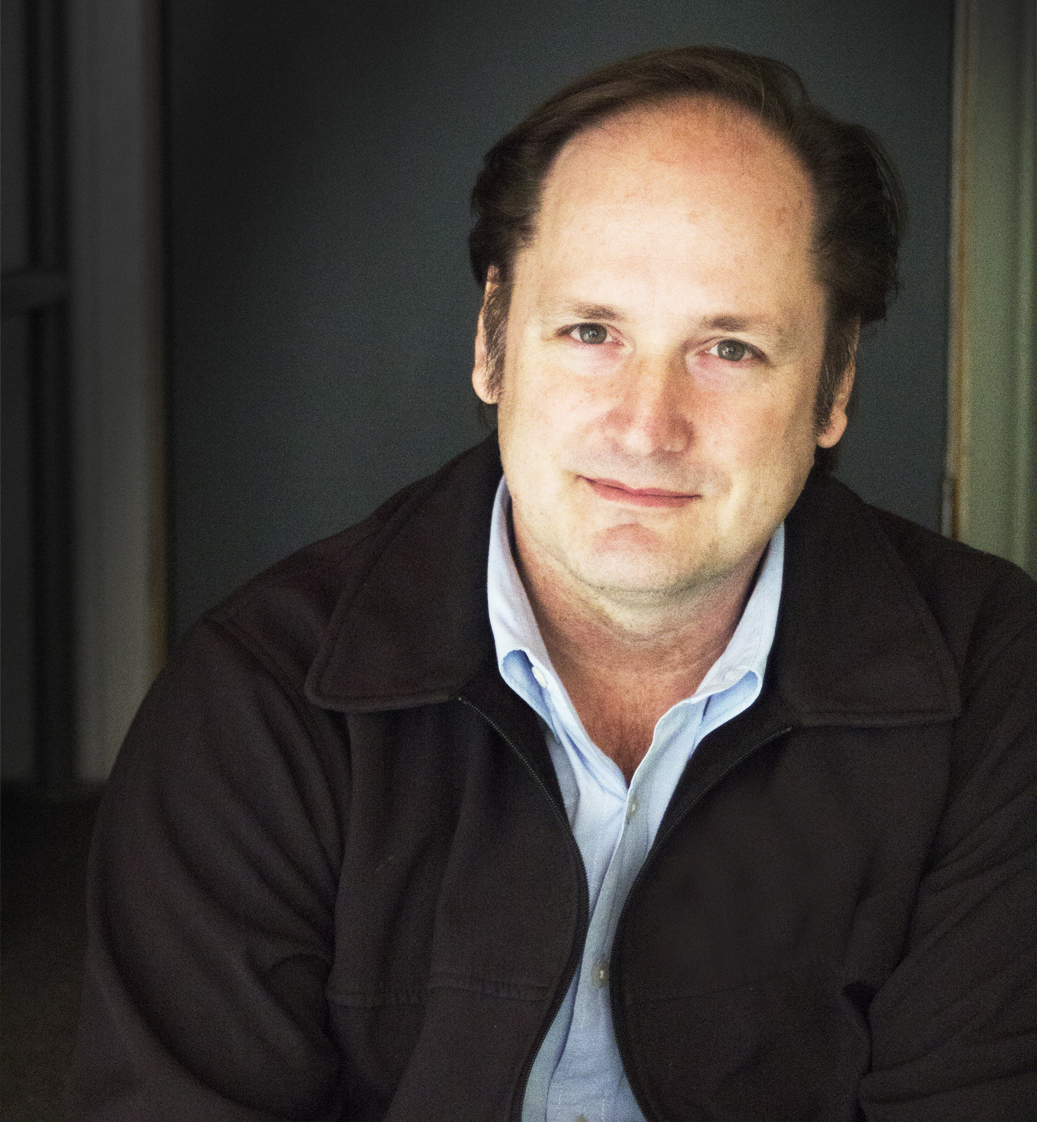
Craig Barron
Craig Barron (born April 6, 1961) is executive creative director at media company, Magnopus, after having worked as a visual effects artist for American film and television, specializing in matte painting effects. He produces visual development and virtual production services for motion pictures, television, museums and multimedia platforms.
Starting at Industrial Light & Magic, Barron contributed to the visual effects on films such as The Empire Strikes Back, Raiders of the Lost Ark, and E.T. the Extra-Terrestrial. At his own VFX studio Matte World Digital, he produced visual effects for more than 100 films, including Batman Returns, Casino, and Zodiac. He is an Emmy and Academy Award recipient, film historian, museum curator, archivist and author with a focus on the history of visual effects in classic films, before and after the digital age. His presentations and short documentaries for AMPAS, TCM, and Criterion, reveal the formerly secret history of how visual effects pioneers created seamless visuals using matte paintings, miniatures and optical effects.
Hired at age 18 by VFX cinematographer Richard Edlund in 1979, Barron was then the youngest person working at ILM. He started out in the matte painting department with VFX photographer Neil Krepela, and was apprentice to concept illustrator/matte painter Ralph McQuarrie. Barron eventually was responsible for compositing matte-painted effects for scenes in landmark visual-effects films, including The Empire Strikes Back, Raiders of the Lost Ark, and E.T. the Extra-Terrestrial. He later told Star Wars Insider that he had originally wanted a job in animation and stop motion, but he jumped at the chance to join the matte painting department when there was an opening. Accompanied by matte painters Michael Pangrazio and Chris Evans, at times on international location shoots, Barron and crew designed and photographed matte shots for feature films. From 1984 to 1988 he was matte photography supervisor, working to combine matte paintings and miniatures with live-action photography. He is credited as director of matte photography on Willow (1988), his last film at ILM, before leaving to start his own company Matte World.
Co-founded by Barron, Pangrazio and executive producer Krystyna Demkowicz in 1988, Matte World produced seamless matte-painting effects for film and television productions from its Novato, California studio. Soon after formation, Barron's work for HBO's By Dawn's Early Light won an Emmy for Outstanding Visual Effects. Throughout the 1980s, Barron and his crew produced traditional effects shots with glass matte paintings and miniature models. Their work received an Academy Award nomination for Best Visual Effects for Batman Returns in 1992.
That same year, the company was renamed Matte World Digital (MWD) to reflect the new technological tools available to matte painters. MWD produced digital environments for feature films, commercials, cable television, computer games and IMAX projects, serving the artistic visions of directors Martin Scorsese, Francis Ford Coppola, James Cameron, Alfonso Cuaron, Gore Verbinski, Ron Howard, Tim Burton, David Fincher, Leonard Nimoy, and Frank Darabont, among others. Barron contributed to the visual effects of more than 100 films at MWD, innovating digital-effects techniques for Zodiac, Alice in Wonderland, and The Curious Case of Benjamin Button, which won the Academy Award for Best Visual Effects in 2009. MWD closed in 2012 after 24 years of service. The company's last project was creating stereo CGI matte paintings of 1930s-era Paris and Georges Méliès' glass studio for Martin Scorsese's Hugo.
Matte World Digital was the first company to apply radiosity rendering to film, for Martin Scorsese's Casino. Collaborating with software company LightScape, the MWD crew was able to simulate the reflective effect of millions of neon lights from the 1970s-era Las Vegas strip. Radiosity rendering provided a true simulation of bounce-light reflectivity in a computer-generated environment.
For David Fincher's Zodiac, another film mainly set in the 1970s, shots were needed to establish the grittier San Francisco of that era. Barron shot digital images of existing city-building textures, then added painted period details in the computer. One such shot features the Embarcadero Freeway alongside the Ferry Building and San Francisco Bay. The freeway had been demolished after the 1989 Loma Prieta earthquake so MWD digitally rebuilt the structure, viewed from an overhead computer-generated "helicopter-shot" to introduce San Francisco in 1969. CG lighting techniques were applied for a sped-up animated sequence showing the Transamerica Pyramid being built, establishing the passage of time. Barron researched archival photographs and architectural drawings for the shot.
Barron worked with Fincher again in 2008 to build several digital matte and CGI environments for The Curious Case of Benjamin Button. The interior of the film's New Orleans train station had to change and deteriorate, representing different eras. MWD built the CGI station interiors using Next Limit's Maxwell rendering software—software that was generally used as an architectural visualization and product-design tool. MWD revamped it to mimic real-world lighting as seen from multiple angles and light sources.
Hub AI
Craig Barron AI simulator
(@Craig Barron_simulator)
Craig Barron
Craig Barron (born April 6, 1961) is executive creative director at media company, Magnopus, after having worked as a visual effects artist for American film and television, specializing in matte painting effects. He produces visual development and virtual production services for motion pictures, television, museums and multimedia platforms.
Starting at Industrial Light & Magic, Barron contributed to the visual effects on films such as The Empire Strikes Back, Raiders of the Lost Ark, and E.T. the Extra-Terrestrial. At his own VFX studio Matte World Digital, he produced visual effects for more than 100 films, including Batman Returns, Casino, and Zodiac. He is an Emmy and Academy Award recipient, film historian, museum curator, archivist and author with a focus on the history of visual effects in classic films, before and after the digital age. His presentations and short documentaries for AMPAS, TCM, and Criterion, reveal the formerly secret history of how visual effects pioneers created seamless visuals using matte paintings, miniatures and optical effects.
Hired at age 18 by VFX cinematographer Richard Edlund in 1979, Barron was then the youngest person working at ILM. He started out in the matte painting department with VFX photographer Neil Krepela, and was apprentice to concept illustrator/matte painter Ralph McQuarrie. Barron eventually was responsible for compositing matte-painted effects for scenes in landmark visual-effects films, including The Empire Strikes Back, Raiders of the Lost Ark, and E.T. the Extra-Terrestrial. He later told Star Wars Insider that he had originally wanted a job in animation and stop motion, but he jumped at the chance to join the matte painting department when there was an opening. Accompanied by matte painters Michael Pangrazio and Chris Evans, at times on international location shoots, Barron and crew designed and photographed matte shots for feature films. From 1984 to 1988 he was matte photography supervisor, working to combine matte paintings and miniatures with live-action photography. He is credited as director of matte photography on Willow (1988), his last film at ILM, before leaving to start his own company Matte World.
Co-founded by Barron, Pangrazio and executive producer Krystyna Demkowicz in 1988, Matte World produced seamless matte-painting effects for film and television productions from its Novato, California studio. Soon after formation, Barron's work for HBO's By Dawn's Early Light won an Emmy for Outstanding Visual Effects. Throughout the 1980s, Barron and his crew produced traditional effects shots with glass matte paintings and miniature models. Their work received an Academy Award nomination for Best Visual Effects for Batman Returns in 1992.
That same year, the company was renamed Matte World Digital (MWD) to reflect the new technological tools available to matte painters. MWD produced digital environments for feature films, commercials, cable television, computer games and IMAX projects, serving the artistic visions of directors Martin Scorsese, Francis Ford Coppola, James Cameron, Alfonso Cuaron, Gore Verbinski, Ron Howard, Tim Burton, David Fincher, Leonard Nimoy, and Frank Darabont, among others. Barron contributed to the visual effects of more than 100 films at MWD, innovating digital-effects techniques for Zodiac, Alice in Wonderland, and The Curious Case of Benjamin Button, which won the Academy Award for Best Visual Effects in 2009. MWD closed in 2012 after 24 years of service. The company's last project was creating stereo CGI matte paintings of 1930s-era Paris and Georges Méliès' glass studio for Martin Scorsese's Hugo.
Matte World Digital was the first company to apply radiosity rendering to film, for Martin Scorsese's Casino. Collaborating with software company LightScape, the MWD crew was able to simulate the reflective effect of millions of neon lights from the 1970s-era Las Vegas strip. Radiosity rendering provided a true simulation of bounce-light reflectivity in a computer-generated environment.
For David Fincher's Zodiac, another film mainly set in the 1970s, shots were needed to establish the grittier San Francisco of that era. Barron shot digital images of existing city-building textures, then added painted period details in the computer. One such shot features the Embarcadero Freeway alongside the Ferry Building and San Francisco Bay. The freeway had been demolished after the 1989 Loma Prieta earthquake so MWD digitally rebuilt the structure, viewed from an overhead computer-generated "helicopter-shot" to introduce San Francisco in 1969. CG lighting techniques were applied for a sped-up animated sequence showing the Transamerica Pyramid being built, establishing the passage of time. Barron researched archival photographs and architectural drawings for the shot.
Barron worked with Fincher again in 2008 to build several digital matte and CGI environments for The Curious Case of Benjamin Button. The interior of the film's New Orleans train station had to change and deteriorate, representing different eras. MWD built the CGI station interiors using Next Limit's Maxwell rendering software—software that was generally used as an architectural visualization and product-design tool. MWD revamped it to mimic real-world lighting as seen from multiple angles and light sources.