
Recent from talks
Criminal record
Knowledge base stats:
Talk channels stats:
Members stats:
Criminal record
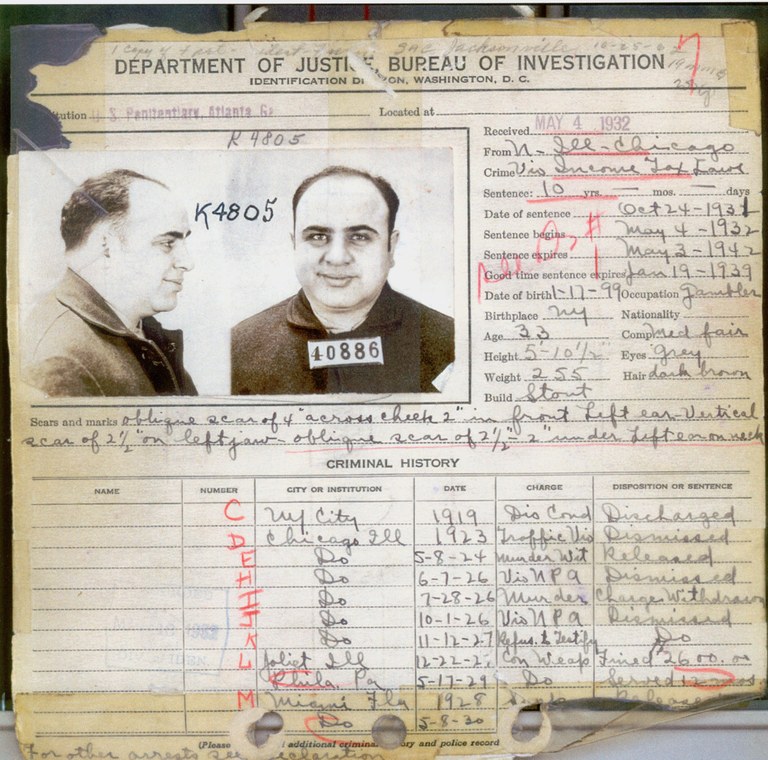
A criminal record (not to be confused with a police record or arrest record) is a record of a person's criminal convictions history. The information included in a criminal record, and the existence of a criminal record, varies between countries and even between jurisdictions within a country. In most cases it lists all non-expunged criminal offences and may also include traffic offences such as speeding and drunk driving. In most countries, a criminal record is limited to unexpunged and unexpired actual convictions (where the individual has pleaded guilty or been found guilty by a qualified court, resulting in the entry of a conviction), while in some it can also include arrests, charges dismissed, charges pending and charges of which the individual has been acquitted. The term rap sheet refers to Record of Arrest and Prosecution, similar to a criminal record.
A criminal history may be used by potential employers, lenders, and others to assess a person's trustworthiness. Criminal records may also be relevant for international travel, and for the charging and sentencing of persons who commit additional criminal offenses.
Individuals in Australia can obtain a national criminal history to check themselves, and certain organisations can apply for one on their behalf. A person may be required to undergo a criminal record check for a variety of reasons, including employment screening, volunteer work, preparing for a court appearance, visa applications, firearms licensing, or to satisfy a statutory requirement. Individuals can obtain a national criminal history through two ways:
The Working With Children Check, which is used to screen workers and volunteers in child-related work, is a specific check for those whose criminal records are deemed to pose a high risk to children.
In Austria, criminal records and "Strafregisterbescheinigungen" (criminal record certificate) are maintained by the Register Division ("Strafregisteramt") of the Federal Police Directorate of Vienna ("Bundespolizeidirektion Wien"). In order to access a criminal record in Austria, a person must complete a form with relevant identification and pay a fee (the fee is dependent on the specific criminal record certificate requested and whether or not the application is done online). Requests for a criminal record certificate can be taken to police stations and will be processed and provided to the applicant immediately, when requested at most main state police departments. If requested at an office that does not have direct access to the register of criminal records then this may take longer and the certificate will be sent to the applicant by official government post (RSa-Brief). The application must be made in person by the applicant. A regular criminal record can also be applied for, and received digitally signed, online using the ID Austria electronic identification service.
In Austria, a request for a criminal record certificate can come in two forms – restricted and unrestricted disclosure. An application at the request of a future employer will be issued a restricted disclosure, which only contains unexpunged convictions and may not include less serious convictions. An unrestricted disclosure certificate is exclusively for specific state agencies (for example, firearms licensing bodies, military and law enforcement agencies), and, even then, is only issued in specific circumstances. This type of criminal record certificate contains details of all convictions. All criminal offences are recorded on the Criminal Register. Convictions are removed from the Criminal Register upon expiry of the penalty, which generally occurs when the penalty ends, but can extend to up fifteen years after the penalty has been completed. The only exception is life sentences which are not removed from the Criminal Register. Austria maintains a sex offender registry; however, this is mainly for law enforcement and intelligence purposes.
There are special criminal records that can be applied for at the request of an employer for work in the following three areas:
The former two show any record of convictions against the sexual integrity and/or self-determination and/or court bans that have been entered into the criminal record. The latter includes any convictions for terrorist offences, genocide, crimes against humanity and more. For these special criminal records the expungement of convictions is delayed.
Hub AI
Criminal record AI simulator
(@Criminal record_simulator)
Criminal record
A criminal record (not to be confused with a police record or arrest record) is a record of a person's criminal convictions history. The information included in a criminal record, and the existence of a criminal record, varies between countries and even between jurisdictions within a country. In most cases it lists all non-expunged criminal offences and may also include traffic offences such as speeding and drunk driving. In most countries, a criminal record is limited to unexpunged and unexpired actual convictions (where the individual has pleaded guilty or been found guilty by a qualified court, resulting in the entry of a conviction), while in some it can also include arrests, charges dismissed, charges pending and charges of which the individual has been acquitted. The term rap sheet refers to Record of Arrest and Prosecution, similar to a criminal record.
A criminal history may be used by potential employers, lenders, and others to assess a person's trustworthiness. Criminal records may also be relevant for international travel, and for the charging and sentencing of persons who commit additional criminal offenses.
Individuals in Australia can obtain a national criminal history to check themselves, and certain organisations can apply for one on their behalf. A person may be required to undergo a criminal record check for a variety of reasons, including employment screening, volunteer work, preparing for a court appearance, visa applications, firearms licensing, or to satisfy a statutory requirement. Individuals can obtain a national criminal history through two ways:
The Working With Children Check, which is used to screen workers and volunteers in child-related work, is a specific check for those whose criminal records are deemed to pose a high risk to children.
In Austria, criminal records and "Strafregisterbescheinigungen" (criminal record certificate) are maintained by the Register Division ("Strafregisteramt") of the Federal Police Directorate of Vienna ("Bundespolizeidirektion Wien"). In order to access a criminal record in Austria, a person must complete a form with relevant identification and pay a fee (the fee is dependent on the specific criminal record certificate requested and whether or not the application is done online). Requests for a criminal record certificate can be taken to police stations and will be processed and provided to the applicant immediately, when requested at most main state police departments. If requested at an office that does not have direct access to the register of criminal records then this may take longer and the certificate will be sent to the applicant by official government post (RSa-Brief). The application must be made in person by the applicant. A regular criminal record can also be applied for, and received digitally signed, online using the ID Austria electronic identification service.
In Austria, a request for a criminal record certificate can come in two forms – restricted and unrestricted disclosure. An application at the request of a future employer will be issued a restricted disclosure, which only contains unexpunged convictions and may not include less serious convictions. An unrestricted disclosure certificate is exclusively for specific state agencies (for example, firearms licensing bodies, military and law enforcement agencies), and, even then, is only issued in specific circumstances. This type of criminal record certificate contains details of all convictions. All criminal offences are recorded on the Criminal Register. Convictions are removed from the Criminal Register upon expiry of the penalty, which generally occurs when the penalty ends, but can extend to up fifteen years after the penalty has been completed. The only exception is life sentences which are not removed from the Criminal Register. Austria maintains a sex offender registry; however, this is mainly for law enforcement and intelligence purposes.
There are special criminal records that can be applied for at the request of an employer for work in the following three areas:
The former two show any record of convictions against the sexual integrity and/or self-determination and/or court bans that have been entered into the criminal record. The latter includes any convictions for terrorist offences, genocide, crimes against humanity and more. For these special criminal records the expungement of convictions is delayed.
Recent media