
Recent from talks
Gable
Knowledge base stats:
Talk channels stats:
Members stats:
Gable
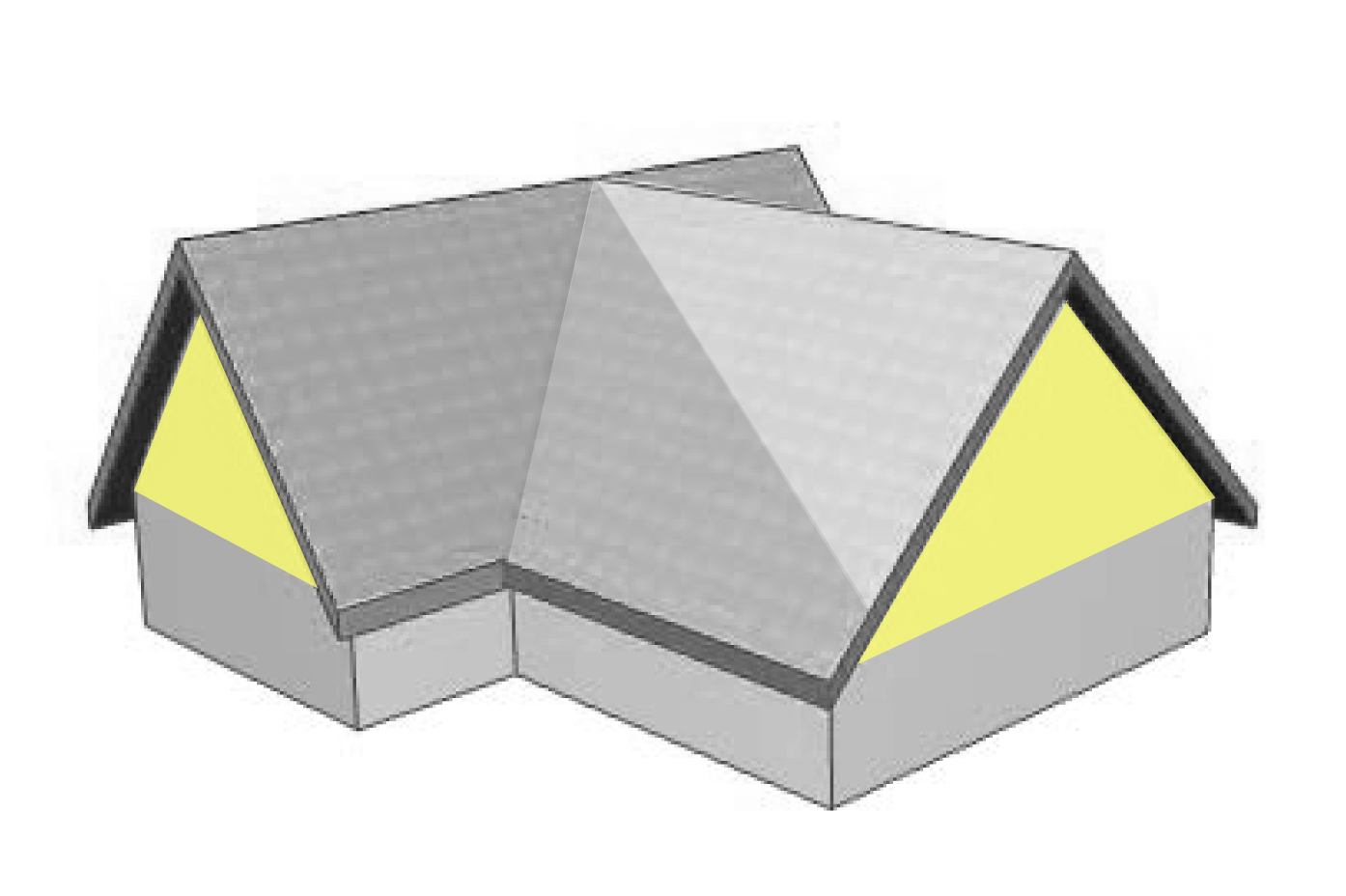
A gable is the generally triangular portion of a wall between the edges of intersecting roof pitches. The shape of the gable and how it is detailed depends on the structural system used, which reflects climate, material availability, and aesthetic concerns. The term gable wall or gable end more commonly refers to the entire wall, including the gable and the wall below it. Some types of roof do not have a gable (for example hip roofs do not). One common type of roof with gables, the 'gable roof', is named after its prominent gables.
A parapet made of a series of curves (shaped gable, see also Dutch gable) or horizontal steps (crow-stepped gable) may hide the diagonal lines of the roof.
Gable ends of more recent buildings are often treated in the same way as the Classic pediment form. But unlike Classical structures, which operate through trabeation, the gable ends of many buildings are actually bearing-wall structures.
Gable style is also used in the design of fabric structures, with varying degree sloped roofs, dependent on how much snowfall is expected.
Sharp gable roofs are a characteristic of the Gothic and classical Greek styles of architecture.
The opposite or inverted form of a gable roof is a V-roof or butterfly roof.
While a front-gabled or gable-fronted building faces the street with its gable, a side-gabled building faces it with its cullis (gutter), meaning the ridge is parallel to the street. The terms are used in architecture and city planning to determine a building in its urban situation.
Front-gabled buildings are considered typical for German city streets in the Gothic period, while later Renaissance buildings, influenced by Italian architecture, are often side-gabled. In America, front-gabled houses, such as the gablefront house, were popular between the early 19th century and 1920.
Hub AI
Gable AI simulator
(@Gable_simulator)
Gable
A gable is the generally triangular portion of a wall between the edges of intersecting roof pitches. The shape of the gable and how it is detailed depends on the structural system used, which reflects climate, material availability, and aesthetic concerns. The term gable wall or gable end more commonly refers to the entire wall, including the gable and the wall below it. Some types of roof do not have a gable (for example hip roofs do not). One common type of roof with gables, the 'gable roof', is named after its prominent gables.
A parapet made of a series of curves (shaped gable, see also Dutch gable) or horizontal steps (crow-stepped gable) may hide the diagonal lines of the roof.
Gable ends of more recent buildings are often treated in the same way as the Classic pediment form. But unlike Classical structures, which operate through trabeation, the gable ends of many buildings are actually bearing-wall structures.
Gable style is also used in the design of fabric structures, with varying degree sloped roofs, dependent on how much snowfall is expected.
Sharp gable roofs are a characteristic of the Gothic and classical Greek styles of architecture.
The opposite or inverted form of a gable roof is a V-roof or butterfly roof.
While a front-gabled or gable-fronted building faces the street with its gable, a side-gabled building faces it with its cullis (gutter), meaning the ridge is parallel to the street. The terms are used in architecture and city planning to determine a building in its urban situation.
Front-gabled buildings are considered typical for German city streets in the Gothic period, while later Renaissance buildings, influenced by Italian architecture, are often side-gabled. In America, front-gabled houses, such as the gablefront house, were popular between the early 19th century and 1920.
Recent media