
Recent from talks
Crossley telescope
Knowledge base stats:
Talk channels stats:
Members stats:
Crossley telescope
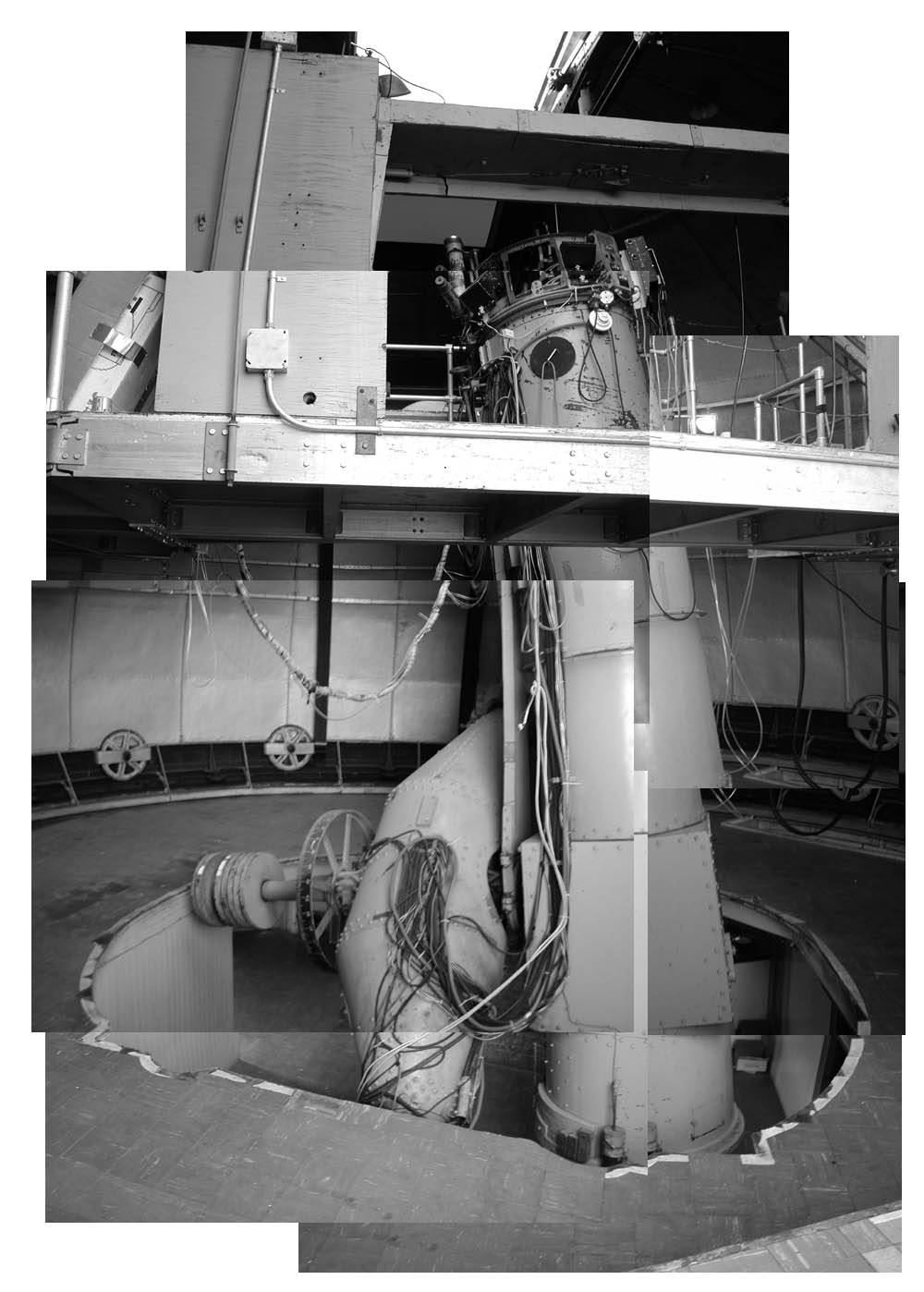
The Crossley telescope is a 36-inch (910 mm) reflecting telescope located at Lick Observatory in the U.S. state of California. It was used between 1895 and 2010, and was donated to the observatory by Edward Crossley, its namesake.
It was the largest glass reflecting telescope in the United States for several years after its recommissioning in California. Lick Director, James Edward Keeler, remarked of the Crossley in 1900, "... by far the most effective instrument in the Observatory for certain class of astronomical work."
Given to the Lick Observatory in 1895 by British politician Edward Crossley, it was rebuilt from the ground up as it was on a very flimsy mounting. It was last used in 2010 in the search for extra-solar planets but has been taken out of service due to budget cuts. The mirror, and some of the initial mounts, came from the 36-inch reflector originally mounted in Andrew Ainslie Common's backyard Ealing observatory. He had used it from 1879 to 1886 to prove the concept of long exposure astrophotography (recording objects too faint to be seen by the naked eye for the first time). Common sold it to Crossley who had it until 1895.
The 36-inch A.A.Common mirror was made by George Calver for Common, and was ordered after Common wanted one bigger than the 18-inch reflecting telescope, which also had a mirror from Calver. Common completed this telescope by 1879, and went on to make a 60-inch telescope; he sold the 36-inch to Crossley. Crossley set the telescope up in Halifax, England in a new dome.
Meanwhile, at the Lick Observatory in California, Edward S. Holden, the first director, learned that Crossley wanted to sell the well-regarded Common 36-inch telescope. Holden and Crossley exchanged letters and worked out transferring the telescope. Crossley was very impressed by the enhanced observing conditions at Mount Hamilton, and, in April 1895, he formally telegraphed the Lick that he would donate the telescope.
Funds had to be raised to ship the telescope to California, which included money from various donors including many small donations from members of the public, as well as donated services. For example, the heavy parts of the telescope were shipped by The Southern Pacific Company at no cost, a service of over US$1,000 (at that time). Converting the buying power of 1896 dollars to 2017 dollars, that can be estimated at US$12,000.
The reflecting telescope type was scarcely used in the United States at the time of the donation, with a noted exception being the work of H. Draper's reflector.
Observations by Keeler helped establish large reflecting telescopes with metal-coated glass mirrors as astronomically useful, as opposed to earlier cast speculum metal mirrors. Great refractors were still in vogue, but the Crossley reflector foreshadowed the success of large reflectors in the 1900s. Other large reflectors followed, such as the Harvard 60-inch Reflector (152 cm), also with a mirror by A.A. Common, or the 1 Meter Spiegelteleskop (39.4 inch reflector) of the Hamburg Observatory. At this time the 72-inch Leviathan of Parsonstown was the largest by aperture, but it used a metal mirror. Despite the accomplishments of reflectors under Herschel, in the 19th century much of the astronomical community used relatively small refractors, often just a few inches in aperture, save for a few larger ones.
Hub AI
Crossley telescope AI simulator
(@Crossley telescope_simulator)
Crossley telescope
The Crossley telescope is a 36-inch (910 mm) reflecting telescope located at Lick Observatory in the U.S. state of California. It was used between 1895 and 2010, and was donated to the observatory by Edward Crossley, its namesake.
It was the largest glass reflecting telescope in the United States for several years after its recommissioning in California. Lick Director, James Edward Keeler, remarked of the Crossley in 1900, "... by far the most effective instrument in the Observatory for certain class of astronomical work."
Given to the Lick Observatory in 1895 by British politician Edward Crossley, it was rebuilt from the ground up as it was on a very flimsy mounting. It was last used in 2010 in the search for extra-solar planets but has been taken out of service due to budget cuts. The mirror, and some of the initial mounts, came from the 36-inch reflector originally mounted in Andrew Ainslie Common's backyard Ealing observatory. He had used it from 1879 to 1886 to prove the concept of long exposure astrophotography (recording objects too faint to be seen by the naked eye for the first time). Common sold it to Crossley who had it until 1895.
The 36-inch A.A.Common mirror was made by George Calver for Common, and was ordered after Common wanted one bigger than the 18-inch reflecting telescope, which also had a mirror from Calver. Common completed this telescope by 1879, and went on to make a 60-inch telescope; he sold the 36-inch to Crossley. Crossley set the telescope up in Halifax, England in a new dome.
Meanwhile, at the Lick Observatory in California, Edward S. Holden, the first director, learned that Crossley wanted to sell the well-regarded Common 36-inch telescope. Holden and Crossley exchanged letters and worked out transferring the telescope. Crossley was very impressed by the enhanced observing conditions at Mount Hamilton, and, in April 1895, he formally telegraphed the Lick that he would donate the telescope.
Funds had to be raised to ship the telescope to California, which included money from various donors including many small donations from members of the public, as well as donated services. For example, the heavy parts of the telescope were shipped by The Southern Pacific Company at no cost, a service of over US$1,000 (at that time). Converting the buying power of 1896 dollars to 2017 dollars, that can be estimated at US$12,000.
The reflecting telescope type was scarcely used in the United States at the time of the donation, with a noted exception being the work of H. Draper's reflector.
Observations by Keeler helped establish large reflecting telescopes with metal-coated glass mirrors as astronomically useful, as opposed to earlier cast speculum metal mirrors. Great refractors were still in vogue, but the Crossley reflector foreshadowed the success of large reflectors in the 1900s. Other large reflectors followed, such as the Harvard 60-inch Reflector (152 cm), also with a mirror by A.A. Common, or the 1 Meter Spiegelteleskop (39.4 inch reflector) of the Hamburg Observatory. At this time the 72-inch Leviathan of Parsonstown was the largest by aperture, but it used a metal mirror. Despite the accomplishments of reflectors under Herschel, in the 19th century much of the astronomical community used relatively small refractors, often just a few inches in aperture, save for a few larger ones.
Recent media