



Community hub
Community hub
Recent from talks
Knowledge base stats:
Talk channels stats:
Members stats:
Cruise missile
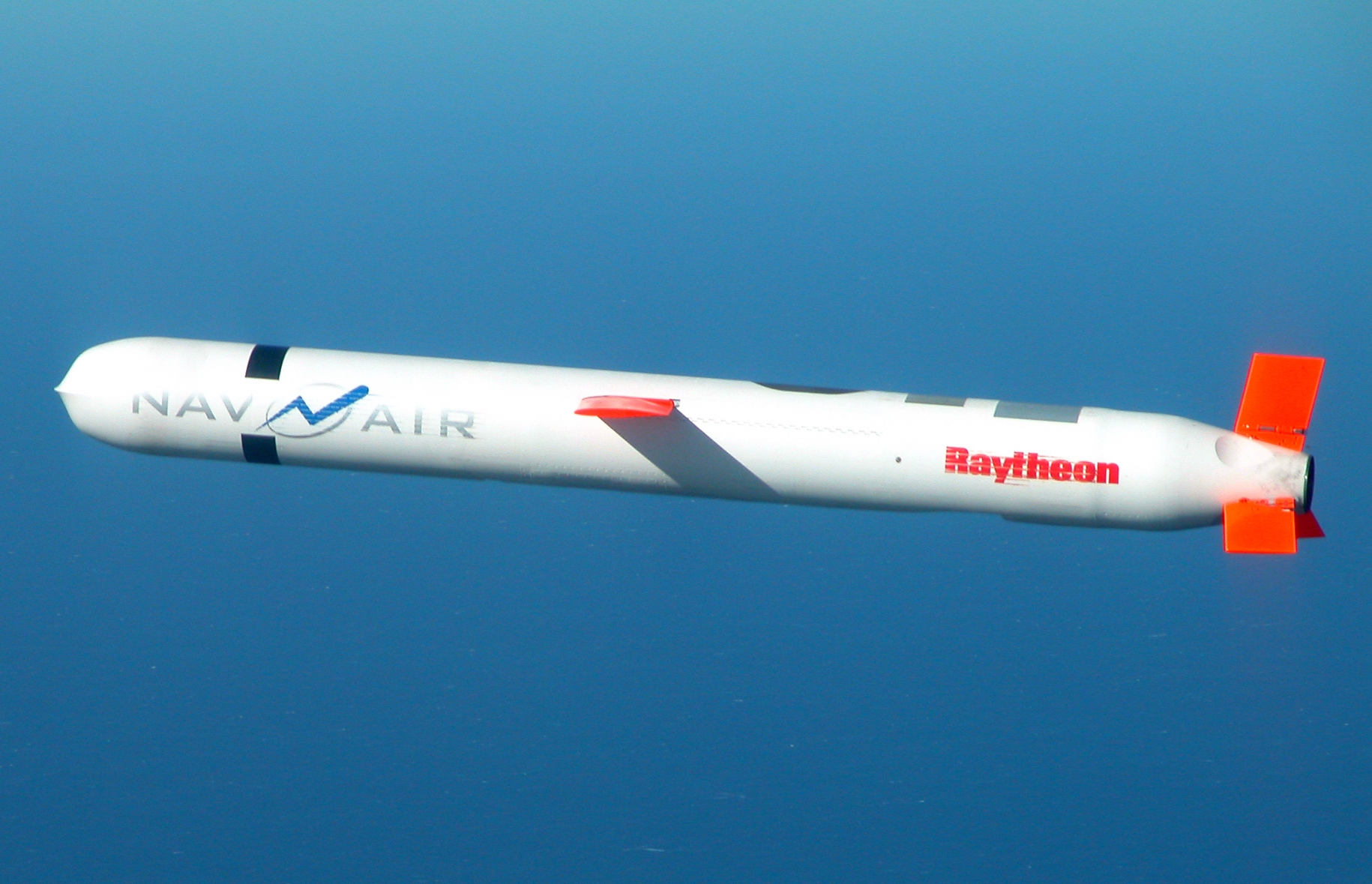
A cruise missile is an unmanned self-propelled guided missile that sustains flight through aerodynamic lift for most of its flight path. Cruise missiles are designed to deliver a large payload over long distances with high precision. Modern cruise missiles are capable of traveling at high subsonic, supersonic, or hypersonic speeds, are self-navigating, and are able to fly on a non-ballistic, extremely low-altitude trajectory.
The idea of an "aerial torpedo" was shown in the British 1909 film The Airship Destroyer in which flying torpedoes controlled wirelessly are used to bring down airships bombing London.
In 1916, the American aviator Lawrence Sperry built and patented an "aerial torpedo", the Hewitt-Sperry Automatic Airplane, a small biplane carrying a TNT charge, a Sperry autopilot and barometric altitude control. Inspired by the experiments, the United States Army developed a similar flying bomb called the Kettering Bug. Germany had also flown trials with remote-controlled aerial gliders (Torpedogleiter) built by Siemens-Schuckert beginning in 1916.
In the Interwar Period, Britain's Royal Aircraft Establishment developed the Larynx (Long Range Gun with Lynx Engine), which underwent a few flight tests in the 1920s.
In the Soviet Union, Sergei Korolev headed the GIRD-06 cruise missile project from 1932 to 1939, which used a rocket-powered boost-glide bomb design. The 06/III (RP-216) and 06/IV (RP-212) contained gyroscopic guidance systems. The vehicle was designed to boost to 28 km (17 mi) altitude and glide a distance of 280 km (170 mi), but test flights in 1934 and 1936 only reached an altitude of 500 metres (1,600 ft).
In 1944, during World War II, Germany deployed the first operational cruise missiles. The V-1, often called a flying bomb, contained a gyroscope guidance system and was propelled by a simple pulsejet engine, the sound of which gave it the nickname of "buzz bomb" or "doodlebug". Accuracy was sufficient only for use against very large targets (the general area of a city), while the range of 250 km (160 mi) was significantly lower than that of a bomber carrying the same payload. The main advantages were speed (although not sufficient to outperform contemporary propeller-driven interceptors) and expendability. The production cost of a V-1 was only a small fraction of that of a V-2 supersonic ballistic missile with a similar-sized warhead. Unlike the V-2, the initial deployments of the V-1 required stationary launch ramps which were susceptible to bombardment. Nazi Germany, in 1943, also developed the Mistel composite aircraft program, which can be seen as a rudimentary air-launched cruise missile, where a piloted fighter-type aircraft was mounted atop an unpiloted bomber-sized aircraft that was packed with explosives to be released while approaching the target. Bomber-launched variants of the V-1 saw limited operational service near the end of the war, with the pioneering V-1's design reverse-engineered by the Americans as the Republic-Ford JB-2 cruise missile.
Immediately after World War II, the United States Air Force had 21 different guided missile projects, including proposed cruise missiles. By 1948, all but four of these projects had been canceled: the Air Materiel Command Banshee, the SM-62 Snark, the SM-64 Navaho, and the MGM-1 Matador. The Banshee design was similar to Operation Aphrodite; like Aphrodite, it failed, and was canceled in April 1949. Concurrently, the US Navy's Operation Bumblebee, was conducted at Topsail Island, North Carolina, from c. 1 June 1946, to 28 July 1948. Bumblebee produced proof-of-concept technologies that influenced the US military's other missile projects.
During the Cold War, both the United States and the Soviet Union experimented further with the concept, of deploying early cruise missiles from land, submarines, and aircraft. The main outcome of the United States Navy submarine missile project was the SSM-N-8 Regulus missile, based upon the V-1 but powered by an Allison J33 jet engine. The Regulus entered service but was phased out with the advent of submarine launched ballistic missiles that did not require the submarine to surface in order to launch the missile and guide it to its target.
Hub AI
Cruise missile AI simulator
(@Cruise missile_simulator)
Cruise missile
A cruise missile is an unmanned self-propelled guided missile that sustains flight through aerodynamic lift for most of its flight path. Cruise missiles are designed to deliver a large payload over long distances with high precision. Modern cruise missiles are capable of traveling at high subsonic, supersonic, or hypersonic speeds, are self-navigating, and are able to fly on a non-ballistic, extremely low-altitude trajectory.
The idea of an "aerial torpedo" was shown in the British 1909 film The Airship Destroyer in which flying torpedoes controlled wirelessly are used to bring down airships bombing London.
In 1916, the American aviator Lawrence Sperry built and patented an "aerial torpedo", the Hewitt-Sperry Automatic Airplane, a small biplane carrying a TNT charge, a Sperry autopilot and barometric altitude control. Inspired by the experiments, the United States Army developed a similar flying bomb called the Kettering Bug. Germany had also flown trials with remote-controlled aerial gliders (Torpedogleiter) built by Siemens-Schuckert beginning in 1916.
In the Interwar Period, Britain's Royal Aircraft Establishment developed the Larynx (Long Range Gun with Lynx Engine), which underwent a few flight tests in the 1920s.
In the Soviet Union, Sergei Korolev headed the GIRD-06 cruise missile project from 1932 to 1939, which used a rocket-powered boost-glide bomb design. The 06/III (RP-216) and 06/IV (RP-212) contained gyroscopic guidance systems. The vehicle was designed to boost to 28 km (17 mi) altitude and glide a distance of 280 km (170 mi), but test flights in 1934 and 1936 only reached an altitude of 500 metres (1,600 ft).
In 1944, during World War II, Germany deployed the first operational cruise missiles. The V-1, often called a flying bomb, contained a gyroscope guidance system and was propelled by a simple pulsejet engine, the sound of which gave it the nickname of "buzz bomb" or "doodlebug". Accuracy was sufficient only for use against very large targets (the general area of a city), while the range of 250 km (160 mi) was significantly lower than that of a bomber carrying the same payload. The main advantages were speed (although not sufficient to outperform contemporary propeller-driven interceptors) and expendability. The production cost of a V-1 was only a small fraction of that of a V-2 supersonic ballistic missile with a similar-sized warhead. Unlike the V-2, the initial deployments of the V-1 required stationary launch ramps which were susceptible to bombardment. Nazi Germany, in 1943, also developed the Mistel composite aircraft program, which can be seen as a rudimentary air-launched cruise missile, where a piloted fighter-type aircraft was mounted atop an unpiloted bomber-sized aircraft that was packed with explosives to be released while approaching the target. Bomber-launched variants of the V-1 saw limited operational service near the end of the war, with the pioneering V-1's design reverse-engineered by the Americans as the Republic-Ford JB-2 cruise missile.
Immediately after World War II, the United States Air Force had 21 different guided missile projects, including proposed cruise missiles. By 1948, all but four of these projects had been canceled: the Air Materiel Command Banshee, the SM-62 Snark, the SM-64 Navaho, and the MGM-1 Matador. The Banshee design was similar to Operation Aphrodite; like Aphrodite, it failed, and was canceled in April 1949. Concurrently, the US Navy's Operation Bumblebee, was conducted at Topsail Island, North Carolina, from c. 1 June 1946, to 28 July 1948. Bumblebee produced proof-of-concept technologies that influenced the US military's other missile projects.
During the Cold War, both the United States and the Soviet Union experimented further with the concept, of deploying early cruise missiles from land, submarines, and aircraft. The main outcome of the United States Navy submarine missile project was the SSM-N-8 Regulus missile, based upon the V-1 but powered by an Allison J33 jet engine. The Regulus entered service but was phased out with the advent of submarine launched ballistic missiles that did not require the submarine to surface in order to launch the missile and guide it to its target.