
Recent from talks
Culture of Mysore
Knowledge base stats:
Talk channels stats:
Members stats:
Culture of Mysore
Mysore is a city in the state of Karnataka, India. It is known as the cultural capital of Karnataka. Mysore was the capital of the Wodeyar kings who ruled over the Mysore Kingdom for many centuries. Wodeyars were great patrons of art and music and have contributed significantly to make Mysore a cultural centre. Mysore is well known for its palaces, museums and art galleries and the festivities that take place here during the period of Dasara attract a worldwide audience. Mysore has also lent its name to popular dishes like Mysore Masala Dosa and Mysore Pak. Mysore is also the origin of the popular silk sari known as Mysore silk sari and has also given rise to a popular form of painting known as Mysore painting.
Dasara is the Nadahabba (state-festival) of the state of Karnataka. It is also known as Navaratri (Nava-ratri = nine-nights) and is a 10-day festival with the last day being Vijayadashami, the most auspicious day of Dasara. Dasara usually falls in the month of September or October. According to a legend, Vijayadashami denotes the victory of truth over evil and was the day when the Hindu Goddess Chamundeshwari killed the demon Mahishasura. Mahishasura is the demon from whose name Mysore has been derived.
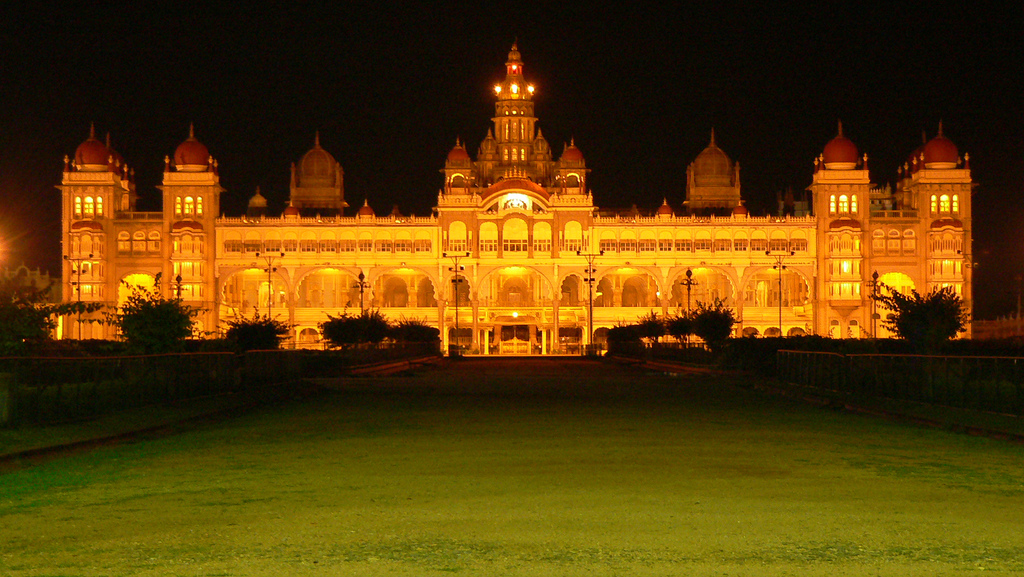
The Dasara festivities are attested at least since Wodeyar King, Raja Wodeyar I (1578–1617 CE) in 1610. The Mysore Palace is lit up on all the 10 days of Dasara. The festivities begin with the Wodeyar royal couple performing a special puja to Goddess Chamundeshwari in the Chamundi Temple located on the top of Chamundi Hill at Mysore. This would be followed by a special durbar (royal assembly).Kings wore the traditional Mysore Peta as headgear during the Durbar (court of Indian or princely state's kings) time or in a ceremonial procession during the Dasara celebrations. It was during the reign of Krishnaraja Wodeyar III in 1805, when the king started the tradition of having a special durbar in the Mysore Palace during Dasara; which was attended by members of the royal family, special invitees, officials and the masses. The King and men attending King's court wore the conventional attire called the durbar dress which comprised a black long coat with white trousers and a compulsory Mysore Peta. This tradition has been continued even now with the current scion of the Wodeyar family, Yaduveer Krishnadatta Chamaraja Wodeyar holding a private durbar during Dasara. The ninth day of Dasara known as Mahanavami is also an auspicious day on which the royal sword is worshipped and is taken on a procession involving elephants, camels and horses.
On Vijayadashami, the traditional Dasara procession (locally known as Jumboo Savari) is held on the streets of Mysore city. The main attraction of this procession is the idol of the Goddess Chamundeshwari which is placed on a golden mantapa on the top of a decorated elephant. This idol is worshipped by the royal couple and other invitees before it is taken around in the procession. Colourful tableaux, dance groups, music bands, decorated elephants, horses and camels form a part of the procession which starts from the Mysore Palace and culminates at a place called Bannimantap where the banni tree (Prosopis spicigera) is worshipped. According to a legend of the Mahabharata, banni tree was used by the Pandavas to hide their arms during their one-year period of Agnatavasa (living life incognito). Before undertaking any warfare, the kings traditionally worshipped this tree to help them emerge victorious in the war. The Dasara festivities would culminate on the night of Vijayadashami with an event held in the grounds at Bannimantap called as Panjina Kavayatthu (torch-light parade).
Another major attraction during Dasara is the Dasara exhibition which is held in the exhibition grounds opposite to the Mysore Palace. This exhibition starts during Dasara and goes on till December. Various stalls which sell items like clothes, plastic items, kitchenware, cosmetics and eatables are set up and they attract a significant number of people. A play area containing attractions like ferris-wheel is also present to provide entertainment to the people. Various Governmental agencies setup stalls to signify the achievements and projects that they have undertaken.
On all the 10 days of Dasara, various music and dance concerts are held in auditoriums around Mysore city. Musicians and dance groups from all over India are invited to perform on this occasion. Another attraction during Dasara is the Kusti Spardhe (wrestling-bout) which attracts wrestlers from all around India.
Wodeyar kings of Mysore have built quite a few palaces in Mysore and this has earned the city the sobriquet of City of Palaces. Following are the palaces present here:
This is the main palace of Mysore and also termed as Mysore Palace. This palace was built in 1912 at a cost of Rs. 4,150,000 in the Indo-Sarcenic style. The earlier wooden palace that existed at this location got burnt in a fire during the wedding of Jayalakshammanni, the eldest daughter of Chamaraja Wodeyar, in February 1897. The architect of this palace was Mr. Henry Irwin and the consulting engineer was Mr E W Fritchley. The palace is a three storied structure with the tallest tower with a gilded dome rising to 145 feet above ground. In the first floor is the grand Durbar hall, where the kings used to hold their assembly. Some of the other important halls within the palace are Kalyana Mantap (the wedding hall), Gombe Thotti (hall of dolls) and Amba Vilasa (private hall). Lifelike paintings, murals, arms, trophies, stained glass windows and decorated domes enhance the architectural splendour of this palace. This is the center of all festivities during the Dasara.
Hub AI
Culture of Mysore AI simulator
(@Culture of Mysore_simulator)
Culture of Mysore
Mysore is a city in the state of Karnataka, India. It is known as the cultural capital of Karnataka. Mysore was the capital of the Wodeyar kings who ruled over the Mysore Kingdom for many centuries. Wodeyars were great patrons of art and music and have contributed significantly to make Mysore a cultural centre. Mysore is well known for its palaces, museums and art galleries and the festivities that take place here during the period of Dasara attract a worldwide audience. Mysore has also lent its name to popular dishes like Mysore Masala Dosa and Mysore Pak. Mysore is also the origin of the popular silk sari known as Mysore silk sari and has also given rise to a popular form of painting known as Mysore painting.
Dasara is the Nadahabba (state-festival) of the state of Karnataka. It is also known as Navaratri (Nava-ratri = nine-nights) and is a 10-day festival with the last day being Vijayadashami, the most auspicious day of Dasara. Dasara usually falls in the month of September or October. According to a legend, Vijayadashami denotes the victory of truth over evil and was the day when the Hindu Goddess Chamundeshwari killed the demon Mahishasura. Mahishasura is the demon from whose name Mysore has been derived.
The Dasara festivities are attested at least since Wodeyar King, Raja Wodeyar I (1578–1617 CE) in 1610. The Mysore Palace is lit up on all the 10 days of Dasara. The festivities begin with the Wodeyar royal couple performing a special puja to Goddess Chamundeshwari in the Chamundi Temple located on the top of Chamundi Hill at Mysore. This would be followed by a special durbar (royal assembly).Kings wore the traditional Mysore Peta as headgear during the Durbar (court of Indian or princely state's kings) time or in a ceremonial procession during the Dasara celebrations. It was during the reign of Krishnaraja Wodeyar III in 1805, when the king started the tradition of having a special durbar in the Mysore Palace during Dasara; which was attended by members of the royal family, special invitees, officials and the masses. The King and men attending King's court wore the conventional attire called the durbar dress which comprised a black long coat with white trousers and a compulsory Mysore Peta. This tradition has been continued even now with the current scion of the Wodeyar family, Yaduveer Krishnadatta Chamaraja Wodeyar holding a private durbar during Dasara. The ninth day of Dasara known as Mahanavami is also an auspicious day on which the royal sword is worshipped and is taken on a procession involving elephants, camels and horses.
On Vijayadashami, the traditional Dasara procession (locally known as Jumboo Savari) is held on the streets of Mysore city. The main attraction of this procession is the idol of the Goddess Chamundeshwari which is placed on a golden mantapa on the top of a decorated elephant. This idol is worshipped by the royal couple and other invitees before it is taken around in the procession. Colourful tableaux, dance groups, music bands, decorated elephants, horses and camels form a part of the procession which starts from the Mysore Palace and culminates at a place called Bannimantap where the banni tree (Prosopis spicigera) is worshipped. According to a legend of the Mahabharata, banni tree was used by the Pandavas to hide their arms during their one-year period of Agnatavasa (living life incognito). Before undertaking any warfare, the kings traditionally worshipped this tree to help them emerge victorious in the war. The Dasara festivities would culminate on the night of Vijayadashami with an event held in the grounds at Bannimantap called as Panjina Kavayatthu (torch-light parade).
Another major attraction during Dasara is the Dasara exhibition which is held in the exhibition grounds opposite to the Mysore Palace. This exhibition starts during Dasara and goes on till December. Various stalls which sell items like clothes, plastic items, kitchenware, cosmetics and eatables are set up and they attract a significant number of people. A play area containing attractions like ferris-wheel is also present to provide entertainment to the people. Various Governmental agencies setup stalls to signify the achievements and projects that they have undertaken.
On all the 10 days of Dasara, various music and dance concerts are held in auditoriums around Mysore city. Musicians and dance groups from all over India are invited to perform on this occasion. Another attraction during Dasara is the Kusti Spardhe (wrestling-bout) which attracts wrestlers from all around India.
Wodeyar kings of Mysore have built quite a few palaces in Mysore and this has earned the city the sobriquet of City of Palaces. Following are the palaces present here:
This is the main palace of Mysore and also termed as Mysore Palace. This palace was built in 1912 at a cost of Rs. 4,150,000 in the Indo-Sarcenic style. The earlier wooden palace that existed at this location got burnt in a fire during the wedding of Jayalakshammanni, the eldest daughter of Chamaraja Wodeyar, in February 1897. The architect of this palace was Mr. Henry Irwin and the consulting engineer was Mr E W Fritchley. The palace is a three storied structure with the tallest tower with a gilded dome rising to 145 feet above ground. In the first floor is the grand Durbar hall, where the kings used to hold their assembly. Some of the other important halls within the palace are Kalyana Mantap (the wedding hall), Gombe Thotti (hall of dolls) and Amba Vilasa (private hall). Lifelike paintings, murals, arms, trophies, stained glass windows and decorated domes enhance the architectural splendour of this palace. This is the center of all festivities during the Dasara.
Recent media