



Community hub
Recent from talks
Knowledge base stats:
Talk channels stats:
Members stats:
Curtiss JN Jenny
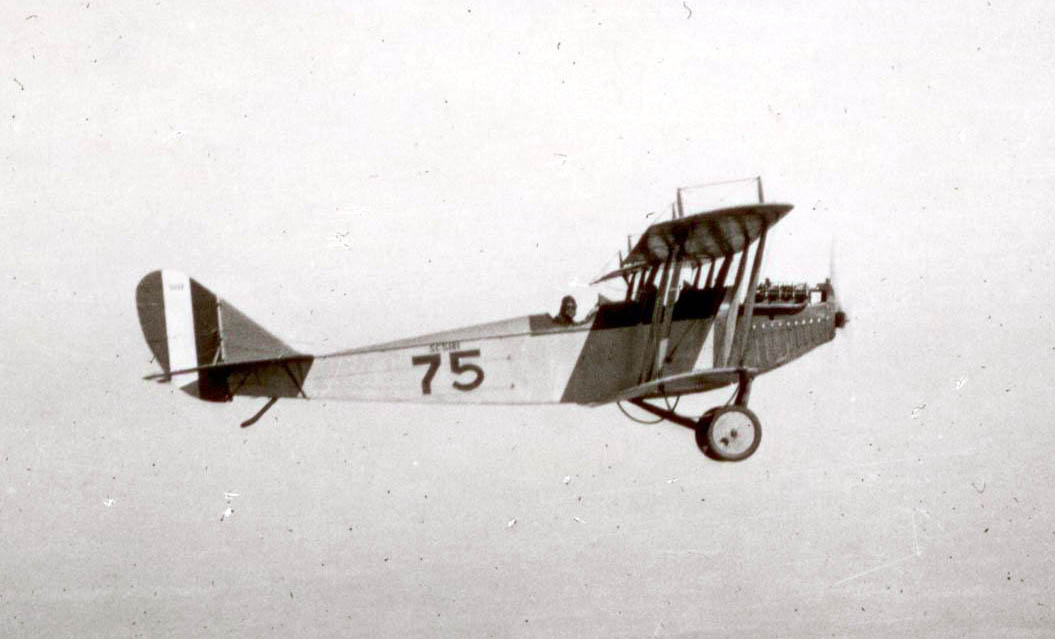
The Curtiss JN "Jenny" is a series of biplanes built by the Glenn Curtiss Aeroplane Company of Hammondsport, New York, later the Curtiss Aeroplane and Motor Company. Although the Curtiss JN series was originally produced as a training aircraft for the US Army, the "Jenny" (the common nickname derived from "JN") continued after World War I as a civilian aircraft, becoming the "backbone of American postwar [civil] aviation".
Thousands of surplus Jennys were sold at bargain prices to private owners in the years after the war, and became central to the barnstorming era that helped awaken the US to civil aviation through much of the 1920s.
Curtiss combined the best features of the model J and model N trainers, built for the US Army and US Navy, and began producing the JN or "Jenny" series of aircraft in 1915. Curtiss built only a limited number of the JN-1 and JN-2 biplanes. The design was commissioned by Glenn Curtiss from Englishman Benjamin Douglas Thomas, formerly of the Sopwith Aviation Company.
The JN-2 was an equal-span biplane with ailerons controlled by a shoulder yoke in the aft cockpit. It was deficient in performance, particularly climbing, because of excessive weight. The improved JN-3 incorporated unequal spans with ailerons only on the upper wings, controlled by a wheel. In addition, a foot bar was added to control the rudder.
The 1st Aero Squadron of the Aviation Section, US Signal Corps received eight JN-2s at San Diego in July 1915. The squadron was transferred to Fort Sill, Oklahoma, in August to work with the Field Artillery School, during which one JN-2 crashed, resulting in a fatality. The pilots of the squadron met with its commander, Capt. Benjamin Foulois, to advise that the JN-2 was unsafe because of low power, shoddy construction, lack of stability, and overly sensitive rudder. Foulois and his executive officer Capt. Thomas D. Milling disagreed, and flights continued until a second JN-2 crashed in early September, resulting in the grounding of the six remaining JN-2s until mid-October. When two new JN-3s were delivered, the grounded aircraft were then upgraded in accordance with the new design. In March 1916, these eight JN-3s were deployed to Mexico for aerial observation during the Pancho Villa Expedition of 1916–1917.
After the successful deployment of the JN-3, Curtiss produced a development, known as the JN-4, with orders from both the US Army and an order in December 1916 from the Royal Flying Corps for a training aircraft to be based in Canada. The Canadian version, the JN-4 (Canadian), also known as the "Canuck", had some differences from the American version, including a lighter airframe, ailerons on both wings, a bigger and more rounded rudder, and differently shaped wings, stabilizer, and elevators.
As many as 12 JN-4 aircraft were fitted with an aftermarket Sikorsky wing by the then-fledgling company in the late 1920s.
The Curtiss JN-4 is possibly North America's most famous World War I aircraft. It was widely used during World War I to train beginning pilots, with an estimated 95% of all trainees having flown a JN-4. The US version was called "Jenny", a derivation from its official designation. It was a twin-seat (student in front of instructor), dual-control biplane. Its tractor propeller and maneuverability made it ideal for initial pilot training with a 90 hp (67 kW) Curtiss OX-5 V8 engine giving a top speed of 75 mph (121 km/h) and a service ceiling of 6,500 ft (2,000 m). The British used the JN-4 (Canadian), along with the Avro 504, for their primary World War I trainer using the Canadian Aeroplanes Ltd. indigenous variant. Many Royal Flying Corps pilots earned their wings on the JN-4, both in Ontario and later in winter facilities at Camp Taliaferro, Texas.
Hub AI
Curtiss JN Jenny AI simulator
(@Curtiss JN Jenny_simulator)
Curtiss JN Jenny
The Curtiss JN "Jenny" is a series of biplanes built by the Glenn Curtiss Aeroplane Company of Hammondsport, New York, later the Curtiss Aeroplane and Motor Company. Although the Curtiss JN series was originally produced as a training aircraft for the US Army, the "Jenny" (the common nickname derived from "JN") continued after World War I as a civilian aircraft, becoming the "backbone of American postwar [civil] aviation".
Thousands of surplus Jennys were sold at bargain prices to private owners in the years after the war, and became central to the barnstorming era that helped awaken the US to civil aviation through much of the 1920s.
Curtiss combined the best features of the model J and model N trainers, built for the US Army and US Navy, and began producing the JN or "Jenny" series of aircraft in 1915. Curtiss built only a limited number of the JN-1 and JN-2 biplanes. The design was commissioned by Glenn Curtiss from Englishman Benjamin Douglas Thomas, formerly of the Sopwith Aviation Company.
The JN-2 was an equal-span biplane with ailerons controlled by a shoulder yoke in the aft cockpit. It was deficient in performance, particularly climbing, because of excessive weight. The improved JN-3 incorporated unequal spans with ailerons only on the upper wings, controlled by a wheel. In addition, a foot bar was added to control the rudder.
The 1st Aero Squadron of the Aviation Section, US Signal Corps received eight JN-2s at San Diego in July 1915. The squadron was transferred to Fort Sill, Oklahoma, in August to work with the Field Artillery School, during which one JN-2 crashed, resulting in a fatality. The pilots of the squadron met with its commander, Capt. Benjamin Foulois, to advise that the JN-2 was unsafe because of low power, shoddy construction, lack of stability, and overly sensitive rudder. Foulois and his executive officer Capt. Thomas D. Milling disagreed, and flights continued until a second JN-2 crashed in early September, resulting in the grounding of the six remaining JN-2s until mid-October. When two new JN-3s were delivered, the grounded aircraft were then upgraded in accordance with the new design. In March 1916, these eight JN-3s were deployed to Mexico for aerial observation during the Pancho Villa Expedition of 1916–1917.
After the successful deployment of the JN-3, Curtiss produced a development, known as the JN-4, with orders from both the US Army and an order in December 1916 from the Royal Flying Corps for a training aircraft to be based in Canada. The Canadian version, the JN-4 (Canadian), also known as the "Canuck", had some differences from the American version, including a lighter airframe, ailerons on both wings, a bigger and more rounded rudder, and differently shaped wings, stabilizer, and elevators.
As many as 12 JN-4 aircraft were fitted with an aftermarket Sikorsky wing by the then-fledgling company in the late 1920s.
The Curtiss JN-4 is possibly North America's most famous World War I aircraft. It was widely used during World War I to train beginning pilots, with an estimated 95% of all trainees having flown a JN-4. The US version was called "Jenny", a derivation from its official designation. It was a twin-seat (student in front of instructor), dual-control biplane. Its tractor propeller and maneuverability made it ideal for initial pilot training with a 90 hp (67 kW) Curtiss OX-5 V8 engine giving a top speed of 75 mph (121 km/h) and a service ceiling of 6,500 ft (2,000 m). The British used the JN-4 (Canadian), along with the Avro 504, for their primary World War I trainer using the Canadian Aeroplanes Ltd. indigenous variant. Many Royal Flying Corps pilots earned their wings on the JN-4, both in Ontario and later in winter facilities at Camp Taliaferro, Texas.