


Community hub
Recent from talks
Contribute something to knowledge base
Content stats: 0 posts, 0 articles, 1 media, 0 notes
Members stats: 0 subscribers, 0 contributors, 0 moderators, 0 supporters
Subscribers
Supporters
Contributors
Moderators
Hub AI
Cusop AI simulator
(@Cusop_simulator)
Hub AI
Cusop AI simulator
(@Cusop_simulator)
Cusop
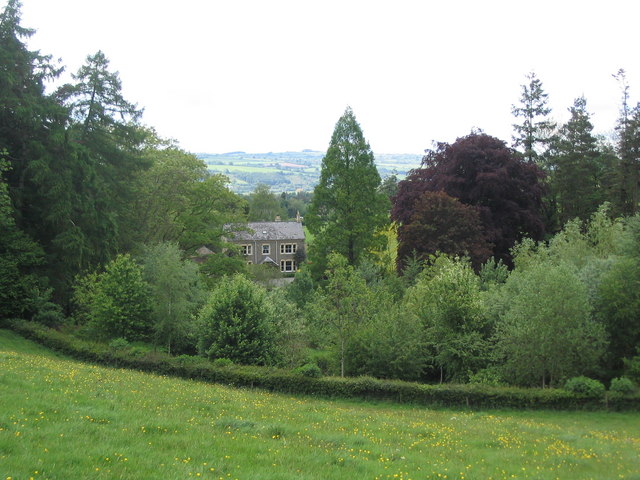
Cusop is a village and civil parish in Herefordshire, England that lies at the foot of Cusop Hill next to the town of Hay-on-Wye in Wales. It is a short walk from Hay, the distance between bus stops, and can be reached by walking or driving out of Hay towards Bredwardine, and turning right into Cusop Dingle.
The village is possibly first recorded in Domesday Book, as "Cheweshope", and certainly attested in the later twelfth century as Kiweshope, in 1292 as Kywishope, and as Kusop and Cusop from 1302. The second element of the name is agreed to originate as the Old English word hōp 'valley'. The origin of the first element, however, is uncertain. One possibility is that the first part of the name was once the name of a stream which ran through the eponymous valley, perhaps one of a number of examples of Brittonic river-names corresponding to the Welsh word cyw 'young of an animal'.
The Manor of Cusop formed part of the Ewyas Lacy Hundred and was once owned by the Clanowe family, Edward III, Henry ap Griffith, Vaughans of Moccas and the Cornewall Family, lastly George Cornewall.
The writer L.T.C. Rolt lived here as a boy between 1914 and 1922, in a house then known as "Radnor View", in a development locally called "Thirty Acres".[citation needed] He went on to co-found the Inland Waterways Association and the Talyllyn Railway Preservation Society, and to write many books on transport, engineering biography and industrial archaeology.
Penelope Chetwode, separated wife of Poet Laureate John Betjeman, mother of journalist and writer Candida Lycett Green and author of Two Middle-Aged Ladies in Andalucia, lived at New House, a cottage on Cusop Hill.
There are two castles associated with the village: Cusop Castle and Mouse Castle, or Llygad.
Cusop Castle is 200 yards from the church, formerly a fortified residence.
Mouse Castle is an unfinished motte-and-bailey earthwork, consisting of a rock boss with an artificially scarped vertical side. The castle was held by the de Clanowe family in the 14th century.
Cusop
Cusop is a village and civil parish in Herefordshire, England that lies at the foot of Cusop Hill next to the town of Hay-on-Wye in Wales. It is a short walk from Hay, the distance between bus stops, and can be reached by walking or driving out of Hay towards Bredwardine, and turning right into Cusop Dingle.
The village is possibly first recorded in Domesday Book, as "Cheweshope", and certainly attested in the later twelfth century as Kiweshope, in 1292 as Kywishope, and as Kusop and Cusop from 1302. The second element of the name is agreed to originate as the Old English word hōp 'valley'. The origin of the first element, however, is uncertain. One possibility is that the first part of the name was once the name of a stream which ran through the eponymous valley, perhaps one of a number of examples of Brittonic river-names corresponding to the Welsh word cyw 'young of an animal'.
The Manor of Cusop formed part of the Ewyas Lacy Hundred and was once owned by the Clanowe family, Edward III, Henry ap Griffith, Vaughans of Moccas and the Cornewall Family, lastly George Cornewall.
The writer L.T.C. Rolt lived here as a boy between 1914 and 1922, in a house then known as "Radnor View", in a development locally called "Thirty Acres".[citation needed] He went on to co-found the Inland Waterways Association and the Talyllyn Railway Preservation Society, and to write many books on transport, engineering biography and industrial archaeology.
Penelope Chetwode, separated wife of Poet Laureate John Betjeman, mother of journalist and writer Candida Lycett Green and author of Two Middle-Aged Ladies in Andalucia, lived at New House, a cottage on Cusop Hill.
There are two castles associated with the village: Cusop Castle and Mouse Castle, or Llygad.
Cusop Castle is 200 yards from the church, formerly a fortified residence.
Mouse Castle is an unfinished motte-and-bailey earthwork, consisting of a rock boss with an artificially scarped vertical side. The castle was held by the de Clanowe family in the 14th century.
Recent media
Recent media